
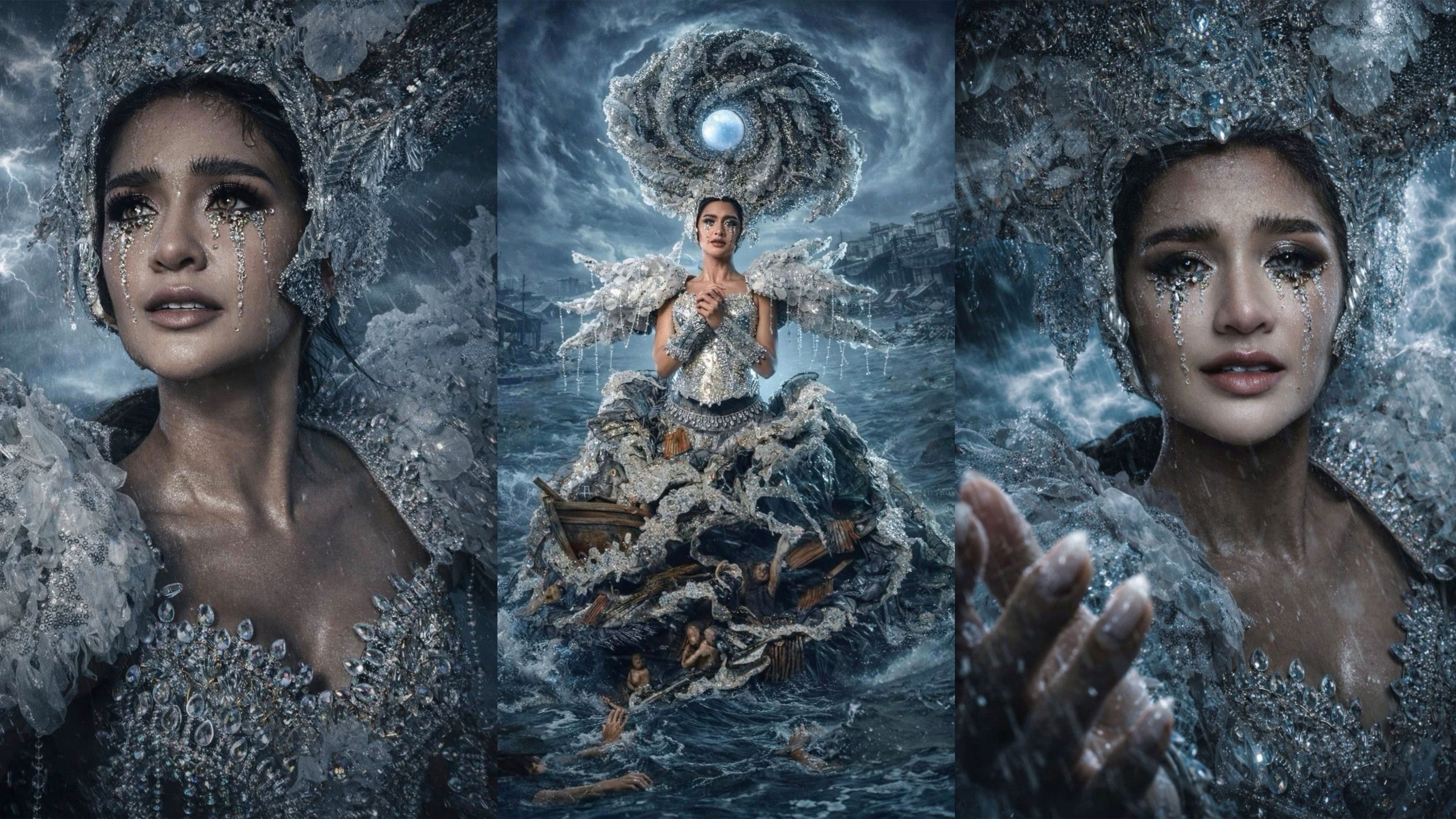
Yolanda-inspired costume Miss Universe Philippines has become a trending topic online after a Tacloban candidate unveiled a national costume referencing Typhoon Yolanda (Haiyan), prompting debate over how tragedy is portrayed in pageantry and public storytelling.
A Miss Universe Philippines candidate representing Tacloban has ignited a wave of online discussion after unveiling a national costume inspired by Typhoon Yolanda (Haiyan), prompting renewed reflection on how tragedy is remembered and represented in public platforms.
The costume, which visually referenced the devastation and resilience associated with the 2013 disaster, quickly drew mixed reactions across social media. While some viewers viewed it as a bold narrative of survival and strength, others questioned whether transforming such a painful chapter in Philippine history into pageant fashion risks diminishing the gravity of the event.
Supporters of the concept pointed to its storytelling and emotional depth, emphasizing how art can serve as a vehicle for remembrance.
“A very touching concept marking the journey of a city that rose above the storm… the resilience of Tacloban,” one commenter said, praising the symbolism behind the design.
Another netizen echoed this sentiment, saying, “As one of the survivors of that typhoon, this costume made me emotional… kudos and well done,” highlighting how the piece resonated personally with those directly affected.
Several comments also focused on the technical execution and creativity of the entry.
“The concept, the story, the details—pasavogh,” one user wrote, while another added, “Creativity check, storytelling pak, overall impact 100 percent,” reflecting admiration for the craftsmanship and presentation.
However, the divided reception underscores a deeper and more complex issue: the boundaries between tribute and sensitivity. Observers noted that while pageantry often celebrates culture and history through visual storytelling, referencing recent tragedies—especially those with lasting human impact—can evoke conflicting interpretations depending on personal experience.
Typhoon Yolanda remains one of the deadliest storms to hit the Philippines, claiming thousands of lives and leaving entire communities devastated. More than a decade later, its memory continues to carry emotional weight, particularly for survivors and families of victims. This context adds a layer of sensitivity to any artistic interpretation tied to the disaster.
This development highlights the evolving role of pageantry in addressing social narratives. Beyond aesthetics, national costumes increasingly serve as platforms for commentary, identity, and collective memory. Yet, as seen in this case, such representations can also prompt critical conversations about respect, timing, and intent.
The situation raises questions about how public figures and creative industries navigate historical trauma in a way that honors those affected without inadvertently reopening wounds. It also reflects the broader Filipino discourse on remembrance—whether through solemn commemoration or creative reinterpretation.
As discussions continue online, the Tacloban candidate’s costume has moved beyond competition, becoming a focal point for dialogue on art, memory, and responsibility.
Beyond online reactions, the controversy reflects a broader shift in how national pageants are evolving into platforms for social commentary. In recent years, candidates have increasingly used costumes to highlight environmental issues, historical narratives, and national identity. However, this development also raises questions about ethical boundaries, particularly when themes involve collective trauma. For many Filipinos, Typhoon Yolanda is not just a historical reference but a lived experience, making its portrayal in competitive and visual formats a subject of ongoing sensitivity.



 Facebook
 Twitter