
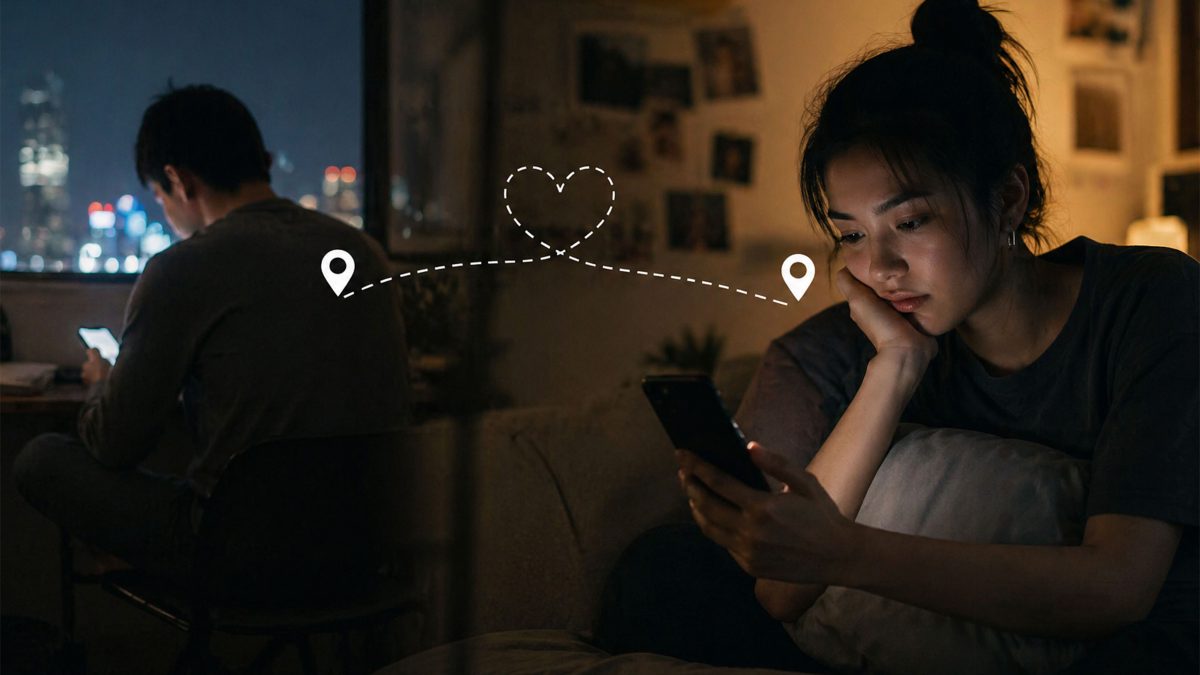
Long-distance relationships are increasingly facing a quiet challenge: emotional disconnection that develops over time. While many couples stay in constant contact, experts note that maintaining communication does not always preserve the deeper sense of connection that defines lasting relationships.
A growing number of couples separated by work, migration, or education are finding that distance does not always lead to dramatic breakups—but instead to a gradual emotional drift. Relationship observers say many long-distance partnerships today end not with conflict, but with a quiet realization that the connection no longer feels the same.
In the Philippines, where overseas employment and inter-island relocation remain common, long-distance relationships have become part of everyday life. While digital platforms allow constant communication, they also reveal a deeper issue: maintaining contact is not the same as sustaining emotional closeness. This shift has drawn attention to how modern relationships evolve under prolonged separation.
Observers point to several underlying patterns that help explain why emotional distance can grow even when communication continues.
1. Emotional routines replace real connection
One of the earliest changes appears in how couples communicate. Conversations that once felt spontaneous can slowly turn into routine exchanges. Daily messages and scheduled calls continue, but often without emotional depth.
“We still talked every day, but it felt like we were just checking in, not really connecting,” one individual shared in an online discussion.
This development highlights how consistency, while important, can sometimes replace genuine engagement. Over time, partners may feel present in each other’s schedules, but not necessarily in each other’s lives.
2. Lack of shared daily experiences
Another factor involves the absence of shared daily moments. Couples living apart miss out on simple, unplanned interactions that naturally strengthen relationships—such as eating together, running errands, or having casual conversations. Without these, interactions become more intentional but less organic.
“It wasn’t the distance itself—it was not sharing the little things anymore,” another commenter noted.
3. Time gaps weaken emotional timing
The situation also raises questions about emotional timing. When partners operate on different schedules or time zones, meaningful conversations can become harder to maintain. Delayed replies or mismatched availability may unintentionally create emotional gaps, even when both individuals remain committed.
4. Small issues remain unresolved longer
At the same time, minor misunderstandings can take longer to resolve. Without physical presence, tone and intent are more easily misinterpreted through messages or calls. What might have been quickly clarified in person can linger, allowing tension to build quietly over time. Observers noted that unresolved issues can gradually affect how partners see each other.
5. Personal growth happens separately
Another key factor is how individuals grow while apart. Personal experiences, challenges, and environments shape people differently. When partners spend long periods separated, they may develop new perspectives independently, making it harder to stay aligned in the relationship.
This trend matters as more Filipinos continue to enter long-distance arrangements driven by economic opportunities and changing work setups. While success stories remain common, the quieter reality of emotional disconnection is becoming increasingly visible. The situation highlights the need to look beyond communication frequency and examine the quality of connection being maintained.

Experts emphasize that awareness of these patterns may help couples better navigate distance. Rather than focusing solely on staying in touch, prioritizing meaningful interaction, shared experiences—even from afar—and timely communication may play a more critical role in sustaining emotional closeness.
Ultimately, long-distance relationships rarely fail because of a single event. More often, it is the accumulation of subtle changes—routines replacing depth, missed shared moments, delayed understanding, unresolved tension, and separate growth—that gradually alters how love is experienced.








 Facebook
 Twitter