
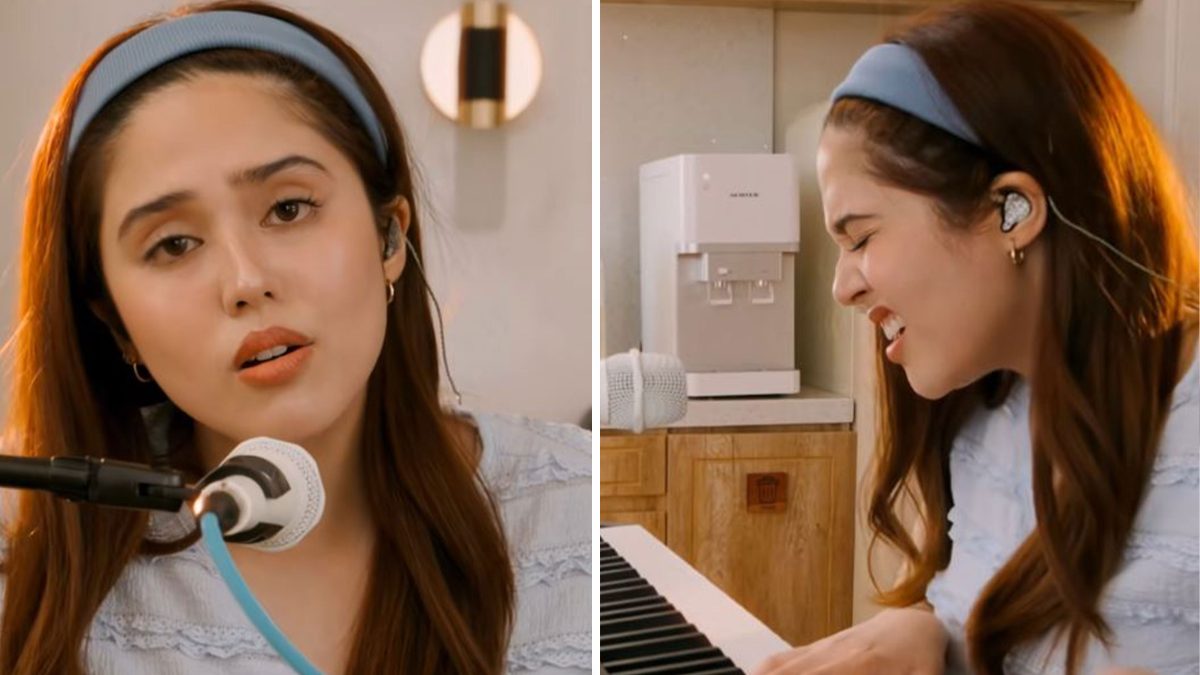
Jayda Avanzado letter H issue quickly gained traction online after a clip of the Filipino singer performing a song cover circulated on TikTok, with viewers highlighting her distinct pronunciation style that turned the performance into a widely discussed topic across social media platforms.
A short performance clip by Filipino singer Jayda Avanzado has ignited widespread discussion online after viewers noticed her distinct pronunciation of the letter “H” during a song cover, turning an otherwise routine music post into a viral talking point across social media platforms.
The video, originally shared on TikTok, features the young artist performing a live rendition of a popular track while playing the keyboard. While many praised her vocal tone and control, a segment of viewers quickly zeroed in on her stylistic delivery—particularly how certain words were articulated—prompting a wave of commentary that ranged from humorous to critical.
“Ma tirhan mo naman kami ng ‘h’,” one commenter wrote, humorously suggesting that the singer had used more than her share of the consonant.
“Di na ako makatawa, kasi kinuha mo na lahat ng ‘H’,” another user posted, echoing a similar sentiment that gained thousands of reactions.
@jedijayda I’ll never stop thinking of you…💙 #jaydajams #cover #thinkingofyou #katyperry #liveperformance @Katy Perry 🎸: @tjcastillon mixed by @tor_noora 🎥: @olibyeah @kieffercarrascal wearing @Penshoppe ♬ original sound – Jayda
The phrase “parang nasobrahan sa letter H” soon became a recurring theme in comment sections, with netizens creating variations of the joke and even mimicking the pronunciation in their own posts. Despite the lighthearted tone of many remarks, some comments also reflected more critical views on vocal style and delivery.
Observers noted that the reaction highlights how quickly performance nuances can become focal points in the age of short-form video content, where even subtle elements may be amplified by audience interpretation. In this case, what may be considered a stylistic choice—or even a natural vocal habit—was reframed as a viral quirk.
The situation also underscores the evolving nature of audience engagement with artists, particularly among younger viewers who actively participate in shaping online narratives. Platforms like TikTok not only serve as stages for performance but also as spaces where public perception is rapidly formed and circulated.
For Filipino artists like Avanzado, who belong to a new generation navigating both traditional and digital media, such moments can carry dual implications. On one hand, viral attention boosts visibility and reach; on the other, it opens the door to intense scrutiny, often centered on isolated aspects of a performance.
This development raises questions about how artistic expression is interpreted in highly interactive online environments. While vocal styling has long been a hallmark of musical identity, its reception today is increasingly influenced by meme culture and audience-driven commentary.
At the same time, the incident reflects a broader pattern in Philippine online spaces, where humor and critique frequently intersect. The blending of playful banter with genuine feedback illustrates how digital audiences engage with content—not merely as passive viewers, but as active participants in shaping discourse.
As of writing, the video continues to circulate widely, drawing both support and criticism. Whether the conversation will have a lasting impact on Avanzado’s public image remains to be seen, but it has undeniably placed her at the center of a uniquely modern form of viral attention—one where even a single letter can spark a nationwide conversation.
The incident also points to the growing influence of algorithm-driven platforms in shaping public discourse. Content that sparks curiosity, humor, or debate is more likely to be amplified, regardless of whether the focus is on performance quality or minor stylistic details. In this context, the Jayda Avanzado letter H issue demonstrates how quickly narratives can shift from appreciation to scrutiny, especially when audiences engage collectively through comments, shares, and parody content.






 Facebook
 Twitter