
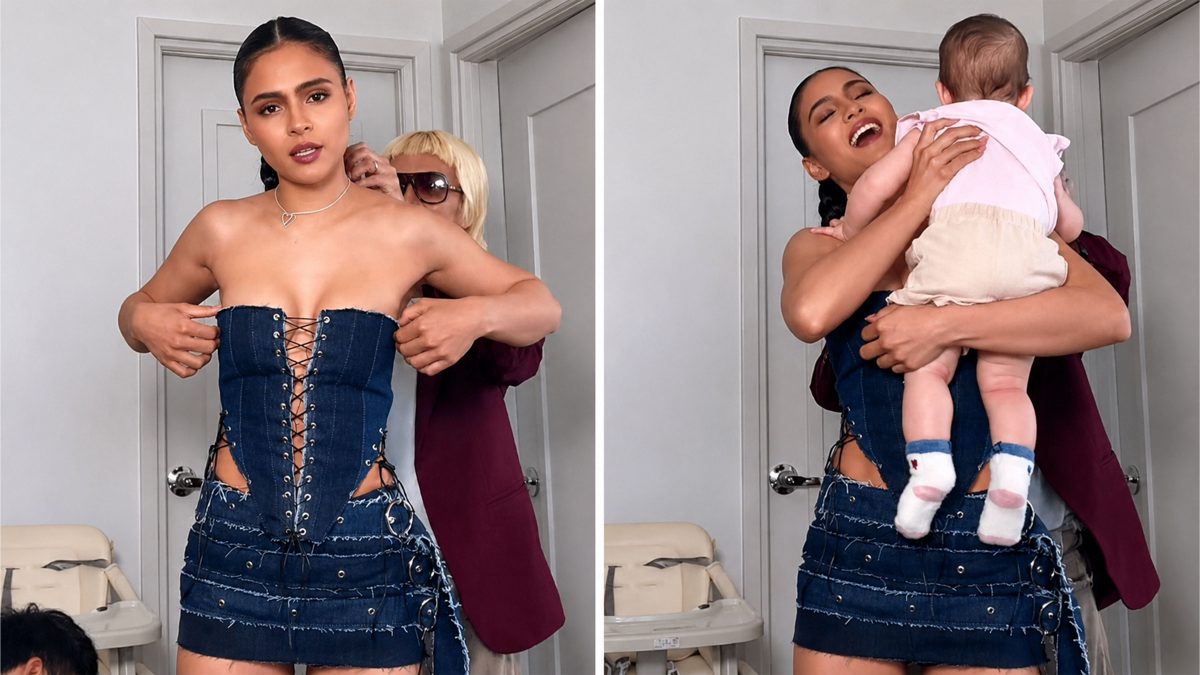
Working mom parenting became a trending discussion among Filipino social media users after actress Lovi Poe appeared in a behind-the-scenes video caring for a child while preparing for work abroad. The viral clip quickly evolved into a broader conversation about motherhood expectations, emotional labor, and the pressure many women face in balancing career responsibilities with family life.
A behind-the-scenes video featuring actress Lovi Poe caring for a child while preparing for work abroad has sparked a wider online discussion about modern motherhood, emotional labor, and the expectations placed on Filipino women balancing career responsibilities with parenting. The clip circulated widely on entertainment and social media pages this week, drawing reactions that extended far beyond celebrity admiration.
Rather than focusing only on Poe herself, many viewers began discussing how Filipino audiences often measure motherhood through visible acts of caregiving. Observers noted that reactions to the video reflected a deeper cultural expectation that mothers should remain emotionally present and nurturing even while maintaining demanding professional schedules.
The viral clip showed Poe warmly interacting with a child during what appeared to be a work-related preparation or fitting session in the United States. Entertainment pages described the moment as an example of “hands-on parenting,” a phrase that quickly became central to public discussion surrounding the video.
This reflects a broader pattern in Philippine online culture where celebrity parenting moments are often treated as emotional reference points for everyday family life. In many cases, audiences respond not only to the celebrity involved but also to what the moment symbolizes about family priorities, sacrifice, and caregiving.
Some viewers praised Poe for appearing attentive despite professional commitments abroad.
“It’s refreshing to see someone balancing work while still making time for children,” one commenter wrote, describing the interaction as relatable to many working parents.
That reaction mirrors how strongly Filipino audiences value visible family involvement, particularly among public figures. Media observers noted that parenting-related content frequently gains high engagement online because viewers associate informal family interactions with authenticity and emotional connection.
At the same time, other users questioned whether mothers continue to face heavier expectations than fathers in similar situations. Several commenters pointed out that women are often publicly praised simply for handling both childcare and work responsibilities simultaneously.
“Mothers are expected to multitask constantly, so people celebrate it whenever they see it,” another user observed.
The development highlights how social media increasingly transforms ordinary parenting moments into broader conversations about gender roles and family expectations. A short personal clip can quickly become a reflection of larger social attitudes, especially in a country where family-centered values remain deeply influential.
Observers also noted that this dynamic resonates strongly with overseas Filipino communities and professionals working abroad. Many Filipino families place high importance on emotional closeness despite distance or demanding schedules, making visible caregiving moments particularly meaningful to online audiences.
The discussion surrounding Poe also raises questions about how celebrity content shapes public expectations of motherhood. While many viewers find such moments inspiring, others argue that constant praise for “doing everything” may unintentionally reinforce pressure on women to manage multiple responsibilities without visible difficulty.
“Being a caring parent should not require proving you can handle everything perfectly,” one commenter wrote during the online discussion.
Media analysts say the growing conversation reflects changing attitudes among younger Filipino audiences, especially women who are increasingly open about the realities of balancing work, family responsibilities, and personal well-being. In digital spaces, celebrity parenting moments are no longer viewed purely as entertainment content; they are becoming entry points for broader social reflection.
For many viewers, the attention surrounding Poe’s video ultimately revealed less about celebrity culture itself and more about how Filipino society continues to define caregiving, family presence, and modern motherhood in the age of social media.




 Facebook
 Twitter