
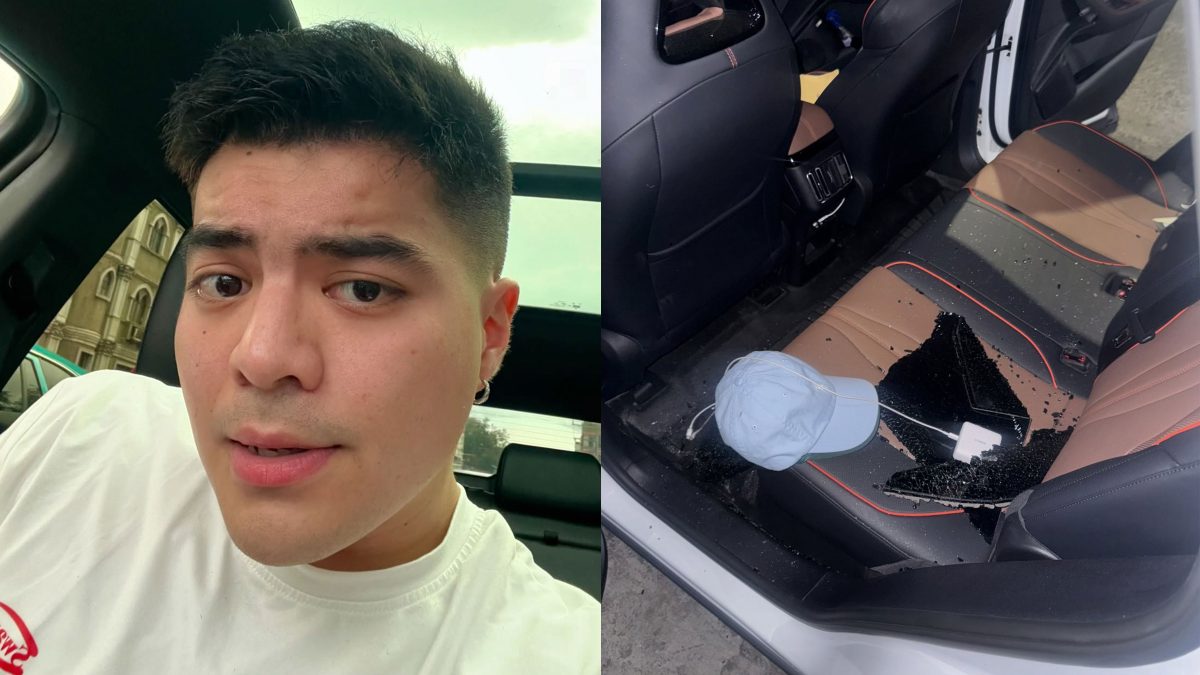
Andrew Muhlach car break-in incident has intensified concerns over “basag-kotse” crimes in the Philippines, after the actor disclosed that thieves smashed his vehicle and took a bag containing two passports, highlighting how quickly such crimes can happen in busy urban areas.
A recent incident involving actor Andrew Muhlach has drawn renewed attention to the persistent threat of “basag-kotse” crimes in the Philippines, after the actor revealed that his vehicle was broken into and his bag—containing two passports—was stolen in what he described as his first experience of such a crime.
Images shared on social media showed shattered glass scattered across the backseat of his car, underscoring how quickly opportunistic theft can occur even in seemingly secure urban locations. While the incident itself may appear isolated, it reflects a broader pattern that continues to affect motorists, particularly in busy city areas where vehicles are often left unattended for short periods.
“First time to nangyare sakin… May chance pa kayo ibalik lahat ‘yan,” Muhlach wrote, expressing both shock and a slim hope that his belongings might still be recovered.
Authorities have long warned that “basag-kotse” incidents typically target visible valuables left inside vehicles, with perpetrators acting within minutes. Observers noted that even high-profile individuals are not immune, suggesting that the crime is less about targeting specific victims and more about opportunity and visibility of items inside cars.
In a follow-up message, Muhlach emphasized caution and vigilance, echoing advice commonly issued by law enforcement.
“Mag ingat nalang tayo sa susunod… double ingat lang tayo. Daming epal sa mundo,” he added, highlighting the need for heightened awareness among motorists.
The situation raises questions about urban safety measures and whether current deterrents—such as CCTV coverage, parking security, and public awareness—are sufficient to curb these incidents. While police responses often include increased patrols and reminders to the public, enforcement remains challenging due to the speed and unpredictability of such crimes.
For Filipino motorists, the incident serves as a timely reminder of basic but critical precautions: avoiding leaving valuables in plain sight, choosing well-lit parking areas, and ensuring vehicles are securely locked. These measures, while simple, remain among the most effective ways to reduce risk.
This development highlights how everyday crimes like “basag-kotse” continue to have real consequences, from financial loss to the inconvenience of replacing essential documents such as passports. In Muhlach’s case, the loss carries additional implications, potentially affecting travel plans and requiring time-consuming coordination with government agencies for replacement.
Public reaction online has largely been sympathetic, with many netizens sharing similar experiences and urging increased vigilance.
“Ingat po lagi… dami talaga kawatan kahit saan,” one commenter wrote, reflecting a sentiment widely echoed across social platforms.
As urban centers grow denser and mobility increases, incidents like this reinforce the importance of both personal responsibility and broader security measures. While no system can fully eliminate risk, consistent awareness and preventive action remain key in minimizing exposure to opportunistic crimes.
For now, Muhlach’s experience stands as both a personal setback and a broader cautionary tale—one that resonates with many Filipinos navigating daily life in increasingly crowded cities.
Security experts note that incidents like the Andrew Muhlach car break-in also point to gaps in situational awareness among motorists, particularly in high-traffic districts where short stops are common. While law enforcement agencies continue to monitor such cases, prevention largely depends on behavioral habits, such as removing valuables from sight and avoiding predictable parking routines. The incident reinforces the need for both improved urban surveillance and stronger public awareness campaigns, especially as similar cases are increasingly shared online.






 Facebook
 Twitter