
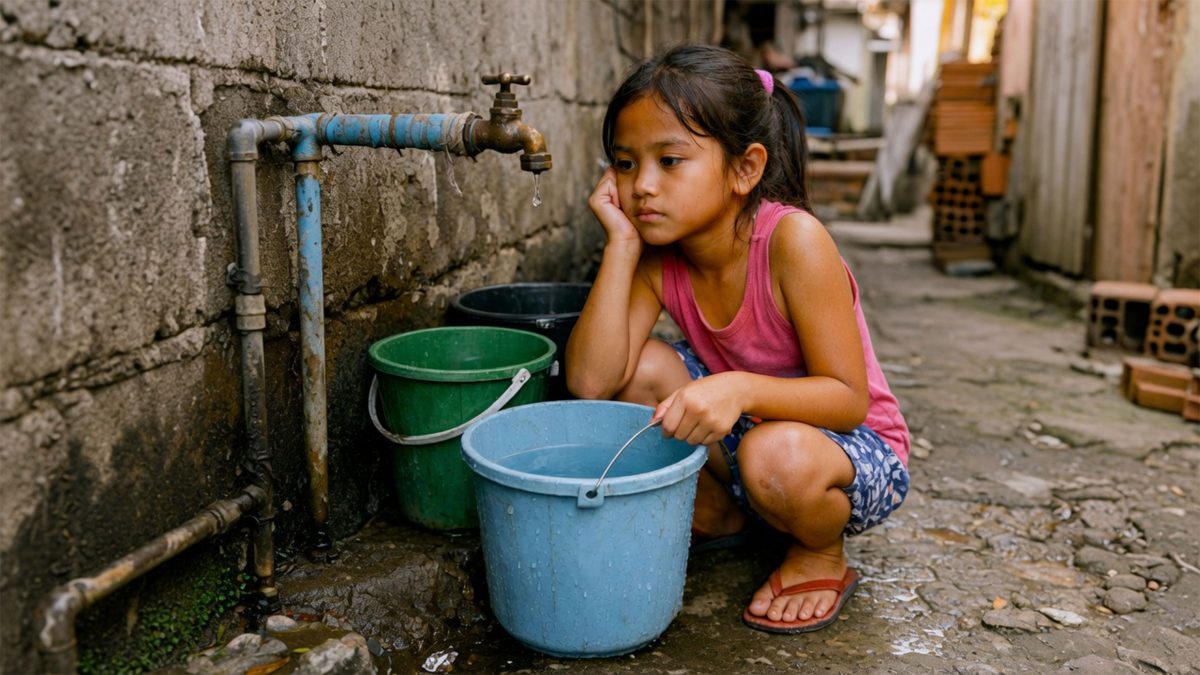
Water crisis in the Philippines is becoming one of the country’s most urgent environmental and public service challenges. Rapid population growth, climate change, aging water infrastructure, and increasing demand are placing immense pressure on limited freshwater resources. As a result, many cities and rural communities are experiencing recurring water shortages that affect households, businesses, agriculture, and public health.
The water crisis in the Philippines is no longer just a future concern—it is becoming a reality for many communities. As population growth, climate change, and increasing freshwater consumption place greater pressure on the country’s limited water resources, cities and municipalities are already experiencing water shortages. This article explores why the water crisis in the Philippines is worsening and what it means for the nation’s future.
A few years back, Reader’s Digest came up with a prediction stating that water is Asia’s looming environmental crisis.
Jim Plouffe, the magazine editor-in-chief at that time, wrote in his editorial: “The environmental challenge we face is quite simple: There is a finite supply of freshwater on Earth, and it’s being consumed by more and more humans, which, in turn, throws the entire water cycle out of whack.”
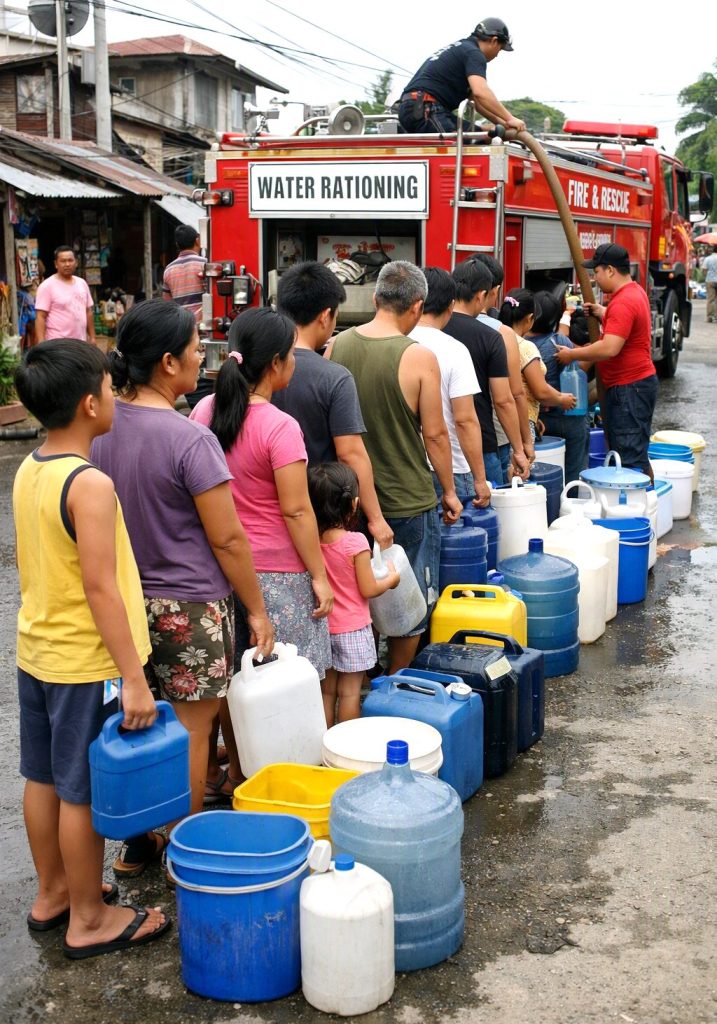
That’s why the crisis is more pronounced in Asia compared with other continents. “Asia has 60% of the world’s population, but only 36% of the renewable water supply,” says Sandra Postel, director of the Massachusetts-based Global Water Policy Project, a group seeking to save fresh water.
The water crisis may still be a distant concern in certain regions of Asia, yet it is already a pressing issue in the Philippines, a country with a population exceeding 100 million. Despite being an archipelago, the country is grappling with significant water shortages.
Davao City, known for its abundant freshwater resources, is not immune to water supply challenges. A managing editor of a local newspaper recently voiced their frustration regarding the prolonged water shortages experienced in their barangay.
A friend recounted her own difficulties, mentioning that the water pressure in her area was so low that it took her half an hour to fill a single pail. When she reached out to the water district to inquire about any ongoing maintenance, she was told that there were no repairs taking place.
Approximately 75 kilometers away from Davao City, in the municipality of Bansalan, Davao del Sur, residents of barangay Poblacion Dos have been enduring severe hardships due to a lack of water supply from their taps for the past week. This situation has left them without water for essential needs such as drinking, cooking, bathing, and laundry, leading many to describe their plight as a nightmare.
The problem is common in most parts of the city. In Metro Manila, the water crisis continues to impact numerous households, primarily manifesting as interruptions in water supply. This issue typically arises during the dry season, which spans from March to May.
Even when water is accessible, a significant concern persists: is it safe for consumption? If the water from the tap appears discolored, it is deemed unsuitable for drinking.
Some years back, research conducted by the Department of Science and Technology has revealed that certain spring waters are not safe to drink due to the presence of coliforms, Escherichia coli, and other harmful bacteria.
Detractors of mineral water say it is not safe for drinking because “it may block the vascular system of the body.” As for distilled water, it is also not good to drink because “it may cause cancer,” according to a mineral water manufacturer.
“The Philippines will likely experience severe water shortage by 2040 due to the combined impact of rapid population growth and climate change,” predicts the Washington, D.C.-based World Resources Institute (WRI).
The current circumstances are not unprecedented. At the dawn of the twenty-first century, the global community was already grappling with a significant water crisis. Indicators point to a worsening situation that is likely to persist unless prompt measures are implemented.
“Today, we withdraw water far faster than it can be recharged – unsustainably mining what was once a renewable resource,” deplores Janet Abramovitz, a researcher at the Washington, D.C.-based Worldwatch Institute.
“Water, not oil, is the most precious fluid in our lives, the substance from which all life on the earth has sprung and continues to depend,” wrote Maryann Bird in a Time feature.
Water is even more expensive than gold. “Water is worth more than gold and necessary for survival above all other resources on earth,” pointed out a feature published in South Review.
While the depletion of oil and other fossil fuels may lead to challenges, there are alternative energy sources available. Society can adapt to the absence of these resources. However, a lack of water would spell disaster for the planet.


 Facebook
 Twitter