

Mosquito viruses are drawing increased attention after a new study found that changes in land use can influence the variety of viruses carried by mosquitoes. While these insects are already known for spreading diseases such as dengue, chikungunya, and Zika, researchers say environmental changes may also affect the viral communities they harbor, highlighting the importance of continued surveillance and public health research.
Contrary to common notion, crocodiles and sharks are not the deadliest living creatures. Public enemy number one is that tiny speck of a living thing that irritates many Filipinos on a daily basis. It’s called mosquitoes.
Every year, crocodiles kill 1,000 people while sharks manage to take 10 lives, according to studies. In contrast, mosquitoes snatch the lives of 725,000 people each year, reports from the World Health Organization (WHO) show.
It’s no wonder why philanthropist and Microsoft founder Bill Gates posted an infographic on his blog some years back showing mosquitoes at the top of the deadliest animals list.
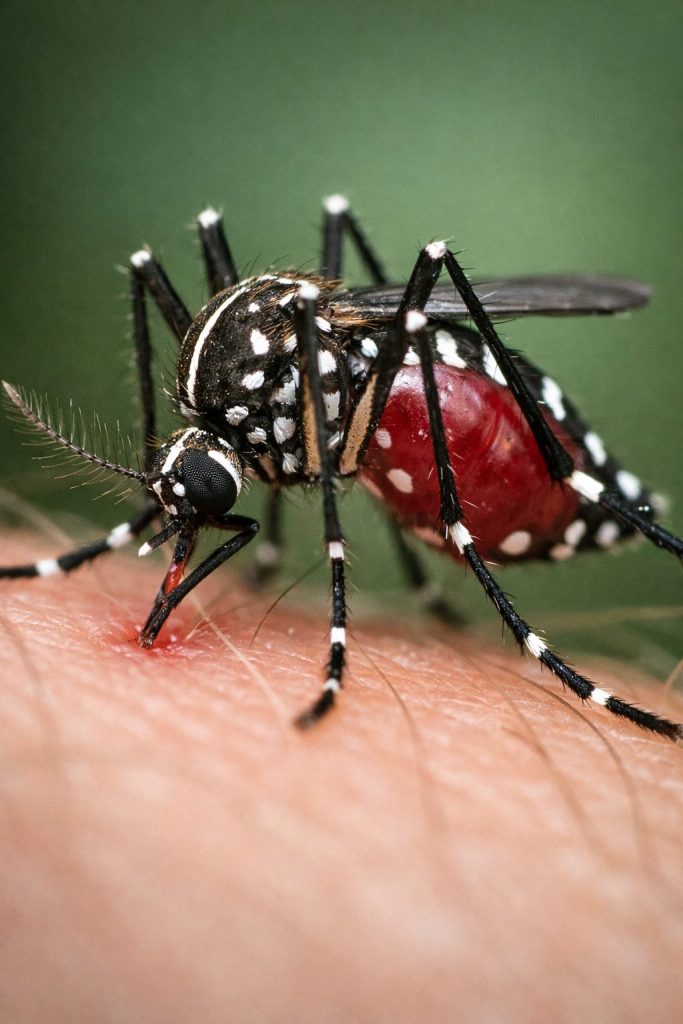
“Considering their impact, you might expect mosquitoes to get more attention than they do,” Gates wrote on his blog. “Sharks kill fewer than a dozen people every year and in the United States they get a week dedicated to them on television every year. Mosquitoes kill 50,000 times as many people, but if there’s a TV channel that features Mosquito Week, I haven’t heard about it.”
That observation is not debatable. Even in the Philippines, where279 species, subspecies and varieties of mosquitoes can be found, mosquitoes are not given prominence except when there is a dengue outbreak or when never heard before diseases – like chikungunya fever and Zika virus – are reported. All three are spread through the bites of mosquitoes.
Now comes this enlightening report from the Diliman-based University of the Philippines. A recent study examined the diversity of viruses carried by mosquitoes and how land use changes may influence these patterns in the country.
“Mosquitoes such as Aedes aegypti and Aedes albopictus may carry more than just viruses that affect humans,” reports Eunice Jean C. Patron of the finding of the study which was published in Parasites & Vectors journal. “They also host insect-specific viruses that do not infect people, some of which may even inhibit the multiplication of disease-causing viruses.
“This implies that mosquitoes can serve as valuable tools for detecting both known and emerging viruses that may impact public health,” Patron adds.
Irish Coleen Asin, John Michael Egana, and Dr. Ma. Anita Bautista from the College of Science’s National Institute of Molecular Biology and Biotechnology (UPD-CS NIMBB), along with Dr. Richard Paul of Institut Pasteur, Université Paris Cité, gathered mosquitoes from three distinct locations in Los Baños, Laguna, each differing in topography and land use.
They employed viral metagenomics—a technique that detects all viruses present in a sample—to examine the virome within the mosquitoes.
The study uncovered that the mosquitoes harbored viruses from 12 separate taxon groups. The majority of these were insect-specific viruses (ISVs), which infect mosquitoes but do not affect humans. Both A. aegypti and A. albopictus were found to share most of the identified viruses.
The molecular biologists obtained mosquito samples from three barangays in Los Baños, Laguna: Bagong Silang, Lalakay, and Bayog. Bagong Silang serves as the upstream (mountain) site, situated at an elevation of 305–331 meters above sea level, featuring a rolling landscape. Lalakay represents the midstream site, noted for its rolling to slightly uneven terrain. Bayog, the lakeshore site, is characterized by a flat landscape.
“Based on the land cover maps, Bagong Silang retained its forest cover in the last 4 decades as of the study date. At the same time, both Lalakay and Bayog underwent conversion from agricultural to built-up areas during that period,” the researchers reported.
The research indicated that a greater variety of viruses were identified in regions impacted by human activities—such as urbanized areas or deforested land, including Barangays Lalakay and Bayog—when compared to the forested area of Bagong Silang.
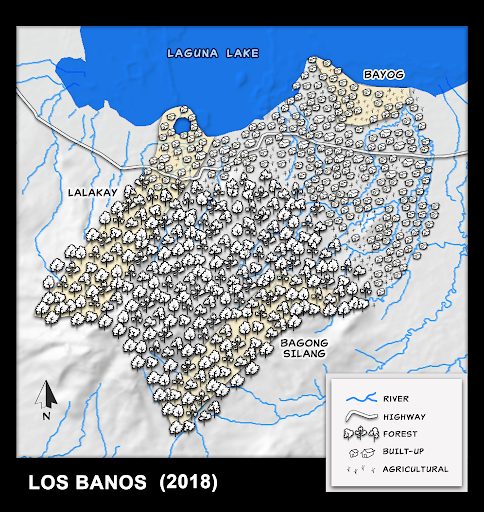
“These mosquitoes are usually disturbance-resilient and are more competent hosts for several viral isolates or strains,” the molecular biologists added.
Importantly, the research team did not find evidence of dengue, Zika, or chikungunya viruses in the collected samples. Interestingly, mosquitoes from two barangays were identified as carriers of the Cell Fusing Agent Virus (CFAV), which is believed to suppress the replication of dengue and Zika viruses.
“The potential risk of emerging and possibly unknown arboviral threats calls for strengthened surveillance programs and advanced research on arboviral diseases—those transmitted by insects like mosquitoes,” they said.
The researchers highlighted the importance of arbovirus surveillance programs for public health, as they provide real-time monitoring of both endemic and emerging viruses to assist in outbreak management. This monitoring can be improved through advanced sequencing methods, including virome sequencing.
The molecular biologists also pointed out that mosquitoes could be significant biological targets for surveillance programs focused on zoonotic and arboviral diseases.
“Mosquitoes act like biological syringes, feeding on multiple kinds of hosts,” the team pointed out. “Because of this, they can provide valuable insights into viral diversity across space, time, and species.”








 Facebook
 Twitter