
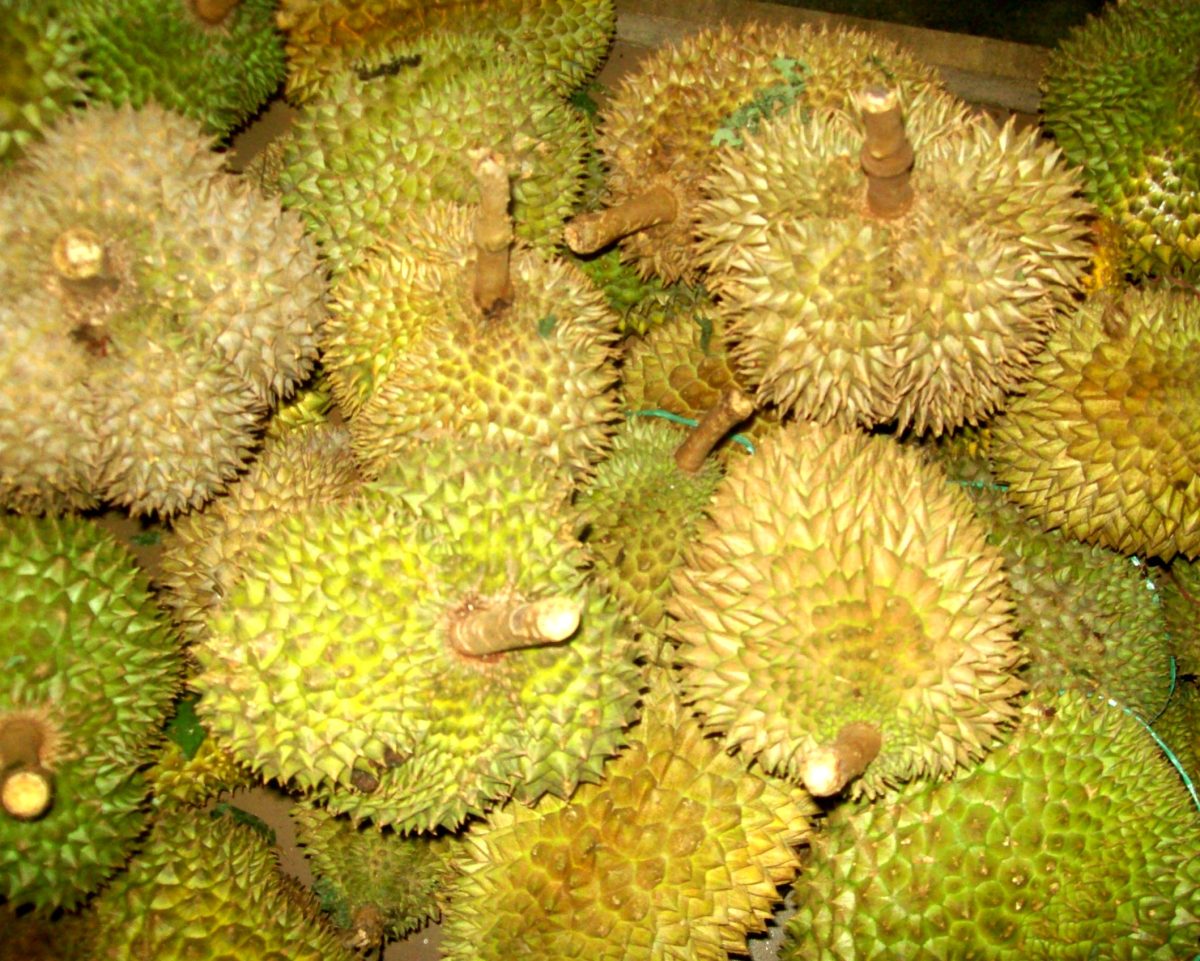
Durian season has returned, bringing back one of Southeast Asia’s most talked-about fruits. Loved for its rich, creamy taste yet criticized for its strong aroma, durian continues to spark debate among locals and visitors alike. In Davao City, the fruit’s distinctive scent is once again a familiar sign that harvest season is underway.
Durian, a fruit that is beloved by many yet often maligned by others, is once again in season. If you are in Davao City, you can detect its distinctive odor even from a considerable distance.
In his book Following the Equator, Mark Twain wrote about his durian experience in Southeast Asia through these words: “It was a strange fruit, and incomparably delicious to the taste, but not to the smell.”
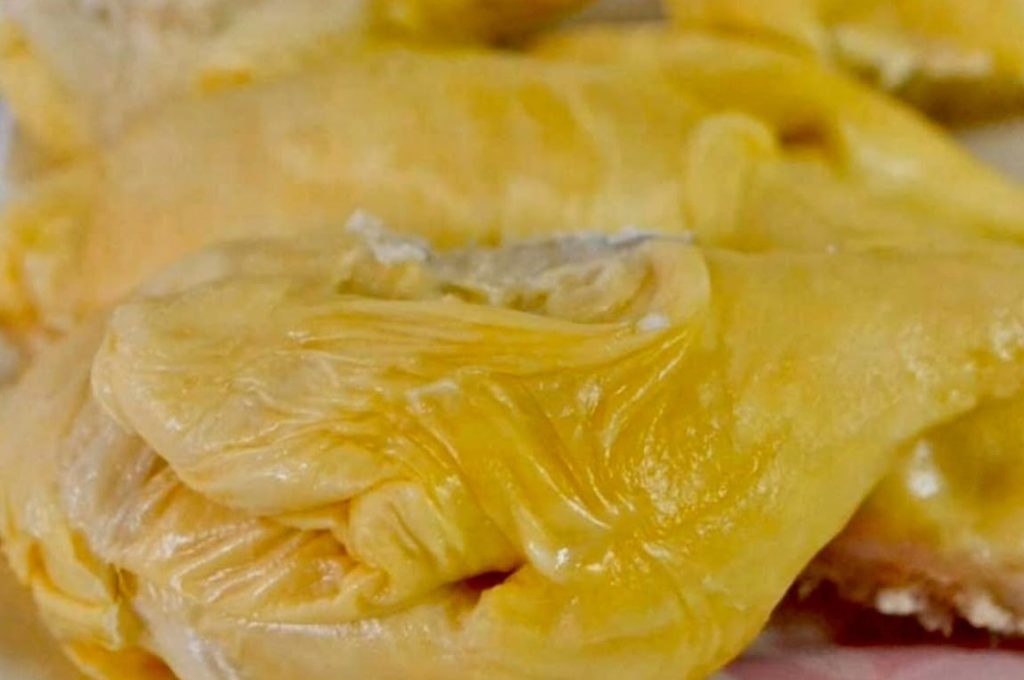
The American humorist further wrote: “We found many who had eaten the durian, and they all spoke of it with a sort of rapture. They said that if you could hold your nose until the fruit was in your mouth a sacred joy would suffuse you from head to foot that would make you oblivious to the smell of the rind, but that if your grip slipped and you caught the smell of the rind before the fruit was in your mouth, you would faint.”
British naturalist Alfred Russell Wallace had the same experience. After a visit with the Interior of Borneo in 1855, he observed the offensive smell of durian in the house; some persons did not even attempt to taste it. “This was also my own experience when I first tried to taste it in Malacca; but in Borneo, I found a ripe fruit on the ground, and eating it out-of-doors, I became a confirmed durian eater.”
Because of the durian’s “foul-smelling odor” that most airlines don’t allow the fruit on board. In Singapore, the Asian country with the most rigid policy and rules concerning the care for the environment, the durian is forbidden on subway-stations and trains.
Despite this, there is an increasing demand for durian in the export market. It is called an “exotic tropical fruit” in North America and Europe where customers offer premium prices. Durian is also highly regarded in other Asian countries.
By weight, the edible portion (or aril as experts call it) is only 26% on the average. Sixty percent of it is the rind while the remaining 14% are seeds.
According to the Food and Nutrition Research Institute, the fruit is rich in vitamin C, phosphorus, calcium, and iron. It also contains fair amounts of thiamin, riboflavin, niacin. It is also a good source of carbohydrates, proteins and fats.
For the uninformed, the aroma (or odor if you will) of the fruit comes largely from thiols or thioethers, esters and sulphides.
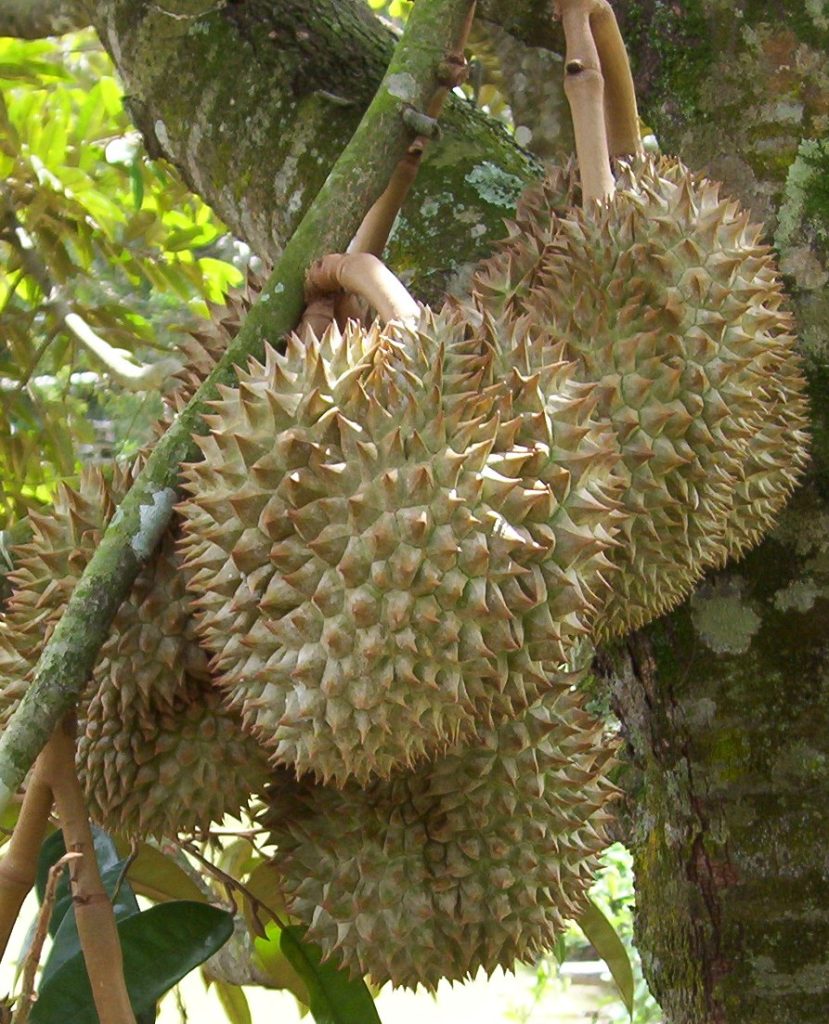
The word “durian” comes from the Indonesian “duri” (thorn) and is botanically known as Durio zibethinus. It is native to Indonesia and Malaysia. It also grows in other Asian countries like Brunei, Cambodia, Laos, the Philippines, Thailand, and Vietnam.
Durian is eaten right after opening the fruit or as a frozen commodity. Like most exotic fruits, durian is touted to have aphrodisiac powers. In Thailand, durian is eaten as a side dish with glutinous rice or it is made into a paste (often packed like long sausages). In Sabah, Malaysia, red durian is fried with onions and chili and served as a side dish.
The Laguna-based Philippine Council for Agriculture, Aquatic and Natural Resources Research and Development (PCAARRD_ says durian can be made into jam, candy, tart, and “polvoron.” Unripe durian can be cooked like a vegetable. Half-ripe or unripe durian are also utilized in making chips and soups.
Durian can be transformed into a delightful ice cream or a refreshing milkshake. However, as an ingredient in a blender, this king of fruits tends to overshadow its lesser counterparts. The unique flavor of durian often prevails, and in certain instances, combining it with other fruits can enhance the garlicky notes of durian in an undesirable manner.
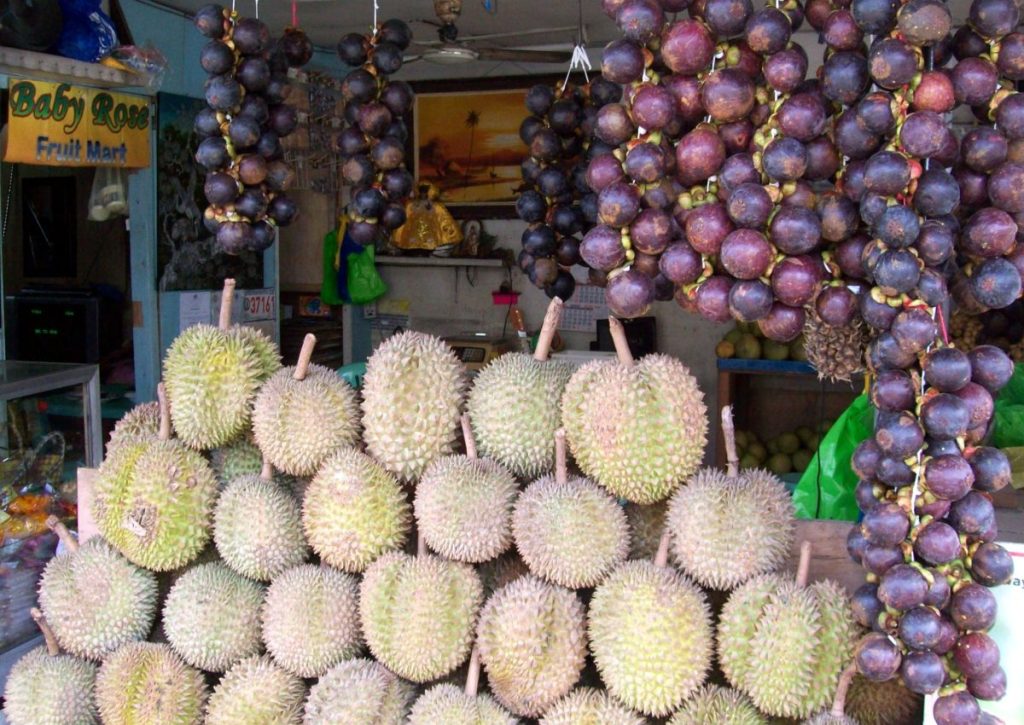
A widely recognized flavor that pairs well with durian is coffee. The combination of coffee and durian is both enjoyable and invigorating – furthermore, a gourmet coffee infused with durian would present a distinctive delicacy. If you happen to be in Davao City, you can find venues that offer coffee blended with durian fruit.
For those who are keen to try durian for the first time, it is crucial to choose the highest quality fruit. But how can you ascertain the authenticity of the durian you intend to buy? Here is a tip from the experts: “When selecting a durian, inspect the stem; if it appears dry, the fruit is likely aged. If the stem has been cut, shake the fruit and listen for the seeds rattling inside; if you hear them, the pulp may have lost some moisture and may not be as flavorful.”




 Facebook
 Twitter