

Zinc-rich rice is showing promising results after researchers found that its yields have nearly doubled while providing higher levels of the essential nutrient. Developed to help combat zinc deficiency in rice-dependent populations, the fortified rice variety offers improved nutrition without compromising agricultural productivity.
You may have previously encountered golden rice before. This rice variety is engineered genetically to produce beta-carotene, which is a precursor to vitamin A, in its edible parts.
Commonly referred to as Malusog rice, golden rice aims to serve as a fortified food source in regions where dietary vitamin A is lacking. The genetically modified rice reportedly can yield up to 23 times more beta-carotene than the original version.
Unknowingly, there exists another type of fortified rice that many Filipinos may not be familiar with. This is known as zinc-rich rice, which can fulfill up to 60% of the daily zinc requirements and help mitigate zinc deficiency in nations with high rice consumption.
Although rice is not particularly abundant in zinc, it does contain some amount. For instance, brown rice offers around 1.2 milligrams of zinc for every 100 grams of cooked rice. Zinc is an essential trace element commonly found in red meat, poultry, and fish.
“Zinc is known to play a critical role in biological processes including cell growth, differentiation and metabolism,” the Geneva-based World Health Organization (WHO) states.
A study cited by the United Nations health agency showed that zinc supplementation “may have a greater impact on growth in stunted children compared to non-stunted children.”
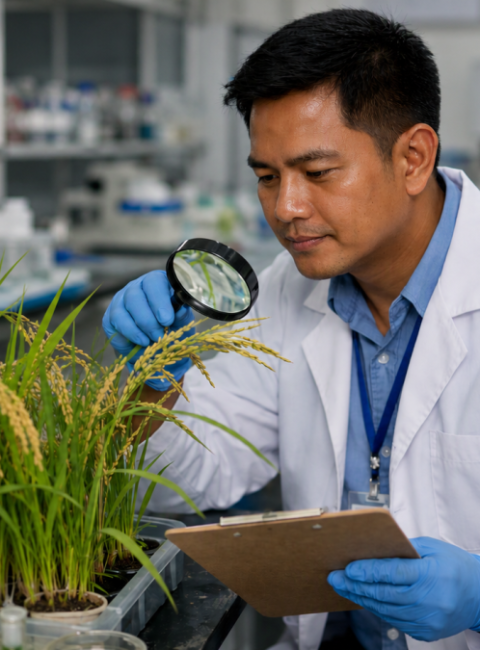
Zinc-rich rice was created through a global collaborative initiative spearheaded by the International Rice Research Institute (IRRI) and HarvestPlus, in conjunction with various national agricultural organizations.
In the Philippines, the Department of Agriculture-Philippine Rice Research Institute (DA-PhilRice) has developed and introduced local high-zinc varieties such as NSIC Rc 460 and NSIC Rc 648.
Here is some positive news. A high-zinc rice variety grown in Ilocos Norte has yielded nearly double the national average, aiding the country in its search for alternatives to combat child stunting and micronutrient deficiencies.
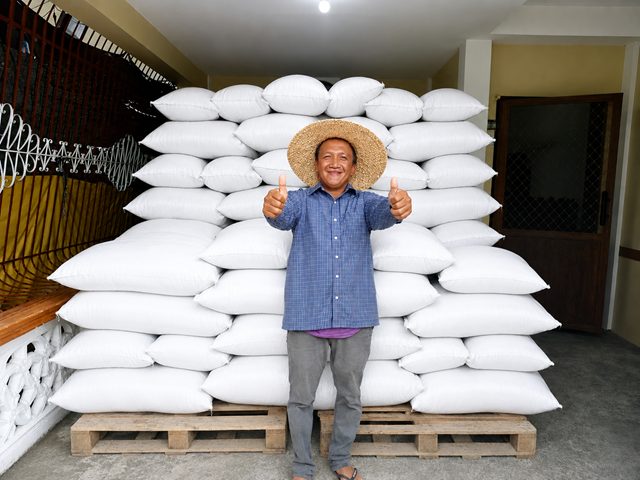
In barangay Sta. Cecilia, San Nicolas, farmer Ricky A. de Guzman achieved a harvest of 8.14 tons per hectare from NSIC Rc 648. This yield surpasses the national average palay yield of 4.07 tons across all ecosystems for the first quarter of this year. Furthermore, it exceeds the reported yield potential of the variety, which ranges from 4 to 7.4 tons per hectare under optimal growing conditions.
According to a report from the Food and Nutrition Research Institute (FNRI), stunting among Filipino children continues to be a significant national nutrition issue. The FNRI’s 2025 Updating Survey indicated that the rate of stunting in children under five rose to 25.3% in 2025, up from 23.6% in 2023.
De Guzman, who is a first-time grower of high-zinc rice and an experienced seed cultivator, volunteered to plant this variety after discovering its nutritional advantages. Typically, he harvests between 7 and 10 tons per hectare from various rice types.
“I was surprised that this variety can produce high yield. With proper irrigation, fertilization, and crop management, it can also compete with the high-yielding inbred varieties that many farmers prefer,” he said.
NSIC Rc 648 reaches maturity in 122 days and thrives optimally in irrigated lowland regions throughout both dry and wet seasons.
Anielyn Y. Alibuyog, the focal person for the Healthier Rice Program at PhilRice Batac, stated that the findings indicate farmers can cultivate rice with enhanced nutritional benefits while maintaining productivity levels.
“This variety shows that farmers do not have to sacrifice yield to produce healthier rice. It combines nutritional value with competitive productivity, making it a promising option for farmers and consumers,” Alibuyog said.
However, Alibuyog emphasized that the zinc-enriched rice variety should not be viewed as a standalone remedy for stunting; rather, it can complement nutritional initiatives by contributing to increased zinc consumption through the staple food of Filipinos.








 Facebook
 Twitter