
Filipino weather superstitions have long reflected the country’s rich folklore and close relationship with nature. From beliefs about rain falling while the sun shines to traditional warnings linked to thunderstorms and animal behavior, these customs have been passed down through generations as part of Philippine culture.
Filipinos possess a variety of traditional beliefs regarding the weather, which blend folklore, local myths, and observations of nature, with many ancient customs being fundamentally based on practical safety measures.
It is commonly believed that when rain falls while the sun is shining, mythical horse-headed beings known as tikbalangs are getting married. Some traditional customs advise against wearing red during thunderstorms, as this color is thought to attract lightning, although meteorological authorities clarify that color does not influence lightning strikes.
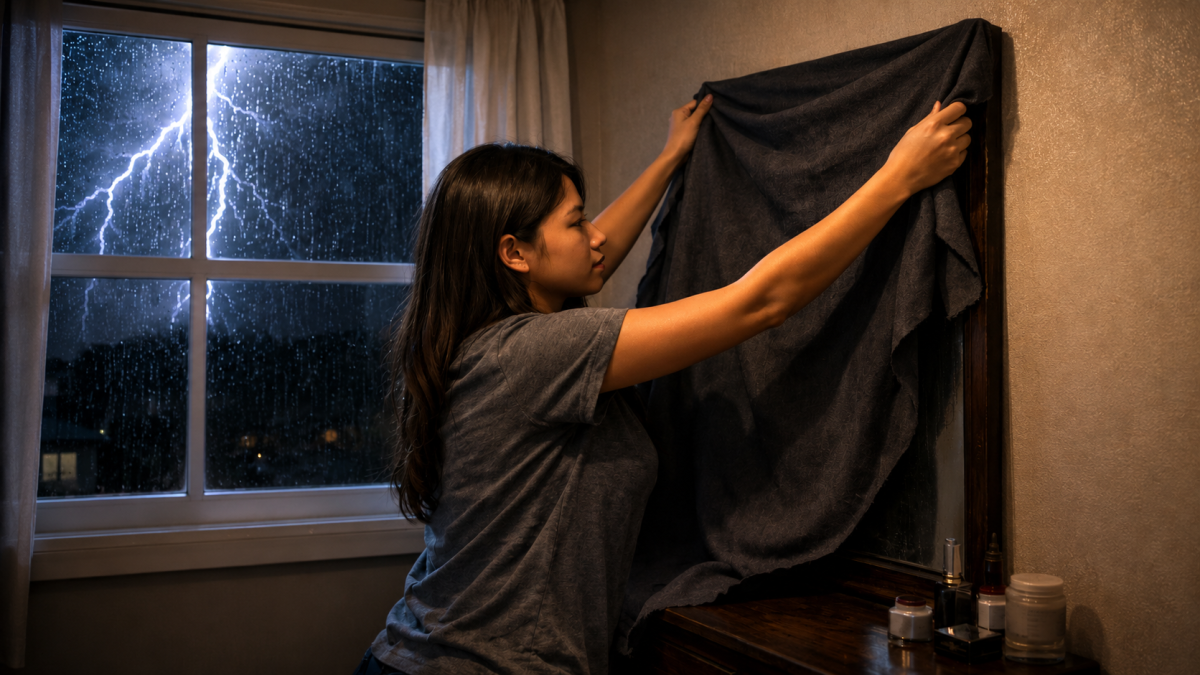
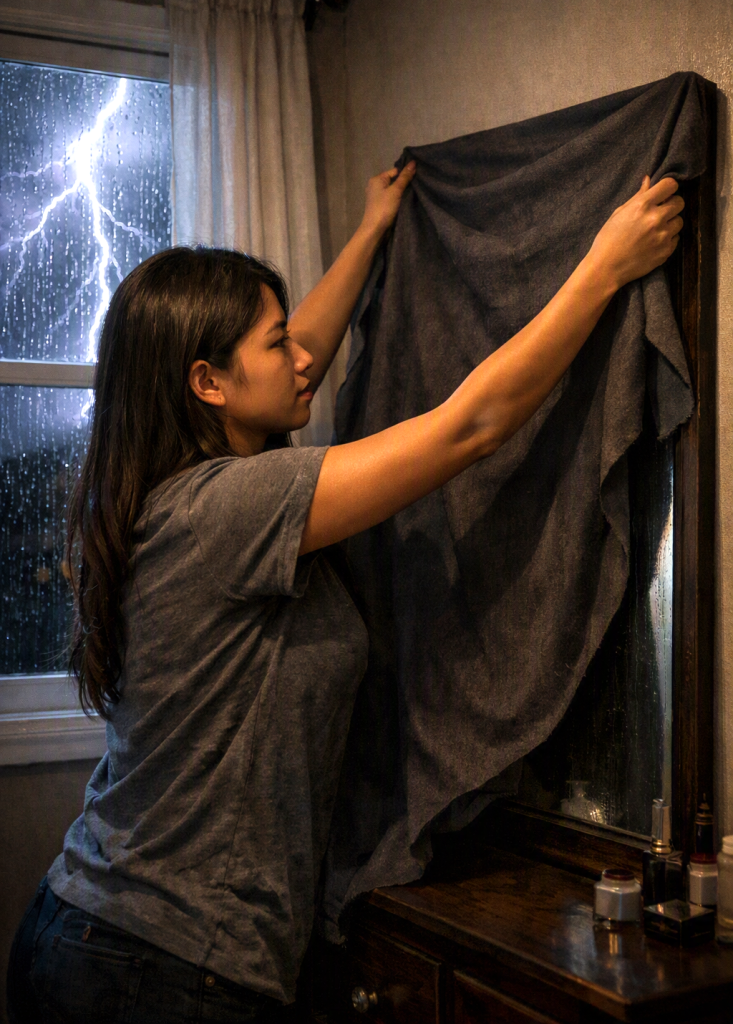
During severe storms or lightning, mirrors are frequently draped with cloth as it is believed that they may attract or reflect sudden flashes of lightning or negative energies. To “drive away” or protect against lightning strikes, families sometimes place sharp metal items such as knives or scissors outside their windows or doors.
Unusual behavior exhibited by domestic animals, ants relocating to elevated areas, or sudden loud noises from insects are traditionally regarded as indicators of an impending heavy rainfall or typhoon. A reddish or hazy halo surrounding the moon is often interpreted by elders as a sign that a powerful storm or heavy rain is on the horizon.
These beliefs illustrate the rich cultural heritage of the Philippines and the deep connection between weather phenomena and local superstitions.
A superstition refers to a belief or practice that lacks a foundation in reason, science, or factual evidence. It often encompasses elements of magic, fate, or the notion that certain unrelated actions can influence good or bad fortune. Frequently, these beliefs are rooted in ancient customs, fears, or traditions that have been transmitted through generations.
The Romans employed the term superstitio in a negative context to characterize unauthorized, excessive, or fanatical religious practices that were outside the bounds of the official state religion. Early Romans distinguished it from religio, which they regarded as a proper and measured respect for the deities.
Christian authors adopted this term to refer to pagan rituals, magic, divination, and idolatry that persisted or conflicted with orthodox Christian doctrines.
The term made its way into the English language in the early 1300s through Old French (supersticion), initially preserving the connotation of an unorthodox or excessive religious belief.
By the 16th and 17th centuries, the meaning of the term evolved beyond strictly theological discussions. It began to encompass any belief in luck, omens, magic, or unseen causal relationships that lacked rational or scientific justification.
In the Philippines, various weather-related myths and beliefs exist across different regions of the country. Although some of these may lack scientific validity, experts suggest that earlier generations had reasons for establishing these superstitions. But what does scientific research indicate about this?
Have your parents or grandparents ever advised against bathing during a thunderstorm? The older generation warned that doing so could result in being struck by lightning. This superstition is one of the most prevalent weather-related beliefs in the country. But since lightning strikes within a home are exceedingly uncommon, many Filipinos tend to disregard this safety caution.
“This actually has a scientific basis. Why? Because your plumbing – especially when you are bathing and are wet – is connected to the water supply. If lightning strikes your house and the electrical current travels directly into your plumbing system, you’re in trouble. You could still get struck by lightning,” explained Lean Michael A. Malabanan, a weather specialist at the Department of Science and Technology-Philippine Atmospheric, Geophysical and Astronomical Services Administration (DOST-PAGASA).
Experts indicate that when lightning strikes or is in proximity to a building, it tends to follow the path of least resistance to reach the ground. Metal pipes, along with the water they contain, serve as highly effective conduits for electrical currents.
Malabanan also noted that our old folks are correct in advising the disconnection of electronic devices such as televisions and refrigerators during thunderstorms.
“Parents were actually right back then (about the risk of the TV getting damaged—or your appliances getting ruined). There is a valid basis for that. You see, if lightning strikes the house, the electrical surge could enter the appliances and destroy them. That would be a waste,” Malabanan pointed out.
Consequently, while these beliefs may be rooted in superstition, there are indeed weather-related customs that can foster and encourage safe practices. Thus, grandparents were somewhat accurate – in a way.
Nevertheless, it is crucial to recognize that some beliefs require correction and proper clarification for the public, as they may affect people’s responses to potential hazards. For example, in many regions, Filipinos hold the belief that placing sharp objects like knives and scissors outside the home can repel rain and lightning. However, experts warn that this practice may pose greater risks.
“It is also not true that metal objects—such as knives, scissors, and the like—repel lightning. In fact, they are actually more dangerous. What you can do is install a lightning rod to protect your electronics and your home’s electrical system. That way, instead of the lightning striking your appliances, it will be directed to the lightning rod—and from there, it will be channeled into the ground,” Malabanan said.
A lightning rod is a metallic pole situated atop a building and linked to the ground. Its purpose is to safeguard the structure. When lightning strikes, the electrical current is directed safely through the lightning rod and into the earth, thereby preventing damage to the building.
Some people hold the belief that wearing jewelry does not attract lightning, suggesting it is safe to wear during a thunderstorm. However, experts clarify that it may exacerbate the severity of injuries in the event of a lightning strike.
“The distressing aspect of wearing jewelry in a thunderstorm is that if lightning strikes, the metal can become heated. For example, gold or silver—being metallic substances—can reach extremely high temperatures. Thus, in addition to the electric shock, one may also experience burns,” Malabanan stated.
Furthermore, he noted that the most prevalent yet scientifically unfounded belief is that using mobile phones poses a danger during a thunderstorm. Many of us have likely heard this warning from our parents in the past or even continue to hear it today.
“A cell phone does not emit a signal strong enough to attract lightning,” Malabanan said. “However, keep in mind that if a device is plugged into a wall outlet—whether it’s a TV, an appliance, or anything else—you should unplug it during a thunderstorm. This is because if lightning strikes your house, your appliances could be affected or damaged.”
Indeed, whether or not these beliefs are true, it is more important for the public to take necessary precautions and stay indoors during thunderstorms than to simply follow superstitions, according to experts.











 Facebook
 Twitter