
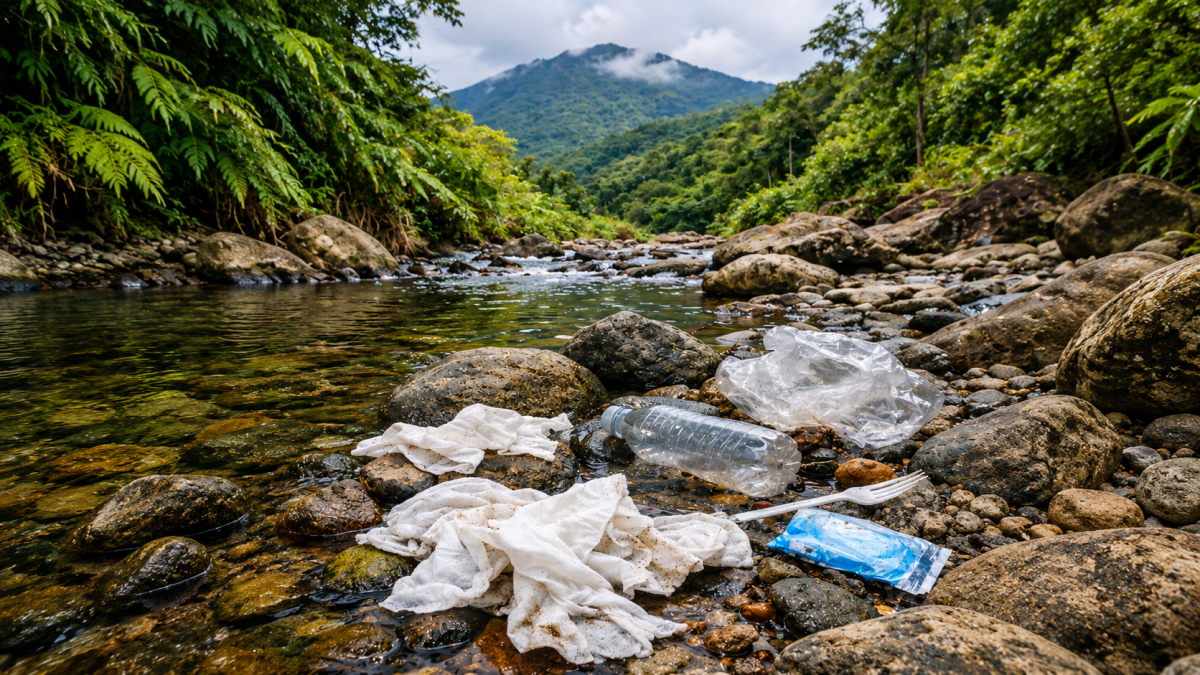
Mount Hamiguitan wet wipes ban is now being enforced as part of a permanent conservation rule prohibiting the entry, use, and disposal of wet wipes and single-use plastic items inside the Mount Hamiguitan Range Wildlife Sanctuary in Davao Oriental. The measure applies to trekkers, researchers, tourists, and other visitors entering the protected area.
A wet wipe, commonly referred to as a wet towel, wet one, moist towelette, disposable wipe, disinfecting wipe, or a baby wipe in certain contexts, is a small to medium-sized piece of moistened plastic or cloth. It is available either folded and individually wrapped for ease of use or, in the case of dispensers, as a large roll from which individual wipes can be detached.
Wet wipes serve various cleaning functions, including personal hygiene and household cleaning. Each type is distinct based on the chemicals incorporated, and it is important to note that medical or office cleaning wipes are not designed for skin hygiene.
Single-use plastics refer to plastic products intended for one-time use before being discarded, typically within a matter of minutes. This category includes items such as bags, bottles, straws, and packaging.
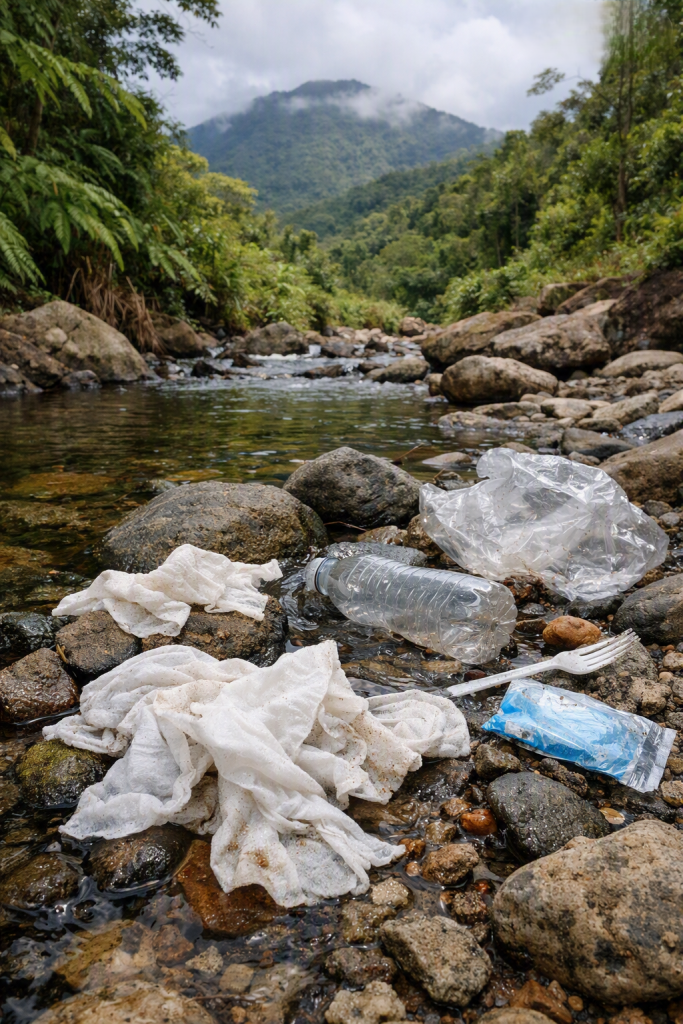
If you are considering a visit to Mount Hamiguitan, please be aware that wet wipes and single-use plastics are not allowed inside Mindanao’s first and only heritage site.
The regional office of the Department of Environment and Natural Resources (DENR 11) has declared a permanent prohibition on the entry, use, and disposal of wet wipes and single-use plastic items within the Mount Hamiguitan Range Wildlife Sanctuary (MHRWS).
According to Edge Davao news report, the prohibition is being enforced in accordance with MHRWS-Protected Area Management Board (PAMB) Resolution No. 2026-20, which applies to trekkers, researchers, tourists, and all other visitors entering the protected area.
As per DENR 11 advisory, this policy was initiated due to ongoing findings from the Protected Area Management Office’s impact monitoring of ecotourism activities in Mount Hamiguitan, which is carried out every semester.
As per the guidelines set forth by DENR 11, the new policy mandates that all trekkers, researchers, and visitors participate in a compulsory pre-climb orientation, during which the complete prohibition will be detailed prior to their entry into the sanctuary.
DENR 11 has indicated that officials will implement rigorous baggage checks before allowing entry to ensure that no prohibited items are brought into the protected area.
The website newecocare.com indicates that the majority of wet wipes, even those marketed as “flushable,” are composed of synthetic materials such as polyester or polypropylene, which do not decompose rapidly in water. In contrast to toilet paper, they may take several hours or even days to break down.
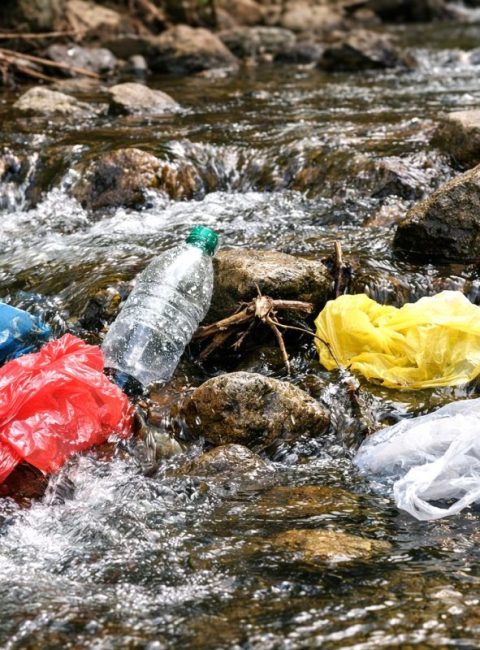
Single-use plastics significantly contribute to plastic pollution. They do not decompose naturally but instead fragment into microplastics, which contaminate soil, waterways, and oceans, thereby posing threats to both wildlife and human health.
According to Greenpeace International, only a minimal percentage of plastic waste is recycled—around 9%, while the rest is typically incinerated or discarded, exacerbating greenhouse gas emissions and environmental harm.
Mount Hamiguitan is a notable tourist destination in the Davao Region, situated in Davao Oriental, Philippines. It rises to an elevation of 1,620 meters (5,315 feet). The mountain and its surrounding areas boast one of the most varied wildlife populations in the country.
The region is home to various wildlife species, including Philippine eagles and multiple types of Nepenthes. Notably, some of these, like Nepenthes peltata and Nepenthes micramphora, are endemic to this locality.
The mountain encompasses a protected forest area of around 2,000 hectares. This forest is distinguished by its unique pygmy forest, featuring century-old trees growing in ultramafic soil, and is home to numerous endangered, endemic, and rare species of both flora and fauna.
In 2004, Mount Hamiguitan was designated as a wildlife sanctuary through the Mount Hamiguitan Law, which was enacted by then-President Gloria Macapagal-Arroyo, following the initiative of Senator Loren Legarda.
In June 2014, the Mount Hamiguitan Range Wildlife Sanctuary was inscribed on the UNESCO World Heritage Sites list. Before this recognition, the site had already been designated as an ASEAN Heritage Park.


 Facebook
 Twitter