
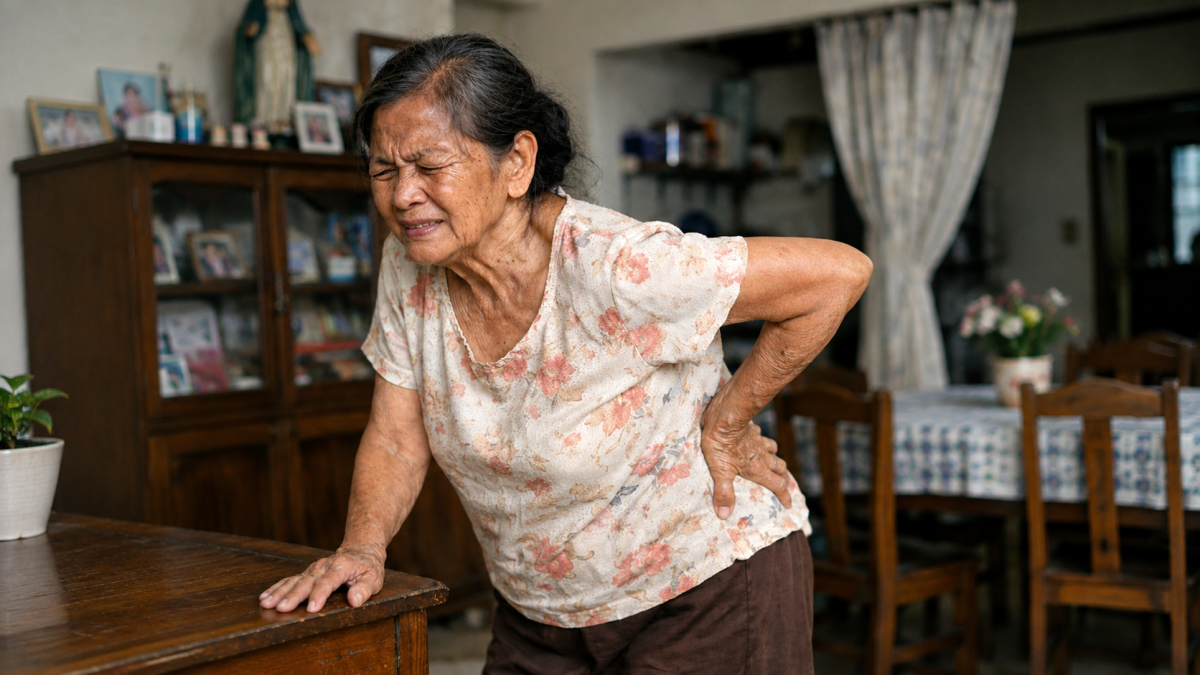
Osteoporosis therapy goes beyond calcium supplementation, with experts emphasizing the important role of protein in maintaining bone strength and reducing fracture risk. Health experts and research institutions continue to encourage Filipinos to improve nutrition and bone health awareness as osteoporosis and calcium deficiency remain significant public health concerns in the Philippines.
Many Filipinos believe that osteoporosis is not prevalent. However, the Food and Nutrition Research Institute (FNRI), which operates under the Department of Science and Technology, indicates otherwise.
A study conducted by FNRI revealed that 97.2% of adults and 95.5% of the elderly population experience calcium deficiency, which is a crucial factor in the deterioration of bone health and the onset of osteoporosis.
Furthermore, a recent survey indicated that 6 out of 10 Filipino adults are at risk for osteoporosis or osteopenia, underscoring a significant public health issue. This situation emphasizes the critical need for heightened awareness and preventive strategies concerning bone health in the Philippines.

Osteoporosis leads to a weakening and brittleness of bones — to such an extent that a fall or even minor stresses like bending over or coughing can result in a fracture, the Mayo Clinic explains. Breaks associated with osteoporosis typically happen in the hip, wrist, or spine.
Osteoporosis occurs approximately four times more frequently in women than in men. In the United States, where extensive research has been conducted on this topic, around 19.6% of women over the age of 60 are affected by osteoporosis, in contrast to only 4.4% of men.
According to Science Insights, the primary factor contributing to this disparity is estrogen. Menopause serves as a critical juncture. When estrogen levels decline significantly, usually between the ages of 45 and 55, the equilibrium between bone formation and bone resorption shifts markedly in favor of resorption.
The Endocrine Society reports that women can lose up to 20% of their total bone mass during the years surrounding menopause. This represents a considerable loss of structural integrity within a relatively brief period.
“This rapid phase of loss explains why vertebral fractures start rising sharply in women around age 55, a full decade earlier than the same spike occurs in men (around age 65),” Science Insights pointed out.
“For hip fractures, the pattern is similar: incidence climbs steeply at 65 in women versus 75 in men. Women consistently develop fractures five to ten years earlier than men do,” Science Insights added.
In women who consume adequate calcium, the importance of protein is greater for the benefits of osteoporosis treatment.
A secondary analysis of the Swiss GERICO cohort examined how calcium and protein intake influence bone changes among older women receiving osteoporosis treatments.
The study followed 586 women with a median age of 67 for 3.5 years. Participants included those on menopausal hormone therapy, antiresorptive drugs, or no osteoporosis medication.
Dietary calcium and protein intake were measured through a validated food‑frequency questionnaire, and supplement use was tracked at baseline and follow‑up. Bone mineral density (BMD), hip strength, and structural parameters were assessed annually using DEXA and finite element analysis.
DXA scan, commonly referred to as a DEXA scan, is a painless and noninvasive procedure utilized to assess bone mineral density (BMD). This test is instrumental in diagnosing osteoporosis and evaluating fracture risk by analyzing bone strength. The scan employs low-dose X-rays to ascertain the density and strength of your bones, and it can additionally offer insights into body composition.
Most women had adequate calcium intake, with a median of 1503 mg/day; 71% met recommended levels, and many used calcium or vitamin D supplements. Both hormone therapy and antiresorptive drugs significantly reduced annual hip BMD loss compared with no treatment, and antiresorptive therapy also slowed hip strength decline.
However, total calcium intake and calcium supplementation did not meaningfully influence changes in hip BMD or strength. Among women consuming less than 800 mg/day of calcium, osteoporosis medications offered no clear benefit unless calcium supplements were added.
Protein intake emerged as a more critical factor. Women consuming less than 0.8 g/kg/day experienced weaker bone‑sparing effects from antiresorptive therapy, particularly in trabecular BMD and hip strength.
The authors concluded that routine calcium supplementation is unnecessary for women already meeting calcium requirements and emphasized evaluating dietary calcium before prescribing supplements. The study was led by Maria Papageorgiou and published in Osteoporosis International on July 17, 2026.










 Facebook
 Twitter