
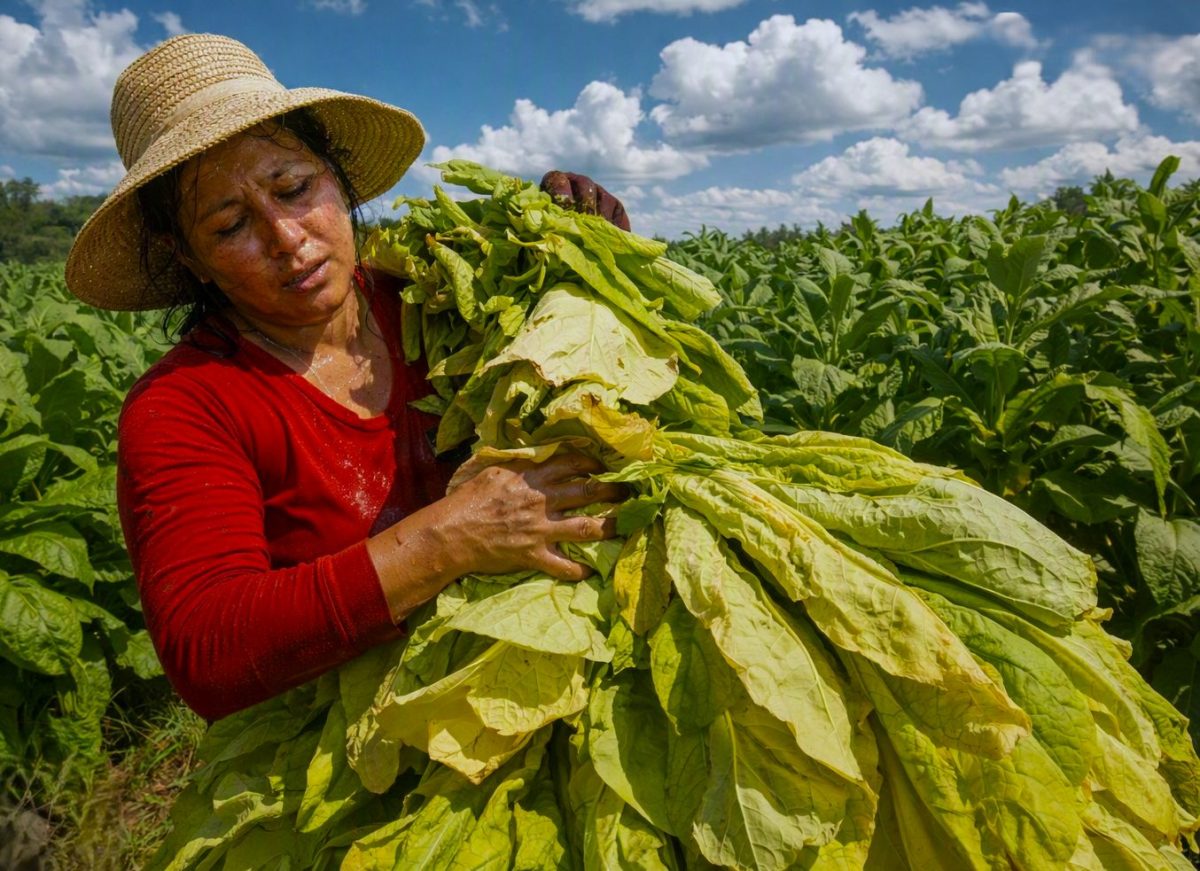
Tobacco uses beyond smoking extend far beyond its traditional role in cigarette production. While many people associate tobacco solely with smoking, the crop also has practical applications in agriculture, waste recycling, and eco-friendly pest control, making it a valuable resource with untapped potential.
When you ask someone what tobacco is for, they always assume it is solely for smoking. But probing deeper, they are surprised to discover that tobacco has more uses than they could imagine.
In every crop production, waste is an inevitable occurrence. Tobacco is not an exception. Following the harvesting phase, the most common types of waste include plant stalks, leaves that are not suitable for processing, and soil contaminants originating from tobacco farms. The manufacturing waste includes tobacco dust, scraps, packaging materials, and defective products. All of these wastes have the potential to be repurposed into valuable resources.
Waste and dust from the tobacco plant, for instance, can be utilized as effective, environmentally friendly organic pesticides, thanks to their natural nicotine content. The National Tobacco Administration (NTA) is actively advocating for these botanical derivatives as cost-effective, biodegradable alternatives to expensive synthetic chemicals.
Farmers recognized the golden apple snail as one of the most damaging pests in rice production. These snails consume young rice seedlings with great intensity, often leading to the destruction of entire fields within a matter of days.
The solution from NTA: Instead of applying molluscicide, it recommends the application of tobacco scraps at approximately 200 kilograms per hectare to effectively manage the pests in rice paddies.
This simply shows that tobacco can be an effective natural pesticide. For centuries, gardeners in industrialized countries have utilized homemade mixtures of tobacco and water as a natural means to eliminate insect pests.
A “green” pesticide industry centered around tobacco could generate additional income for tobacco farmers while also providing a new eco-friendly pest-control solution.
In the United States, scientists conducting research on this matter have identified a promising method for transforming tobacco leaves into pesticides through pyrolysis. The process entails heating tobacco leaves to approximately 900 degrees Fahrenheit in a vacuum, resulting in an unrefined product known as bio-oil.
The American Chemical Society (ACS) disclosed that researchers evaluated tobacco bio-oil against a diverse range of insect pests, which included 11 different fungi, four types of bacteria, and the Colorado potato beetle, a significant agricultural pest that is becoming increasingly resistant to existing insecticides.
“The oil killed all of the beetles and blocked the growth of two types of bacteria and one fungus. Even after removal of the nicotine, the oil remained a very effective pesticide. Its ability of the oil to block some but not all of the microorganisms suggests that tobacco bio-oil may have additional value as a more selective pesticide than those currently in use,” ACS reported.
In the Philippines, the NTA has developed a tobacco aqueous spray with a 1:10 ratio of tobacco to water, as well as tobacco dust, both of which have proven effective as pesticides. When applied at 10-day intervals, the tobacco spray can decrease the populations of beanfly and bean aphids by 89% and 97%, respectively.
The tobacco dust, on the other hand, can achieve an 80 to 90% mortality rate in tomato cutworm and beanfly. In addition, leafhoppers, thrips, and corn earthworm can be managed using either the tobacco spray or dust.
In Ilocos Sur, some local farmers have reported that its application in vegetable farming has led to improved crop yields and significant reductions in production costs.
In addition, tobacco dust can act as a soil conditioner. Experts say that when combined with organic compost, it can serve as an organic fertilizer, providing essential nutrients like nitrogen, phosphorus, and potassium that are crucial for plant growth.
The organic tobacco pesticide is also utilized within the aquaculture sector. Processed tobacco dust, which contains nicotine, serves as a natural toxin that effectively eliminates predatory snails and other undesirable pests in milkfish (bangus) and mixed freshwater/brackishwater ponds prior to the introduction of fingerlings.
According to the NTA, a significant advantage of tobacco dust is its ability to substitute hazardous, highly toxic, or prohibited inorganic chemical sterilizers (such as those based on cyanide), thereby reducing environmental water pollution and decreasing fish mortality rates from 20% to 5%.
When incorporated into the pond soil through plowing and degradation, organic tobacco waste acts as a fertilizer that encourages the vigorous growth of lablab (microscopic benthic algae), which provides vital natural nutrition for the cultured fish.
Tobacco stalks and midribs have been demonstrated to be highly effective organic waste materials for mushroom cultivation, particularly as excellent substrates or spawn-production media for straw mushrooms (Volvariella volvacea) and oyster mushrooms (Pleurotus species). “This technology is already commercialized,” the NTA reports.
Tobacco serves not only as a valuable source of pesticides but also as a potential source of food and animal feed. The NTA has reported that high-quality protein can be extracted from tobacco leaves for human consumption.
The tobacco seeds, which are devoid of nicotine and contain 25% protein and 35% oil, are excellent sources of both edible and industrial oils. The seed cake produced after oil extraction is a protein-rich feed suitable for cattle and horses.
According to the NTA, they have successfully created pastry products such as polvoron, pastillas, cookies, doughnuts, and pancakes by substituting ground tobacco seeds for up to 30% of the flour needed. Tobacco seeds can also replace sesame seeds or peanuts in brittle candies.
In terms of animal feed, tobacco seeds can replace 25% of the commercial feed ingredients used for broilers. Preliminary findings regarding tilapia suggest that up to 70% of their feed could be substituted with tobacco seeds.
Given that tobacco seeds have been found to be rich in biologically active compounds such as amino acids, proteins, and fatty acids, incorporating them into animal diets may enhance meat quality. In fact, a study conducted in Italy indicated that using tobacco seeds as an alternative source of protein and energy could reduce feeding expenses.
The seed cake, a byproduct of oil extraction, presents a novel alternative feed option with elevated protein and fat levels. The Italian study revealed that while seed cake decreased the average daily gain and cold carcass yield of lambs, it did not influence feed intake.
“The potentials of tobacco as a source of food and feeds are, therefore, very promising. If fully tapped, it will not extend the usefulness of tobacco but more importantly, will be a positive factor in easing the increasing demand for food,” the NTA states.
Meanwhile, the woody stalks and fibrous leaf midribs from tobacco are typically regarded as waste. However, NTA asserts that these materials can be transformed into handmade paper and various paper products. They are developing these innovative, eco-friendly materials in collaboration with the Duntog Foundation.
The fibrous leaf midribs and stalks are said to be abundant in natural cellulose fibers. These waste materials undergo a cleaning, chopping, and cooking process with a mild alkali (such as washing soda) to decompose lignin and soften the fibers into a manageable mass. The treated fibers are then mashed or blended into a pulp, combined with water, and shaped using a mold and deckle to create distinctive, textured sheets of handmade paper.
Tobacco has also made its way into the field of medicine. The plant and its chemical components have been utilized historically, have modern pharmaceutical applications, and are currently the subject of active research into new treatments.
The Conversation reported that numerous clinical trials are in progress, investigating tobacco-derived immunotherapies for diseases such as human immunodeficiency virus (HIV) and Ebola virus disease.
In the United States, one treatment has already been granted emergency use authorization for healthcare workers returning during the 2014 Ebola virus outbreak. These diseases disproportionately impact low-income countries, where tobacco is primarily cultivated.
Tobacco is also being utilized to develop cancer immunotherapies. These cancer treatments, according to The Conversation report, enhance the body’s immune response to combat cancer cells, presenting fewer side effects compared to conventional chemotherapy. However, they are currently very costly, so this approach could potentially increase their accessibility.
Research has also been conducted on the potential therapeutic benefits of isolated compounds, such as nicotine and solanesol, which may support cognitive function or alleviate symptoms associated with neurodegenerative diseases like Alzheimer’s and Parkinson’s.
Cathy Moore, author of The Conversation report, noted: “An emerging field is engineering tobacco to have it produce the same medications we typically extract from these plants. Not only that, but we can also produce expensive spices like saffron, or flavors such as raspberries, at a fraction of the cost. Not even the sky is the limit for tobacco’s potential.”
Tobacco farming in the Philippines boasts a rich heritage and continues to be a vital agricultural endeavor, especially in areas such as Ilocos, where it serves as a primary source of income for numerous farmers.
The country mainly produces three varieties of tobacco: Virginia tobacco (predominantly cultivated in the Ilocos Region and the Cordillera Administrative Region), burley tobacco (found in several areas, including La Union, Pangasinan, and parts of Cagayan Valley), and native tobacco (grown in various provinces across Luzon, Visayas, and Mindanao, typically for local use).
Tobacco has primarily been grown for its leaves. The exceptionally high economic returns from these leaves have encouraged this practice, often overlooking the potential benefits of other parts of the plant. The future may appear uncertain, but as noted by former NTA Administrator Joaquin T. Ortega, “… the tobacco industry is beset with problems now, but with the development of other tobacco products, tobacco may still prove to be the crop of the future.”






 Facebook
 Twitter