

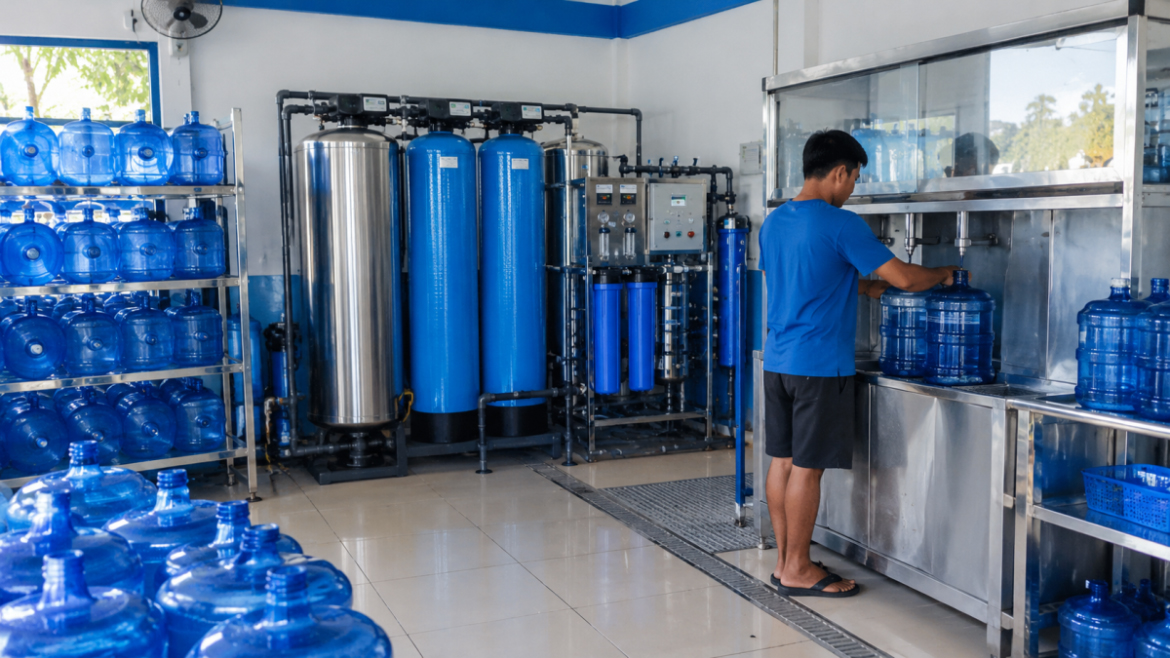
Navigating the Water Refilling Station Landscape in the Philippines
How to start a water refilling station in the Philippines is a business question that requires careful planning, sufficient startup capital, and compliance with local health and business regulations. Entrepreneurs must evaluate neighborhood demand, compare water filtration systems, estimate operating expenses, and secure the necessary permits before opening. Understanding these requirements can help prospective owners assess whether the business is suitable for their location, budget, and long-term goals.
Achieving high-value, original content that satisfies both search engine quality evaluators and everyday entrepreneurs involves addressing the real-world operational challenges unique to the Philippines. This comprehensive blueprint is designed to provide authoritative insights, practical financial calculations in Philippine Pesos (PHP), and exhaustive compliance guidelines. By focusing on technical accuracy, regulatory transparency, and local market nuances, this guide provides the depth required to stand out in search results and build a sustainable enterprise.
Market Viability and Consumer Behavior in Local Communities
Understanding why the water refilling station model endures requires examining municipal water infrastructure realities across the country. While municipal water districts and private concessionaires supply piped water to many urban households, this water is typically rated for general domestic use—such as washing, bathing, and cleaning—rather than direct consumption. The presence of aging distribution pipelines, secondary contamination risks, and hard water minerals drives millions of households to rely entirely on 5-gallon containers for daily hydration.
Entrepreneurs must evaluate consumer preferences within their specific target neighborhood. In the Philippines, consumers generally choose among three primary product categories:
- Purified Water: Processed primarily through Reverse Osmosis (RO) systems, removing dissolved solids, heavy metals, and microorganisms. This remains the budget-friendly standard for daily household use.
- Mineral Water: Enhanced with controlled amounts of essential minerals to improve taste and nutritional profile, appealing to health-conscious families.
- Alkaline Water: Filtered and ionized to achieve a higher pH balance, representing a premium product category that commands higher retail pricing per container.
Conducting a localized feasibility study within a 500-meter radius of your intended storefront is critical. Analyzing foot traffic, the density of subdivision townhouses or apartment complexes, and the pricing strategies of existing competitors prevents market oversaturation. Successful operators often differentiate themselves not by price wars, but by offering superior delivery reliability, pristine store aesthetics, and transparent water quality testing.
Technical Deep Dive: Selecting the Right Water Filtration Systems
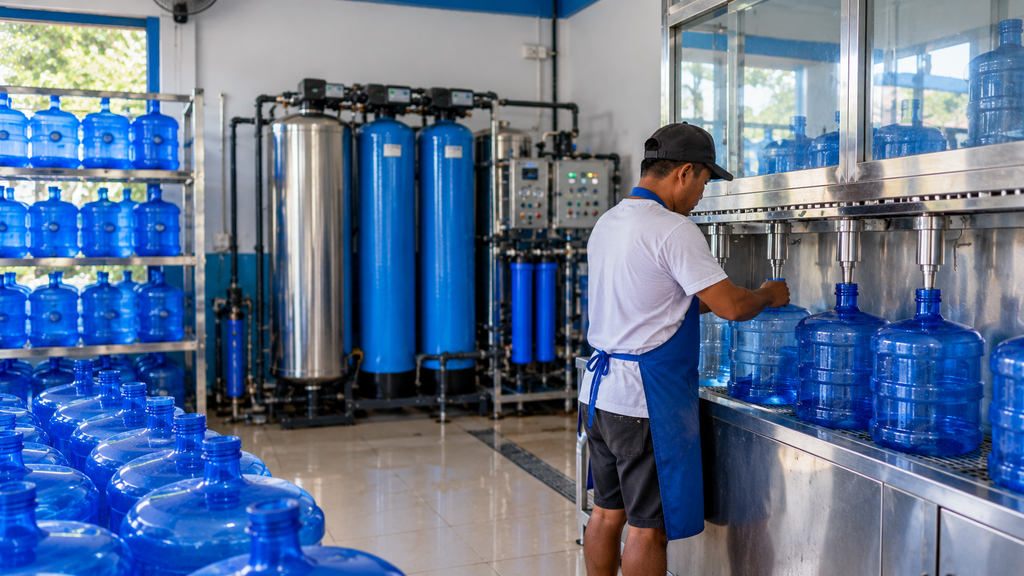
The heart of any refilling station is its water treatment facility. Choosing sub-standard filtration components inevitably leads to costly downtime, failed bacteriological tests, and regulatory sanctions from local sanitation inspectors. A professional-grade commercial system typically integrates a multi-stage purification train engineered to handle raw water inputs from deep wells (groundwater) or municipal lines.
The standard treatment stages include:
- Multi-Media Sediment Filter: Utilizes layers of graded sand, anthracite, and gravel to trap suspended solids, turbidity, rust, and particulate matter down to micro-levels.
- Activated Carbon Filter: Adsorbs chlorine, organic compounds, volatile chemicals, and unpleasant tastes or odors from the raw water supply.
- Water Softener (Ion Exchange): Essential for areas with hard water, replacing calcium and magnesium ions with sodium ions to protect downstream RO membranes from scaling.
- Reverse Osmosis (RO) Membrane: The core purification barrier that forces water through a semi-permeable membrane at high pressure, rejecting up to 99% of dissolved inorganic solids, heavy metals, and microscopic contaminants.
- Ultraviolet (UV) Sterilization Lamp: Exposes treated water to germicidal UV radiation, neutralizing bacteria, viruses, and pathogens just prior to dispensing.
- Ozone Generator: Injects ozone gas into the product water storage tanks and rinse water, providing residual disinfection that prevents microbial growth inside containers.
Investing in commercial-grade stainless steel framing, food-grade sanitary piping (such as schedule 80 PVC or sanitary stainless tubing), and automated rinsing manifolds ensures long-term operational durability and simplifies routine maintenance sanitation.
Comprehensive Capital Breakdown and Startup Cost Estimations (PHP)
Launching a standard, standalone water refilling station requires careful capital budgeting. Costs vary depending on whether you opt for a pure Reverse Osmosis (RO) system or a Combined RO and Mineral/Alkaline setup. Below is an exhaustive financial breakdown based on standard market rates for equipment, construction, and initial working capital in the Philippines.
| Expense Category | Item Description | Estimated Cost Range (PHP) |
| Equipment Package | Commercial RO System, Sediments, Carbon, Softener, UV, Ozone, and 3-in-1 Stainless Rinsing/Filling Station | ₱150,000 – ₱350,000 |
| Store Renovation & Civil Works | Tiling, Glass Facade, Plumbing, Drainage, Electrical Rewiring, and Partition Wall | ₱60,000 – ₱120,000 |
| Initial Inventory & Supplies | 100 to 200 Polycarbonate 5-Gallon Containers, Caps, Heat Seals, and Sanitizing Solutions | ₱25,000 – ₱50,000 |
| Permits & Legal Compliance | DTI, Barangay, LGU Mayor’s Permit, Sanitary Permits, and Initial Lab Water Testing | ₱10,000 – ₱25,000 |
| Initial Working Capital | Rent Deposit (2 Months Advance, 1 Month Deposit), Utility Reserves, and Initial Wages | ₱40,000 – ₱80,000 |
| Total Estimated Startup Capital | Combined Initial Investment Range | ₱285,000 – ₱625,000 |
Ongoing operational expenses must also be projected carefully. Monthly fixed and variable costs typically include commercial space rental (₱10,000 to ₱25,000), electricity for high-pressure pumps and ozone generators (₱5,000 to ₱12,000), water utility bills (₱3,000 to ₱8,000), staff salaries, and periodic replacement of sediment filters, carbon beds, and UV lamps.
Step-by-Step Legal Requirements, Bureaucracy, and Permit Compliance
Navigating the regulatory landscape in the Philippines is a mandatory step that establishes business credibility and ensures full compliance with national health codes. Operating without complete permits risks immediate closure by local government units (LGUs).
The step-by-step registration sequence proceeds as follows:
- Step 1: Business Name Registration with the Department of Trade and Industry (DTI): Register your official trade name under the Sole Proprietorship category. For partnerships or corporations, registration must be secured through the Securities and Exchange Commission (SEC).
- Step 2: Barangay Clearance: Secure a clearance from the local barangay hall where your physical store is located, confirming that your business operations will not disrupt neighborhood peace or violate zoning rules.
- Step 3: LGU Mayor’s Permit & Business License: Submit your DTI certificate, lease contract, and barangay clearance to the local municipal or city hall licensing bureau. Environmental and engineering inspections will be scheduled.
- Step 4: DOH Sanitary Permit & Sanitation Code Compliance: Under Presidential Decree No. 856 (Code on Sanitation of the Philippines), water refilling stations are classified as food establishments requiring stringent sanitary controls. You must secure a Sanitary Permit issued by the local health office. This requires submitting architectural floor plans signed by a licensed sanitary engineer, proof of potable raw water testing, and mandatory health certificates for all personnel handling water containers.
- Step 5: Bureau of Internal Revenue (BIR) Registration: Register your business with the Bureau of Internal Revenue (BIR) to obtain your Certificate of Registration (Form 2303), register official books of accounts, and secure authority to print official receipts or invoices.
- Step 6: Mandatory Water Testing Compliance: Before commercial operations commence—and on a strict monthly basis thereafter—water samples must be submitted to a DOH-accredited testing laboratory. Testing covers physical-chemical parameters and microbiological analysis (heterotrophic plate count, total coliform, and fecal coliform) to ensure absolute safety.
Strategic Location Selection and Floor Plan Architecture
Selecting the right physical location dictates customer acquisition velocity and operational efficiency. Ideal sites include high-density residential zones, apartment complexes lacking in-house filtration, condominium peripheries, and busy neighborhood intersections. Proximity to vehicular parking or easy street access is essential because customers and delivery personnel frequently transport heavy 5-gallon containers.
Interior spatial architecture must strictly adhere to sanitary zoning principles mandated by health inspectors. A compliant floor plan divides the establishment into distinct operational zones:
- The Raw Wash and Scrub Area: Located near the entrance or drainage points, equipped with automated or manual soaking and scrubbing basins where returned 5-gallon containers are washed externally and rinsed internally with cleaning detergents.
- The Sterile Filling Room: Physically separated from the washing zone by a glass partition or door. This room houses the final polishing filters, UV sterilizers, ozone injection systems, and stainless steel filling nozzles. Entry should be restricted strictly to authorized, gowned, and sanitized personnel.
- Storage and Dispatch Area: Dedicated space for storing sealed, finished containers ready for walk-in customers or delivery dispatch, ensuring stock is kept off direct concrete flooring using sanitary pallets.
Operational Best Practices for Quality Control and Equipment Longevity
Maintaining high customer retention and protecting brand reputation require rigorous daily and weekly operational checklists. Equipment neglect leads to biofilm buildup, foul-tasting water, and failed bacteriological lab tests.
Essential maintenance protocols include:
- Daily Flushing and Sanitization: Flush storage tanks, rinse lines, and filling nozzles with ozonated water at the start and end of every operating day. Wipe all contact surfaces with food-grade sanitizing solutions.
- Scheduled Filter Replacements: Replace sediment filter cartridges every 2 to 4 weeks depending on raw water turbidity. Backwash carbon filters and water softeners weekly to prevent media channeling and mineral saturation.
- Container Inspection Standards: Inspect every returned 5-gallon container for cracks, deep internal staining, or chemical contamination. Reject any container used previously to store petroleum products, paint, or toxic chemicals.
- Staff Hygiene Protocols: Mandate that all operators wear clean hairnets, face masks, aprons, and sanitized gloves during filling operations. Regular handwashing and annual medical check-ups for skin diseases or infectious illnesses are non-negotiable requirements under local sanitary codes.
Marketing Strategies and Building Long-Term Customer Trust
In the hyper-local water refilling industry, word-of-mouth marketing and trust are your strongest growth levers. Consumers are exceptionally sensitive to the taste, clarity, and safety of their drinking water. Establishing immediate credibility involves displaying your current DOH Sanitary Permit, recent monthly water testing laboratory results, and business licenses prominently on the store wall for walk-in customers to view.
Effective promotional tactics tailored for the Philippine market include:
- Neighborhood Launch Promos: Offer introductory discounts, free delivery for the first three fills, or complimentary container upgrades for new household sign-ups within the immediate subdivision or barangay.
- Subscription and Loyalty Cards: Implement physical punch cards or digital tracking systems (such as buy 10 fills, get 1 free) to encourage repeat business from regular household and small office clients.
- Reliable Delivery Service: Provide prompt home and office delivery services using motorcycle tricycles or utility carts. Punctuality and courteous service establish deep customer loyalty against competing neighborhood stations.
- Digital Presence and Local SEO: Maintain an active Google Business Profile with updated operating hours, precise map pins, contact numbers, and high-resolution photos of your clean facility. Encourage satisfied customers to leave positive reviews to boost local search visibility.




 Facebook
 Twitter