

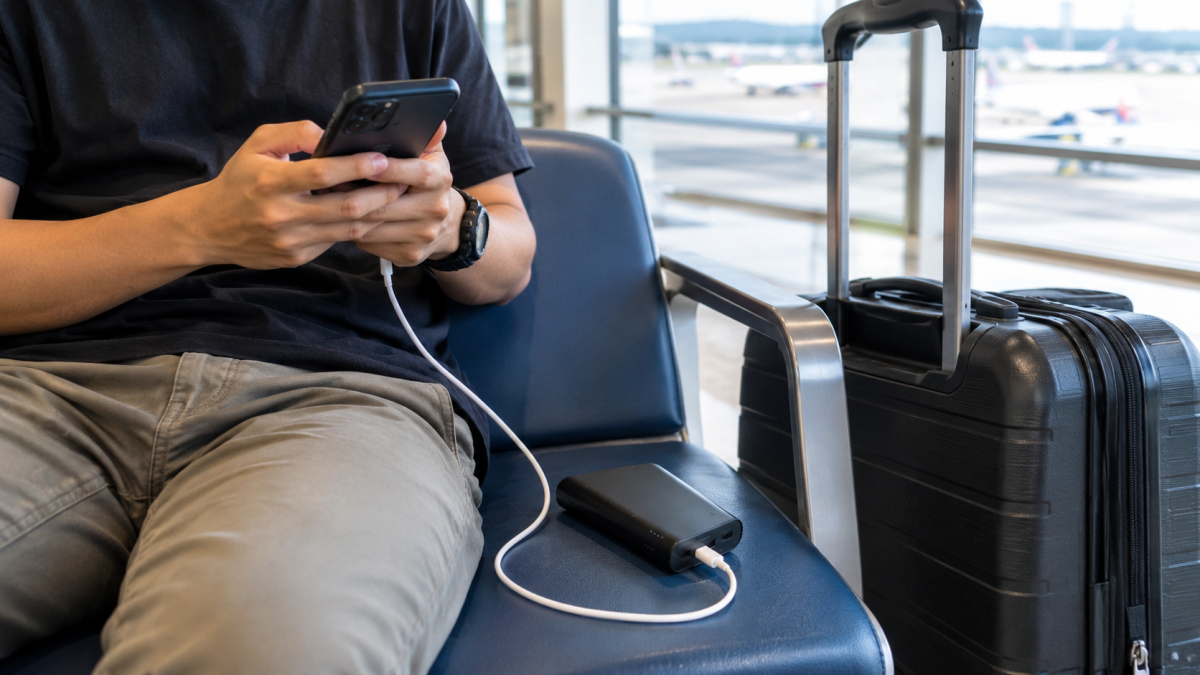
Best travel power bank selection has become a critical step for modern explorers who rely entirely on digital devices while navigating unfamiliar destinations. From high-resolution navigation apps and instant translation software to digital boarding passes, pocket Wi-Fi routers, and mirrorless cameras, a dead battery is no longer just an inconvenience—it can derail an entire itinerary. Whether you are exploring a bustling urban transit system or trekking through remote island destinations across the Philippines, maintaining reliable off-grid power is essential.
However, not all portable chargers are created equal. The market is saturated with cheap, low-grade lithium-ion cells that promise astronomical capacities while failing basic safety standards. Securing a reliable power bank requires understanding battery chemistry, recognizing international and local transport safety limits, and evaluating real-world performance metrics. This guide breaks down everything you need to know to select, pack, and utilize a high-capacity power bank safely and efficiently, ensuring your devices remain charged wherever your journey leads.
Understanding Battery Metrics: mAh, Watt-Hours, and Real Output
To evaluate a best travel power bank candidate with true editorial expertise, you must look past the flashy marketing numbers printed on the casing and understand the underlying physics. Manufacturers often market total milliamp-hours (mAh) of the internal cells, but this number does not equal the actual energy delivered to your phone.
Power banks operate at an internal voltage of 3.7 volts, while USB charging outputs operate at 5 volts or higher for fast charging. During this voltage conversion, energy is lost as heat. As a result, the conversion efficiency of a standard power bank typically hovers around 70% to 80%. For example, a 20,000mAh power bank does not deliver a full four charges to a 5,000mAh smartphone battery; it realistically yields closer to three full charges once conversion loss and circuit board draw are factored in.
To calculate true energy capacity and airline compliance, look at Watt-hours (Wh). The formula for determining Watt-hours is multiplying the capacity in milliamp-hours by the voltage, then dividing by 1,000:
Watt-hours (Wh)=1,000mAh×Voltage
For a standard 20,000mAh power bank operating at 3.7V, the calculation yields 74Wh. This distinction is critical because commercial aviation regulations do not regulate power banks by milliamp-hours—they regulate them strictly by Watt-hours.
Navigating Airline Safety Regulations and Lithium-Ion Limits
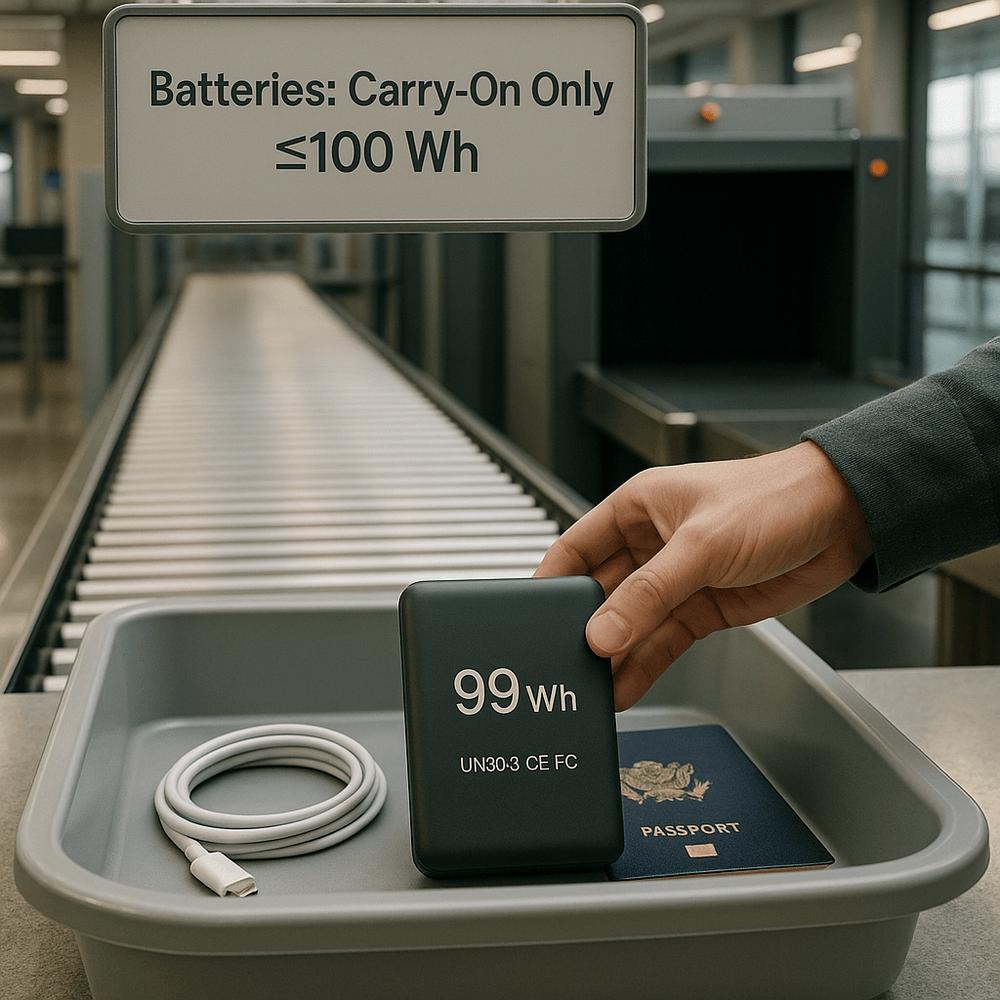
One of the greatest pain points for frequent flyers is airport security confiscating oversized or improperly packed electronics. Lithium-ion batteries store a massive amount of energy in a compact space, making them a recognized fire hazard if short-circuited in the cargo hold due to pressure changes and shifting baggage.
According to global aviation safety guidelines enforced by bodies like the Civil Aeronautics Board (CAB) and international equivalents like the Federal Aviation Administration (FAA), power banks and spare lithium-ion batteries must be packed exclusively in carry-on baggage. They are strictly prohibited in checked luggage because if a thermal runaway event occurs in the cargo hold, aircraft fire suppression systems cannot easily extinguish it.
When packing your gear, adhere to these regulatory thresholds:
- Under 100Wh (Approx. 27,000mAh): You can carry an unlimited number of these power banks in your carry-on luggage for personal use without airline approval.
- Between 100Wh and 160Wh (Approx. 27,000mAh to 43,000mAh): These require explicit airline approval before boarding. Most commercial airlines permit a maximum of two spare power banks in this range per passenger.
- Over 160Wh: These are strictly forbidden on commercial passenger aircraft and require hazardous cargo shipping procedures.
When traveling, always ensure your power banks are protected against short-circuiting by keeping them in their original pouches, covering the terminals with non-conductive tape, or storing them in dedicated tech organizer pockets.
Fast-Charging Protocols: Power Delivery and Quick Charge
Carrying a high-capacity power bank is only half the battle; how fast that power transfers to your devices dictates your overall travel efficiency. Modern portable chargers utilize advanced charging protocols to negotiate optimal power delivery between the battery pack and your electronics.
The industry gold standard is USB Power Delivery (USB-PD), an open standard that allows devices to negotiate higher voltages and currents dynamically over a USB-C connection. A power bank supporting USB-PD 3.0 with Programmable Power Supply (PPS) can safely ramp up output to 65W, 100W, or even 140W. This means a high-end travel power bank can rapidly charge not just your smartphone, but also power-hungry devices like a MacBook, iPad, or portable gaming console while you sit at a departure gate.
When evaluating specifications, pay close attention to bidirectional fast charging. A high-quality power bank should support high-wattage input as well as output. If a 25,000mAh power bank only supports standard 10W input, it will take over ten hours to recharge itself from a wall outlet—defeating the purpose of rapid transit preparation. Look for models that can recharge from zero to full capacity in under two hours using a high-wattage wall adapter.
Real-World Field Testing: Durability and Build Quality
Laboratory specifications tell only part of the story. True travel durability requires hands-on evaluation of physical build materials, thermal management, and port longevity under grueling environmental conditions.
During field tests across tropical climates—where ambient temperatures frequently exceed 35°C—cheap plastic power bank casings are prone to warping, discoloration, and internal thermal throttling. High-quality travel power banks utilize fire-retardant polycarbonate shells, anodized aluminum chassis, or rubberized bumpers designed to absorb the inevitable drops and knocks of backpacking and transit.
Furthermore, thermal management is paramount. During high-wattage fast charging, lithium-ion cells generate significant internal heat. Premium power banks feature internal NTC (Negative Temperature Coefficient) thermistors that continuously monitor temperature fluctuations. If the internal circuitry detects overheating, it automatically throttles the charging speed or temporarily halts operation to prevent cell degradation or safety risks. When purchasing a best travel power bank model, look for safety certifications from recognized testing laboratories such as UL Solutions (Underwriters Laboratories), CE, or RoHS compliance markings to guarantee the unit has undergone rigorous short-circuit, overcharge, and drop testing.
Curating the Top Travel Power Bank Categories
To simplify your purchasing decision, high-capacity portable chargers generally fall into three distinct categories based on travel style and power demands:
- The Ultralight Commuter Class (10,000mAh / 37Wh): Ideal for day trips, city walking tours, and short flights. These models slip easily into a jacket pocket or small sling bag, providing roughly two full smartphone charges while remaining well under standard weight restrictions.
- The Global Nomad Class (20,000mAh to 25,000mAh / 74Wh to 92Wh): The absolute sweet spot for multi-day travel. These power banks balance high energy density with compliance under the 100Wh airline carry-on limit. They can comfortably charge a smartphone three to four times, power a tablet, and run a portable Wi-Fi hotspot simultaneously.
- The Pro Creator Class (24,000mAh to 27,000mAh with 100W+ USB-PD Output): Designed for digital nomads, videographers, and remote workers carrying laptops and camera gear. These feature heavy-duty multi-port layouts capable of sustaining high continuous wattage output to recharge laptops directly from a backpack on long-haul flights or remote off-grid shoots.
Essential Maintenance and Longevity Practices for Travelers
Investing in a high-quality travel power bank is only effective if you maintain the internal battery health over years of regular use. Lithium-ion and lithium-polymer cells naturally degrade over time, but improper handling accelerates capacity loss.
To maximize the lifespan of your travel power bank, follow these field-tested maintenance guidelines:
- Avoid Extreme Temperatures: Never leave your power bank exposed to direct sunlight on a car dashboard or inside a checked bag in freezing cargo holds. Extreme heat accelerates chemical degradation and can permanently compromise cell integrity.
- Store at Partial Charge: If you are storing your power bank for an extended period between trips, keep the charge level around 50%. Storing a lithium battery at 0% can cause the cells to enter a deep sleep state from which they cannot recover, while storing at 100% accelerates long-term capacity wear.
- Use Certified Cables: Always pair your high-output power bank with certified cables featuring USB-IF certification and E-marker chips if you are pushing currents above 3A. Cheap, uncertified cables can melt under sustained high-wattage loads, damaging both your devices and the power bank’s internal ports.
Conclusion and Final Buying Recommendation
Choosing the right travel power bank requires balancing capacity, physical weight, airline compliance, and fast-charging capabilities. By focusing on Watt-hour ratings rather than marketing jargon, verifying safety certifications, and investing in a robust build quality suited for your specific travel demands, you eliminate low-battery anxiety entirely.
Prioritize models featuring genuine USB-PD fast charging, multi-port versatility, and intelligent thermal protection. Whether you are catching a quick domestic flight or embarking on an extended cross-country expedition, a reliable, high-capacity power bank ensures your digital lifeline remains active from departure to destination.










 Facebook
 Twitter