
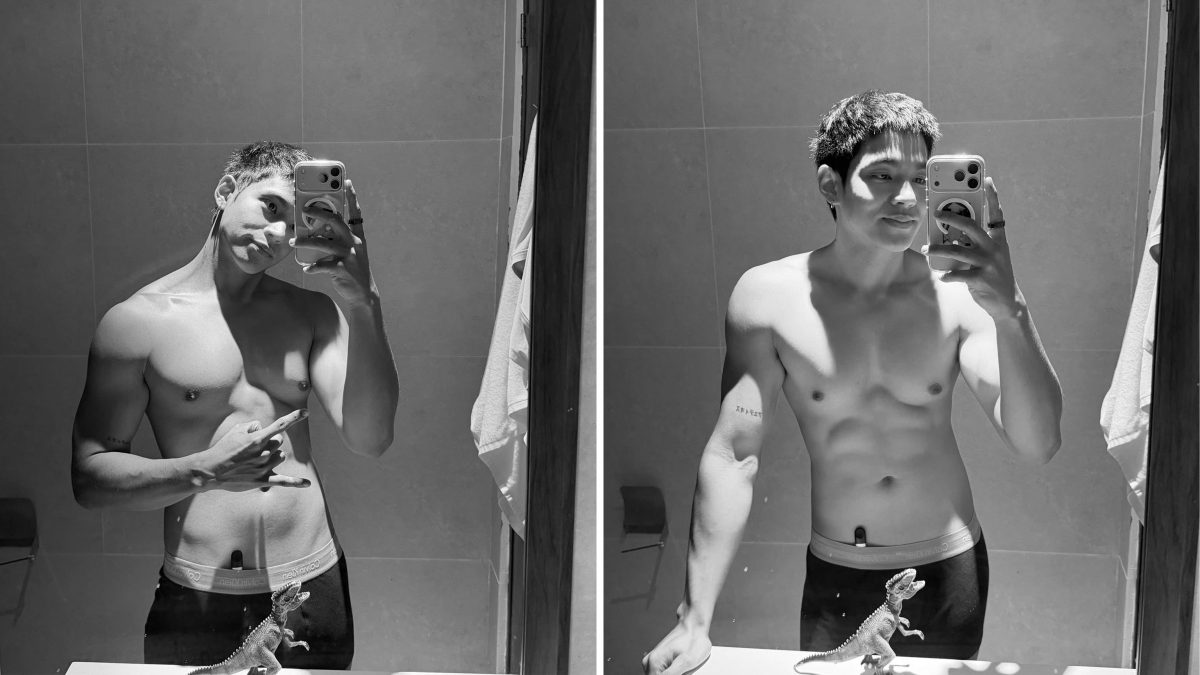
Ron Angeles viral post gained attention not only because of the photos themselves, but because Filipino netizens transformed the upload into a fast-moving online humor trend. What began as a celebrity mirror selfie quickly evolved into a wider conversation about meme culture, participatory entertainment, and how comment-driven engagement now shapes visibility on Philippine social media platforms.
The strongest reactions to Ron Angeles’ latest viral photos did not come from the images alone. Instead, much of the online attention was driven by how Filipino users collectively transformed a simple celebrity upload into a shared comedy thread — a pattern that increasingly defines how entertainment content spreads on local social media.
The actor-model recently drew heavy engagement after posting mirror selfies that were later reposted by entertainment pages on Facebook. While the images immediately attracted viewers, the larger discussion centered on the playful use of a toy dinosaur placed strategically within the frame, triggering hundreds of humorous reactions and quote-style comments from netizens.
What followed reflected a broader shift in Philippine online behavior. Viral celebrity posts are no longer sustained only by fandom or appearance-based admiration. Increasingly, engagement grows because audiences actively participate in shaping the narrative through jokes, memes, screenshots, and comment-driven storytelling.
Observers noted that the post succeeded because it felt intentionally interactive without appearing overly manufactured. Instead of presenting a polished promotional image, the upload invited audiences to react casually, allowing the comment section to become part of the entertainment itself.
One comment that circulated widely online captured that tone.
“Tinakpan pa, eh nakita ko na,” one user wrote, joking that the attempt to conceal part of the image only made viewers pay closer attention.
The remark quickly spread beyond the original thread and became a recurring caption in reposts and reaction posts. The development highlights how audience participation now functions as a major driver of visibility on Philippine social platforms, particularly in entertainment-focused spaces where relatability often outperforms formal celebrity branding.
Digital engagement patterns in the country have increasingly rewarded content that feels spontaneous, meme-ready, and socially shareable. Unlike traditional celebrity publicity, which depends heavily on interviews or official announcements, newer viral moments tend to emerge from playful audience interaction. In many cases, the comments become more memorable than the original upload.
Another viewer humorously pointed out that the toy dinosaur had effectively become part of the online narrative.
“Parang supporting actor na yung dinosaur sa dami ng usapan tungkol doon,” the commenter wrote.
That reaction may appear lighthearted, but it reflects a deeper online trend. Filipino users frequently turn ordinary visual details into recurring internet references, helping extend the lifespan of posts long after the original upload. This behavior has become especially visible on Facebook and TikTok, where algorithm-driven visibility often depends on repeated interactions rather than one-time views.
The timing of the post also contributed to its reach. Entertainment content that encourages communal humor has recently gained stronger traction than heavily curated celebrity promotions. Observers noted that audiences now respond more favorably to content that feels socially participatory rather than commercially staged.
Importantly, the viral discussion surrounding Angeles remained largely humor-based instead of controversy-driven. In a digital environment often dominated by outrage and conflict, the post spread through collective amusement and casual interaction. That distinction matters because it demonstrates how online attention can still be built around low-conflict engagement rather than polarizing discourse.
“Hindi lang siya selfie post — naging shared online joke siya,” another user commented.
This raises broader questions about how public figures navigate visibility in the current social media landscape. Carefully planned image-building remains relevant, but posts that unintentionally invite collaborative humor often travel farther because audiences feel involved in the experience itself.
The reaction to Ron Angeles’ photos ultimately reveals more than temporary entertainment buzz. It reflects how Filipino internet culture increasingly treats online content as a participatory space where users help determine what becomes memorable, shareable, and culturally relevant.
The spread of the post also reflects how entertainment consumption in the Philippines has become increasingly community-driven rather than celebrity-driven alone. In previous years, viral showbiz moments often depended on television exposure or formal publicity campaigns. Today, however, posts gain momentum when audiences actively reinterpret them through humor, memes, and commentary. Analysts observing digital engagement trends noted that this shift has made online visibility less predictable, as ordinary users now play a major role in determining which celebrity moments remain culturally relevant beyond a single news cycle.




 Facebook
 Twitter