

Baguio City, Benguet — The Summer Capital of the Philippines
Baguio City, often called the “Summer Capital of the Philippines,” remains one of the country’s most beloved solo travel destinations in 2026, and for good reason. Perched at over 1,500 meters above sea level in the Cordillera mountains of Benguet province, Baguio offers a refreshing cool climate year-round — a stark contrast to the sweltering heat of the Philippine lowlands. For solo travelers, Baguio is the perfect gateway into highland culture, arts, and cuisine without straining the budget. The city is compact enough to explore on foot, yet rich enough in history, culture, and natural beauty to keep you engaged for days.
Read also: Top 20 Budget-Friendly Destinations in the Philippines for 2026
Baguio’s attractions are plentiful and largely free or very low-cost. Burnham Park is the social heart of the city, offering free strolls, affordable boat rentals, cycling, and people-watching. Mines View Park offers panoramic views of the Cordillera and the gold mines of Itogon for a minimal ₱20–₱50 fee. Camp John Hay, a former American rest and recreation base, now offers nature trails, a butterfly sanctuary, and a historical marker area that can be explored without spending much. The BenCab Museum — one of the finest art museums in the country — charges only ₱120 for the entrance fee, making it exceptional value. Tam-awan Village gives travelers an authentic look at Cordilleran art, architecture, and indigenous culture.
Food in Baguio is a major draw for budget travelers. The city’s local market is packed with fresh strawberries, ube jam, peanut brittle, pinikpikan, and various Cordillera delicacies that are both affordable and unique to the region. A full meal at a local eatery costs ₱80 to ₱150, while popular spots along Session Road — Good Taste Restaurant, Oh My Gulay, and Café by the Ruins — offer elevated dining experiences still within reasonable price ranges of ₱200 to ₱450 per person. Budget accommodation options are plentiful. Dormitory-style hostels and guesthouses near the city center range from ₱350 to ₱700 per night.
Getting to Baguio from Manila is easy and affordable. Bus rides from Manila’s various terminals — Victory Liner, Genesis, Florida, Partas — cost around ₱400 to ₱600 one-way, making the overall travel cost very manageable for a 2 to 3-day trip. The best months to visit Baguio are December through February for the cool Christmas atmosphere, and April to May, though the latter is peak season. Avoid Holy Week and the Panagbenga Festival in February unless you book accommodation at least 3 to 4 weeks in advance, as the city fills up rapidly and rates can double or triple.
Sagada, Mountain Province — The Mystic Highlands
Sagada in Mountain Province is one of the Philippines’ most beloved alternative travel destinations, and it continues to enchant solo travelers in 2026 with its otherworldly landscapes, deep cultural heritage, and unhurried pace of life. Perched high in the Cordillera range at over 1,500 meters above sea level, this small mountain town is famous for its mist-shrouded valleys, ancient limestone caves, dramatic cliffs, and the haunting spectacle of its hanging coffins — a centuries-old Kankana-ey burial tradition that has become one of the most iconic images in Philippine tourism.
Read also: Top 25 Best Tourist Destinations in the Philippines for 2026: Complete Travel Guide
For solo travelers, Sagada offers some of the most immersive experiences in the country. Spelunking through Sumaguing Cave — one of the largest caves in the Philippines — is a thrilling adventure that costs only ₱400 to ₱600 with a required local guide. The Hanging Coffins at Echo Valley are reachable via a scenic 20-minute trek from town, and the sight of coffins suspended on cliffsides amid green forest is genuinely unforgettable. Bomod-ok Falls, also known as Big Falls, requires a guided hike through rice terraces and forest trails costing around ₱150 for the guide fee. The town’s weaving cooperatives offer handmade Cordillera textiles at fair prices, and the weekly market is a wonderful place to interact with locals.
Accommodation in Sagada is simple but charming. Budget guesthouses and inns like Sagada Guesthouse, Alfredo’s, and Misty Lodge offer clean rooms ranging from ₱400 to ₱800 per night for a private room, and some have dormitory options for ₱250 to ₱350 per head. Food is wholesome and wallet-friendly — the local specialty is pinikpikan (a traditional Cordillera chicken dish), and yogurt made locally in Sagada has become a beloved treat for visitors. A meal at a local diner costs ₱80 to ₱180. The famous Yoghurt House serves freshly made yogurt topped with granola and fruits for under ₱150, making it a must-visit.
Getting to Sagada requires some effort but is part of the adventure. From Baguio, buses and vans to Sagada depart daily and cost around ₱150 to ₱250 for the scenic 4 to 5-hour journey. Alternatively, travelers can take a bus to Bontoc and transfer to a jeepney or van to Sagada. A tourist registration fee of ₱50 is required upon arrival. The best time to visit is during the dry months of November to May. Sagada is coldest in December and January, with temperatures dropping to around 10°C at night, so pack layers. Solo travelers should always hire a licensed guide for cave and trail explorations as it is both mandatory and genuinely helpful for safety.
Vigan City, Ilocos Sur — The Living Heritage City
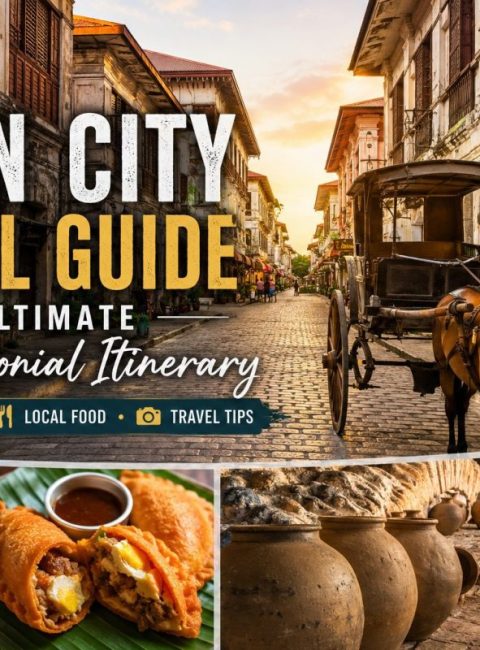
Vigan City in Ilocos Sur is a UNESCO World Heritage Site and one of the best-preserved examples of Spanish colonial town planning in Asia. For solo travelers with a passion for history, culture, and photography, Vigan is virtually unmatched in the Philippines. The city’s Calle Crisologo — a narrow cobblestone street flanked by two-storey ancestral houses with wooden balconies and capiz shell windows — feels like stepping back into the 16th century. Declared a UNESCO World Heritage Site in 1999, Vigan has maintained its heritage landscape with remarkable integrity, and in 2026 it remains one of the most walkable and photogenic cities in the country.
Read also: The Homecoming Budget: What OFWs Really Spend Before Flying Back to the Philippines
Solo travelers will find Vigan’s attractions largely accessible on foot or by kalesa — the horse-drawn carriages that remain the most atmospheric way to tour the heritage zone. A kalesa tour costs around ₱150 to ₱200 per hour. The Vigan Cathedral (Metropolitan Cathedral of the Conversion of Saint Paul), the Bantay Church and Bell Tower, Syquia Mansion, and the Crisologo Museum are all within easy walking distance of each other. The Plaza Burgos area is a hub of local culture, handicraft stalls, and the famous Vigan longanisa and empanada food stalls that cater to budget-conscious travelers.
Ilocano food is among the most distinctive and affordable regional cuisines in the Philippines. Vigan’s longanisa (garlic-packed pork sausage) served with rice and vinegar is a classic breakfast for ₱60 to ₱100. Bagnet — crispy deep-fried pork belly — is a must-try, as is pinakbet with bagoong and the local empanada stuffed with egg, longganisa, and papaya. Local eateries and the Vigan Public Market serve generous meals for ₱80 to ₱200. Budget accommodation options include Gordion Hotel, Villa Angela Heritage House, and several inns along Mena Crisologo Street, with rates ranging from ₱500 to ₱1,200 per night.
Vigan is best explored from October to May when weather is dry. Getting there from Manila takes about 8 to 9 hours by overnight bus (Partas, Dominion, or Florida Bus Lines), with fares ranging from ₱650 to ₱900. Flying to Laoag and then taking a bus south to Vigan is another option. Solo travelers should plan at least two full days to properly absorb Vigan’s heritage, attending the daily light-and-sound show at Plaza Burgos at night and exploring the pottery and weaving workshops on the outskirts of town during the day.
El Nido, Palawan — The Crown Jewel of Philippine Beaches
El Nido in Palawan consistently ranks among the top beach destinations not just in the Philippines but in all of Asia, and it earns that reputation every single time a visitor catches their first glimpse of its towering limestone karst cliffs rising from turquoise waters. For solo travelers, El Nido in 2026 offers an unparalleled combination of natural beauty, adventure activities, and a thriving backpacker culture that makes it easy to meet fellow travelers and split costs on island-hopping tours. While not the cheapest destination on this list, El Nido offers extraordinary value for the quality of experiences it delivers.
Read also: Best Places to Visit in the Philippines for Returning OFWs
The centerpiece of any El Nido visit is the island-hopping tour circuit. Tours A, B, C, and D each cover different lagoons, beaches, and snorkeling spots around Bacuit Archipelago’s 45 islands. Tour A, which covers the Big Lagoon and Small Lagoon, is the most popular and costs around ₱1,200 to ₱1,500 per person including lunch and equipment. For solo travelers, joining a shared group tour is the most budget-friendly option. Beyond island hopping, El Nido town itself has a pleasant beach promenade, excellent seafood restaurants, and a vibrant bar scene along the beachfront. Nacpan Beach — a four-kilometer stretch of white sand — is often cited as one of the most beautiful beaches in the country and requires only a ₱150 tricycle ride from town.
Accommodation in El Nido has expanded significantly, giving solo travelers many budget options. Dormitory beds in well-reviewed hostels like Spin Designer Hostel and Mad Monkey El Nido range from ₱500 to ₱800 per night, while private budget rooms start at ₱1,000 to ₱1,800. Eating in El Nido is manageable on a budget — the local palengke (market) offers fresh seafood at ₱100 to ₱200 per kilo, and local carinderias serve rice meals for ₱80 to ₱150. Restaurant meals along Calle Hama or the beachfront typically cost ₱200 to ₱400 for a full seafood meal, which is still considered excellent value given the setting.
Getting to El Nido typically involves flying from Manila or Cebu to Puerto Princesa (₱1,500 to ₱4,000 one-way) and then taking a 5 to 6-hour van or bus ride to El Nido for ₱600 to ₱900. Alternatively, flights direct to El Nido’s Lio Airport on AirSWIFT are available from Manila for around ₱3,000 to ₱7,000. The best time to visit is November to May during the dry season. Solo travelers should note that El Nido implements tourist quotas in some areas, so booking island-hopping tours a day in advance during peak season is strongly advised.
Siargao Island, Surigao del Norte — The Surfing Capital
Siargao Island has undergone a remarkable transformation over the past decade, evolving from a hidden surfer’s paradise into one of Asia’s most talked-about travel destinations. Yet despite its rising international profile, Siargao in 2026 retains the laid-back, community-oriented spirit that made it famous in the first place. For solo travelers, Siargao offers a uniquely social travel experience — the island’s compact size, close-knit hostel culture, and shared activities like surfing, island hopping, and lagoon tours naturally bring strangers together. Whether you surf or not, Siargao delivers an experience that is authentic, beautiful, and refreshingly unhurried.
Cloud 9, the island’s most famous surf break, is a powerful barreling reef break that draws professional surfers from around the world for the annual Siargao Surfing Cup held every September. Beginners can take surfing lessons at nearby Jacking Horse and Rock Island for ₱500 to ₱800 per hour including board rental. Beyond surfing, the island-hopping tour to Naked Island, Daku Island, and Guyam Island is a full day of beach bliss for ₱600 to ₱800 per person in a group. The Magpupungko Rock Pools — stunning natural tidal pools carved into volcanic rock — are a Siargao highlight accessible for a ₱50 entrance fee. Sugba Lagoon in Del Carmen offers emerald waters and cliff jumping for approximately ₱700 including the boat.
General Luna, the main tourist hub, offers a fantastic range of accommodations. Dormitory beds at well-reviewed hostels like Bravo Beach Resort, Harana Surf Resort, and Kermit Siargao start at ₱500 to ₱900. Private budget rooms range from ₱1,000 to ₱2,000. The food scene in General Luna is surprisingly varied — local carinderias serve tuna meals (Siargao is close to major tuna fishing grounds) for ₱80 to ₱150, while the island’s growing restaurant scene offers everything from wood-fired pizza to fresh ceviche, typically at ₱200 to ₱500 per dish. The famous coconut shake at Kermit is a beloved ₱80 treat.
Reaching Siargao requires a flight to Sayak Airport (code IAO) from Manila or Cebu, with fares typically ranging from ₱1,500 to ₱4,500 depending on the season and how far in advance you book. The best time to visit for surfing is August to November when swells are most consistent. For calmer waters and island hopping, March to May is ideal. Solo travelers should note that Siargao’s road network is best navigated by rented motorbike at ₱300 to ₱500 per day, making it one of the most economical and liberating ways to explore the island independently.
Dumaguete City, Negros Oriental — The City of Gentle People
Dumaguete City in Negros Oriental has long been considered one of the Philippines’ most livable cities, and for solo travelers it represents something genuinely special: an affordable, intellectual, and deeply charming city that rewards slow travel. Known as the “City of Gentle People,” Dumaguete is a university town home to Silliman University — the oldest Protestant university in Asia — and its student population gives the city an energetic, creative, and welcoming atmosphere. Rizal Boulevard, the tree-lined waterfront promenade that faces Cebu Strait, is the social heart of the city and one of the most pleasant evening strolls in the Philippines.
Dumaguete’s greatest attraction for adventurous solo travelers is its role as a gateway to some of the most extraordinary marine and natural environments in the Philippines. Apo Island — accessible by a 30-minute boat ride from Malatapay — is one of the best marine sanctuaries in all of Southeast Asia, famous for its population of resident sea turtles that snorkelers can encounter at close range. A day trip to Apo Island costs approximately ₱800 to ₱1,500 including boat, guide, and equipment. Twin Lakes of Balinsasayao — two crater lakes in a rainforest setting — offer trekking and kayaking in a serene environment for around ₱200 to ₱400. The Liberty Nature Park and Casaroro Falls near Valencia are additional natural highlights within easy reach.
Dumaguete is one of the most cost-effective cities for solo travel in the Philippines. Budget guesthouses and inns near Silliman University or Rizal Boulevard offer clean private rooms for ₱400 to ₱800 per night. The famous Rizal Boulevard food stalls serve fresh puso (hanging rice) and grilled seafood at very affordable rates, while local favorites like Sans Rival Cakes and Pastries (a Dumaguete institution) serve their famous silvanas and sans rival cakes for ₱25 to ₱50 per piece. A full meal at a local eatery costs ₱80 to ₱170, and the city’s multiple carinderias offer exceptional value.
Getting to Dumaguete is easy from Cebu via fast ferry (2.5 hours, ₱250–₱400) or OceanJet (₱350–₱500). Direct flights from Manila are also available, typically ₱1,500 to ₱4,000. The best time to visit is March to June when weather is consistently dry. Dumaguete is also an excellent base for exploring the Visayas — Siquijor Island is just a 45-minute ferry ride away, making it perfect for a day trip or overnight extension to your solo journey.
Batanes Islands, Cagayan — The Edge of the Philippines
Batanes, the northernmost province of the Philippines, is unlike any other destination in the archipelago. Perched at the northern tip of the country, closer to Taiwan than to Manila, the Batanes Islands are a place of extraordinary natural beauty, ancient Ivatan culture, and a serenity that feels almost otherworldly. Rolling green hills that tumble dramatically into the churning Pacific and South China Sea, traditional stone houses built to withstand powerful typhoons, a community so honest that stores operate on the honor system — Batanes defies easy description and rewards solo travelers who make the effort to reach it with an experience that is genuinely life-changing.
The main island of Batan is the starting point for most visitors, with Basco as the provincial capital. The iconic Marlboro Country — an expansive rolling grassland in the island’s north — is the most photographed landscape in Batanes and can be reached by rented bike or scooter. Vayang Rolling Hills, Morong Beach, Chawa View Deck, and the Naidi Hills Lighthouse are equally stunning. Day trips to Sabtang Island — where traditional Ivatan stone houses are best preserved — are available for around ₱300 to ₱500 via falowa (traditional Ivatan boat) or motorized pump boat. Itbayat, the largest and most remote island, requires a one to two-hour boat ride and is for the truly adventurous solo traveler.
Read also: James Reid and Issa Pressman Spotted on Camping Getaway
Batanes is not the cheapest destination on this list due to the cost of flights, but once you arrive, daily expenses are surprisingly modest. Budget guesthouses and homestays in Basco range from ₱500 to ₱1,200 per night, and the Ivatan community warmth means homestays often feel like staying with family. Local food is a genuine highlight — uved balls (pork and taro root dumplings), coconut crab, lunis (cured pork), and the local wine called palek are unique to Batanes and available at very reasonable prices from local homes and small eateries. A full Ivatan meal costs ₱100 to ₱250.
Flights to Batan Island’s Basco Airport are available from Manila via Philippine Airlines and SkyJet, typically costing ₱3,000 to ₱8,000 one-way depending on season. The best time to visit is March to June during the dry season when seas are calm enough for inter-island boat trips. July to October is typhoon season and travel to Batanes may be disrupted. Solo travelers should plan a minimum of 4 to 5 days to explore Batan Island properly and add a day for Sabtang Island, which is well worth the extra effort and expense.
Cebu City & Surroundings — The Queen City of the South
Cebu City, the “Queen City of the South,” is the Philippines’ second-largest metropolitan area and one of the country’s most dynamic hubs for solo travel. As the gateway to the Central Visayas, Cebu City serves as an excellent base for exploring not only its own rich history and culture but also the natural wonders of the surrounding islands and provinces. For solo travelers, Cebu offers remarkable convenience — its Mactan-Cebu International Airport is one of the busiest in the country with direct connections to many international destinations, and its well-developed transportation network makes moving around the region easy and affordable.
In the city itself, history enthusiasts will find Magellan’s Cross — one of the most significant Christian landmarks in the Philippines, planted by Ferdinand Magellan upon his arrival in 1521 — along with the Basilica Minore del Santo Niño, Fort San Pedro, and the Heritage of Cebu Monument, all within walking distance of each other in the downtown area. The Cebu Taoist Temple in Beverly Hills offers a peaceful hillside sanctuary with panoramic views of the city. Beyond the city, Kawasan Falls in Badian — a multi-tier turquoise waterfall — is one of the most beautiful natural attractions in the Visayas and is accessible via a 3 to 4-hour bus ride for ₱150 to ₱200 one-way, with a canyoneering adventure available for ₱800 to ₱1,200.
Cebu is a foodie paradise for budget travelers. Lechon Cebu — the city’s world-famous roasted pig — can be enjoyed at legendary spots like Rico’s Lechon and CNT Lechon for ₱200 to ₱400 for a generous serving. The Carbon Market is the oldest and largest public market in the city, offering the cheapest fresh produce, dried fish, and local snacks. Pasil Fish Market is the place for the freshest and most affordable seafood in the city. Budget accommodation is abundant — hostels in the IT Park, Colon, and Mango Avenue areas offer dormitory beds for ₱350 to ₱700 per night, with private budget rooms available at ₱600 to ₱1,200.
Cebu is accessible from Manila by both air (1.5 hours, ₱1,000–₱4,000) and sea (22 hours by overnight ferry, ₱700–₱2,000). The best time to visit is January to May. The Sinulog Festival in January is one of the grandest festivals in the Philippines and draws millions of visitors — plan and book well in advance. Day trips to Oslob for whale shark watching (₱500 interaction fee plus transportation) and the Kawasan Falls canyoneering experience are perennial solo traveler favorites that can be organized through any hostel in the city.
Davao City, Davao del Sur — The Gateway to Mindanao
Davao City is the largest city in the Philippines by land area and one of the most progressive, orderly, and dynamic urban centers in the country. For solo travelers who have been hesitant about visiting Mindanao due to outdated safety perceptions, 2026 is an excellent time to reconsider. Davao City has for many years been consistently ranked among the safest cities in Southeast Asia, and its warm, proud residents are among the most hospitable in the Philippines. As the gateway to Mindanao’s extraordinary natural and cultural diversity, Davao City offers solo travelers a rich and genuinely surprising experience that challenges every preconception about the region.
Davao’s most iconic attraction is Mount Apo — the highest peak in the Philippines at 2,954 meters above sea level — which dominates the western horizon and draws serious trekkers from across the country. A two-to-three-day guided trek up Mount Apo costs approximately ₱3,000 to ₱5,000 including guide, porter, and permits, making it extraordinary value for a summit of such significance. Within the city, the Philippine Eagle Center in Malagos houses the critically endangered Philippine Eagle and is one of the most important wildlife conservation facilities in Southeast Asia — admission is ₱200. Eden Nature Park offers a refreshing highland retreat with ziplines, trekking, and gardens for ₱350 entrance.
Davao is famous for its agricultural abundance, and food here is outstanding and affordable. The city is the durian capital of the Philippines — the pungent king of fruits is sold fresh at markets for ₱50 to ₱200 per kilo, and durian-flavored products like candies, pastillas, and ice cream are available everywhere. Pomelo, mangosteen, rambutan, and lanzones are also seasonal staples. The Aldevinco Shopping Center is a treasure trove of affordable Mindanaoan handicrafts, indigenous textiles, and tribal jewelry perfect as pasalubong. A full meal at a local eatery costs ₱80 to ₱200, and budget guesthouses in the Poblacion and Roxas areas start at ₱400 to ₱900 per night.
Francisco Bangoy International Airport in Davao is well-served by Cebu Pacific, Philippine Airlines, and AirAsia from Manila, Cebu, and other major hubs, with fares typically ranging from ₱1,200 to ₱4,500. The best time to visit Davao is March to June during the dry season. Solo travelers should check the latest travel advisories for specific areas of Mindanao before their trip, as conditions can vary by municipality. Davao City proper and its immediate environs, however, are consistently considered safe and welcoming for tourists.
Puerto Princesa, Palawan — The City in a Forest
Puerto Princesa, the capital of Palawan province, is often called the “City in a Forest” for its exceptional commitment to environmental conservation and the remarkable greenery that defines its urban landscape. As the primary gateway to the island of Palawan — consistently rated one of the world’s best island destinations — Puerto Princesa holds enormous appeal for solo travelers both as a destination in its own right and as a launching pad for further adventures in the province. The city is clean, orderly, and remarkably eco-conscious, having won numerous international awards for sustainable urban development and environmental protection.
The crown jewel of Puerto Princesa is undoubtedly the Puerto Princesa Subterranean River National Park — a UNESCO World Heritage Site and one of the New 7 Wonders of Nature. This navigable underground river stretches over 8 kilometers through a spectacular cave system, and touring it by paddle boat is one of the most extraordinary natural experiences in the Philippines. Tours cost approximately ₱900 to ₱1,500 including transport, permit, and guide. Honda Bay island-hopping tours are another popular activity, covering several small islands with excellent snorkeling and white-sand beaches for ₱700 to ₱1,200 per person in a group. The Iwahig Firefly Watching Tour at night offers a magical experience seeing thousands of fireflies along a mangrove river for ₱300 to ₱400.
Puerto Princesa is one of the more budget-friendly destinations in Palawan for food and accommodation. The city’s Rizal Avenue and the areas around the airport have numerous budget guesthouses and inns offering private rooms from ₱500 to ₱1,200 per night. Badjao Seafront Restaurant and Ka Lui Restaurant are popular dining spots serving fresh Palawan seafood in beautiful rustic settings at ₱250 to ₱500 per person. For cheaper eats, the Sabang Wharf area and local carinderias along Rizal Avenue serve generous rice meals for ₱80 to ₱150. The city’s famous tamilok — a woodworm that tastes like oyster — can be tried at local bars for ₱50 to ₱80, providing an adventurous and memorable culinary experience.
Puerto Princesa is well-connected by air from Manila, Cebu, Iloilo, and other cities, with fares ranging from ₱1,200 to ₱4,500. The airport is conveniently located just minutes from the city center. The best time to visit is November to May. Solo travelers should note that booking the Subterranean River tour in advance is strongly recommended, especially from December to April when permits sell out quickly. Puerto Princesa also serves as the departure point for overland and sea journeys north to El Nido — making a combined Palawan itinerary covering both cities an excellent option for solo travelers who want to see the best of the island.
💰 Essential Money-Saving Tips for Solo Travel in the Philippines
Whether this is your first solo trip to the Philippines or your tenth, these tried-and-tested strategies will help you stretch your budget further without compromising on quality, safety, or experience.
Philippine budget airlines — Cebu Pacific, AirAsia Philippines, and Philippine Airlines’ PAL Express — frequently hold seat sales that can slash fares by 50% to 70%. Set up fare alerts on Skyscanner or the airline’s official app and be ready to book the moment a promotion drops. Traveling on Tuesdays or Wednesdays typically yields cheaper fares than weekends. For popular routes like Manila to El Nido, Puerto Princesa, Siargao, or Davao, booking early is not just about saving money — it is about securing a seat at all during peak season months.
The Philippines’ hostel scene has grown tremendously in quality over the past five years, with well-reviewed options now available in virtually every major destination on this list. Dormitory beds typically cost ₱350 to ₱900 per night — significantly cheaper than private budget rooms — and the communal spaces make it easy to meet other solo travelers to share the cost of tours, boats, and transportation. Many hostels also organize in-house tours and activities at discounted rates exclusively for guests, saving you the effort and premium of booking through external agencies.
The single most effective way to reduce your daily food budget in the Philippines is to eat at carinderias — small, informal local eateries that serve home-cooked Filipino food at ₱60 to ₱150 per meal. These establishments are everywhere in the Philippines and are where most ordinary Filipinos eat their daily meals. Public markets are equally economical — visit in the morning for the freshest produce, seafood, and cooked food at the lowest prices. Restaurant dining is an occasional treat, not a daily necessity, for budget solo travelers.
The Philippines has a robust and very affordable public transportation network that most solo travelers underutilize in favor of more expensive tourist vans and private transfers. Jeepneys, buses, tricycles, habal-habal (motorcycle taxis), and ferries are the backbone of local transport and can cut your transportation costs by 50% to 80% compared to private options. Learning a few key routes and transport hubs in each destination — easily done by asking your hostel or local residents — opens up an authentic, immersive, and economical way to travel that simply cannot be replicated in a tourist van.
The Philippine tourist season peaks from December to February (Christmas–New Year period) and again in April to May (Holy Week and summer). During these periods, accommodation rates in popular destinations can double or triple and attractions are significantly more crowded. Traveling during the shoulder months of June to August — while being mindful of typhoon forecasts — or in late October and early November can result in hotel savings of 30% to 50% and a far more peaceful experience. Some destinations like Batanes and Sagada are actually more beautiful with dramatic weather during transition seasons.
A prepaid SIM card from Globe or Smart Telecommunications costs only ₱40 to ₱50 at the airport or any convenience store, and data packages offering 5GB to 15GB for ₱99 to ₱299 make staying connected extremely affordable. Having reliable mobile data is essential for safe solo travel in the Philippines — it allows you to use Google Maps for navigation, book accommodations last-minute on Booking.com or Agoda, check weather forecasts, and stay in contact with family or friends. Many fast food chains, coffee shops, and malls offer free Wi-Fi, so you can limit data usage to outdoor navigation and connectivity.
❓ Frequently Asked Questions
🇵🇭 The Philippines Is Waiting — Your Solo Adventure Starts Now
From the misty pine forests of Baguio and the ancient burial traditions of Sagada, to the turquoise lagoons of El Nido and the thundering surf of Siargao’s Cloud 9, the Philippines offers solo travelers a depth and diversity of experience that few countries in the world can match. This guide has covered ten of the finest solo travel destinations in the archipelago for 2026, each with detailed cost breakdowns in Philippine Peso, practical travel tips, and honest guidance on how to make the most of every peso you spend.
The most important thing to remember about solo travel in the Philippines is that the country’s greatest attraction is not found in any specific landmark or natural wonder — it is found in the warmth, resilience, humor, and extraordinary generosity of the Filipino people. Every stranger who offers you directions, every lola who feeds you a home-cooked meal, every fellow traveler you meet in a hostel dormitory who becomes a lifelong friend — these are the experiences that make the Philippines not just a destination, but a home for every solo traveler who comes with an open heart and a curious mind.
Whether you have ₱500 in your pocket or ₱5,000, whether you have three days or three months, and whether you are nineteen or ninety years old — the Philippines has something extraordinary waiting for you. Pack light, stay curious, eat everything, trust the journey, and go. The islands are calling. Mabuhay!





 Facebook
 Twitter