

- Essential Trip Logistics
- Day 1 — Old Enchanted Balete Tree
- Day 1 — Lazi Church & Convent
- Day 1 — Paliton Beach & Sunset
- Day 2 — Cambugahay Falls
- Day 2 — Salagdoong Beach
- Day 2 — Tubod Marine Sanctuary
- Day 3 — Mt. Bandilaan Viewpoint
- Day 3 — Meeting a Traditional Healer
- Where to Eat in San Juan
- Pro Money-Saving Tips
- Frequently Asked Questions
Essential Trip Logistics: Getting to & Around Siquijor

Getting your logistics right before you set foot on Siquijor is the difference between a seamless island adventure and a frustrating first day. The island has no commercial airport, which is both a practical inconvenience and the single greatest factor preserving its uncrowded, unhurried character. The gateway city is Dumaguete, the laid-back capital of Negros Oriental, which is well-served by Cebu Pacific and Philippine Airlines with multiple daily flights from Manila (Ninoy Aquino International Airport) and regular connections from Cebu City’s Mactan-Cebu International Airport. From Cebu City, you also have the option of a RORO (roll-on, roll-off) ferry direct to Siquijor’s Larena port, though this journey takes significantly longer. For most visitors flying in from Manila or Cebu, landing in Dumaguete and catching the fast ferry remains the fastest, most convenient option by far.
From Dumaguete Airport, a standard tricycle ride to the Dumaguete Sea Port costs roughly ₱30–₱50 for the short five-to-ten-minute trip. At the port, you’ll find OceanJet and Montenegro Lines operating fast-ferry services to Siquijor throughout the day. The fast ferry takes approximately 45 to 50 minutes and costs around ₱250–₱350 per person depending on the operator and ticket class. Boats depart roughly every one to two hours between 6:00 AM and 5:30 PM, though schedules can shift during typhoon season (June to November), so always verify departure times directly with the ferry operators or via their official apps before you travel. Ferries arrive at either Siquijor Pier in Siquijor town or Larena Pier slightly further north — both are accessible and have waiting tricycles ready.
The moment you disembark at either pier, vendors will swarm you with scooter rental offers, and you should accept one immediately. A scooter rental is the definitive way to experience Siquijor. The standard rate is ₱350 per day for a semi-automatic or automatic scooter. Before driving off, take a full video walkthrough of the bike’s existing scratches, dents, and damage so your deposit (usually ₱1,000–₱2,000 or your passport, though we strongly advise against surrendering your passport) is protected. Confirm the helmet buckle works properly — a helmet is mandatory and will be checked at police checkpoints. Your first stop after picking up the scooter should be the official gas station right outside the pier; fill up there because roadside alternatives along the circumference road sell fuel out of repurposed Coca-Cola bottles at a significant premium per liter.
If you’re not comfortable riding a scooter or prefer a guided experience, hiring a tricycle driver for a day-tour runs approximately ₱1,200–₱1,500 per day. This is excellent value if you’re traveling with one or two companions, as the cost is shared. Your driver will serve as an informal guide who knows exactly where to park, which trails lead where, and which local eateries serve the freshest meals at the lowest prices. Base yourself in San Juan, on the western side of the island. This beachside municipality is Siquijor’s undisputed tourist hub, home to the best concentration of restaurants, beach bars, guesthouses, boutique resorts, scooter rentals, and the most spectacular west-facing sunset views on the island. Book your accommodation in advance during peak months (December, Holy Week, and June–August) as quality rooms sell out quickly. For more Philippines travel planning essentials, browse our Ultimate 2026 Philippines Travel Guide.
Day 1, Morning — The Old Enchanted Balete Tree, Lazi

Begin your first full day of Siquijor exploration by heading clockwise from San Juan, making the Old Enchanted Balete Tree in Lazi your very first stop. Arriving early — between 8:00 and 9:00 AM — is strongly advisable because this landmark, while not large in physical footprint, draws significant foot traffic by mid-morning and can feel crowded by 10:30 AM. The tree itself is a towering centuries-old banyan, believed by locals to be anywhere between 400 and 500 years old, though its exact age has never been formally verified. What makes it visually spectacular is its form: an explosion of aerial roots, thick dangling tendrils, and interlocking trunks that create the impression of multiple trees merged into one vast, breathing organism. The canopy it creates is enormous, plunging the ground beneath into cool, dappled shade even on the island’s hottest mornings. It is exactly the kind of tree that earns the word “enchanted” without any supernatural embellishment required.
The natural spring that flows from beneath the tree’s roots has been channeled into a small, clear pool that the local community has converted into a remarkably enjoyable fish spa experience. For an entry fee of just ₱20, you can remove your shoes, sit along the edge of the concrete pool, dip your feet into the cool, clean spring water, and let dozens of small doctor fish (Garra rufa) nibble away at your dead skin cells. The sensation is ticklish and slightly surreal, but it is genuinely relaxing, and the cool temperature of the spring water is a welcome relief on warm mornings. Local vendors sell cold drinks and snacks nearby, making this a natural first break point of the day rather than a rushed, photo-only stop.
The cultural significance of the Balete Tree goes well beyond its age. In Philippine folklore, ancient trees — especially banyan trees — are considered inhabited by spirits called diwata or engkanto. On Siquijor specifically, the balete’s mystique is amplified by the island’s existing reputation for folk magic and healing practices. Whether you approach the tree as a curious traveler, a folklore enthusiast, or simply a lover of spectacular natural formations, it delivers. The oldest, most twisted sections of the trunk are particularly photogenic in the slanted morning light, and the aerial roots create natural frames for portraits. Just be respectful — this is not merely a tourist prop. Locals treat the tree with genuine reverence, and that attitude is contagious if you let it be.
Total time at the Balete Tree, including the fish spa, should run about 30 to 45 minutes. From here, continue your clockwise loop deeper into Lazi to visit the San Isidro Labrador Parish Church, which sits just minutes away by scooter. The combination of these two stops — the natural wonder of the tree and the man-made grandeur of the church — makes for a beautifully complementary morning that captures both the spiritual and natural character of Siquijor without exhausting you before the beach portion of the day.
Day 1, Mid-Morning — Lazi Church & Convent, Lazi

A few minutes’ ride from the Balete Tree brings you into the quiet municipality of Lazi, where the San Isidro Labrador Parish Church and Convent stands as one of the most historically significant and architecturally impressive colonial-era structures in the entire Visayas region. Constructed in 1884 under the direction of Spanish Augustinian Recollect friars, the church complex is a UNESCO World Heritage-nominated site and is widely cited as one of the largest Spanish colonial convents in Asia. That designation alone should command your attention, but standing before it in person, the claim becomes utterly believable. The convent’s size is genuinely imposing — its thick walls, wide arcaded corridors, and multi-story facade give it a gravity that feels completely at odds with the sleepy, unhurried town surrounding it.
The architectural style falls under what historians call “Earthquake Baroque,” a uniquely Philippine adaptation of Spanish Baroque architecture developed in response to the seismic activity common throughout the archipelago. This meant walls built extraordinarily thick using locally quarried coral stone — sometimes reaching over a meter in width — combined with buttresses and lower, more stabilized bell towers that could withstand tremors rather than crumbling under them. The result is a building that feels simultaneously fortress-like and devotional, austere and ornate. Inside the church, hardwood floors salvaged from the island’s own forests creak underfoot beneath centuries of varnish, and the interplay of light through the narrow windows creates a deeply atmospheric interior.
The convent adjacent to the church still houses a small community museum on its upper floor, where visitors can view religious artifacts, antique liturgical items, and historical photographs documenting Siquijor’s ecclesiastical past. The museum charges a very modest entrance fee (typically ₱20–₱30), and the caretakers are generally happy to offer informal commentary about the structure’s history. The shaded interior of the convent provides a natural cool-down from the outside heat, making it a perfectly timed stop during the warming late-morning hours. The view of the church from across the quiet plaza is worth photographing before you enter — the full facade, framed by mature trees on either side, captures the colonial grandeur in a single frame.
Dress modestly when visiting — covered shoulders and knees are expected inside an active parish church, and this is absolutely an active place of worship, not merely a museum. If you visit on a Sunday morning, you may arrive during or just after Mass, in which case be particularly respectful of worshippers and keep voices low. Plan approximately 30 to 45 minutes here before continuing your circumference-road loop back toward San Juan. This combination of the Balete Tree, Lazi Church, and the afternoon spent at Paliton Beach makes Day 1 a beautifully balanced introduction to Siquijor’s dual identity: a place where natural wonder and deep cultural history are never far apart.
Day 1, Afternoon & Evening — Paliton Beach & Sunset

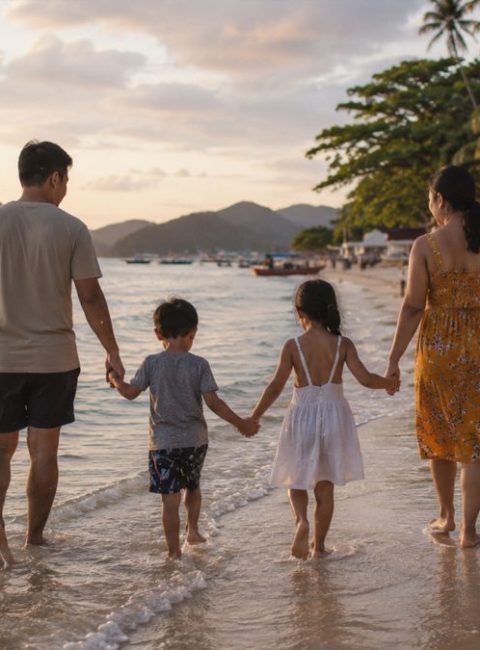
After looping back from Lazi through the island’s interior roads, your afternoon destination is Paliton Beach — and it is, without question, one of the most beautiful stretches of coastline in the Central Visayas. Situated just a few kilometers north of San Juan’s main beachfront, Paliton is frequently dubbed the “Boracay of Siquijor,” a comparison that flatters both beaches rather than diminishing either. The sand here is fine and powdery in a way that clings to your feet in dry, cool clumps — the telltale signature of premium-grade white sand beaches. The water is an almost startlingly clear shade of turquoise and green that deepens gradually as you wade in, with a sandy seafloor that remains visible for a remarkable distance offshore.
What sets Paliton apart visually from Siquijor’s other beaches is its dense fringe of coconut palms that lean dramatically over the shoreline at various angles, their trunks forming natural arches over the water. This creates the layered, tropical composition that travel photographers dream of: white sand below, deep turquoise water in the middle, leaning palms above, and open sky behind. It is genuinely spectacular in a way that photographs do not fully capture, because the scale and the light and the warm salt air are all part of the experience. There is no heavy resort infrastructure here — no floating water parks, no jet ski vendors, no blasting speakers. Just the beach, the palms, the water, and a handful of small bamboo cottages where you can rent a sunbed for around ₱50–₱100.
Spend the afternoon swimming, snorkeling along the beach’s edge (basic snorkeling gear available for rent at ₱100), or simply reclining beneath a coconut palm with the specific, perfect brand of productive-do-nothing that only good tropical beaches produce. As the afternoon stretches toward late afternoon, the beach takes on a different quality entirely: the western exposure means Paliton receives the full, unobstructed spectacle of the Siquijor sunset. Local vendors emerge as the light softens, selling fresh young coconuts (buko) for ₱30–₱50, cold San Miguel beer for ₱40–₱60, and various local street food including grilled corn, fish balls, and sticky rice delicacies.
Do not leave Paliton before the sun fully sets. The western horizon here drops into the open Mindanao Sea, unbroken by any landmass, which means the colors during golden hour and the final descent of the sun are genuinely dramatic — deep oranges, purples, and pinks that reflect across the calm water surface like something from a painting. Locals and travelers alike gather along the shore in the final hour before dark, and there is an easy, communal mood that makes staying for the full sunset a natural social occasion rather than a solitary activity. Cap the evening with dinner at one of San Juan’s excellent restaurants (see the dining section below) for a Day 1 that covers colonial history, natural wonder, beach relaxation, and sunset beauty — all on a scooter and under ₱500 in expenses outside your accommodation.
Day 2, Morning — Cambugahay Falls

Cambugahay Falls is Siquijor’s most iconic natural attraction, and it earns that designation entirely on merit. Set in a lush, jungle-fringed ravine in the municipality of Lazi, this three-tiered waterfall cascades into a series of deep natural pools fed not by surface runoff but by underground freshwater springs — which is precisely why its water maintains that extraordinary, milky-turquoise color even during dry weather. The color is not a camera filter or a trick of the light. It is genuinely, breathtakingly real: a luminous, opaque turquoise that glows almost electric against the surrounding dark green vegetation and grey limestone. Arrive at the falls by 8:00 AM at the latest to experience the place as it deserves to be experienced: without the Instagram crowds that begin flooding in around 10:00 AM.
The access involves descending 135 concrete steps through dense jungle vegetation — a beautiful, shaded descent in the cool morning air. At the bottom, you are rewarded immediately with the sight and sound of the falls: water tumbling over natural limestone shelves into the luminous pools below. The entry fee is just ₱30 per person, which is one of the most spectacular bargains in Philippine tourism. Local guides stationed at the falls maintain bamboo rafts for floating between the tiers (free to use or tipping basis) and multi-level vine and rope swings positioned over the deepest pools. Unlimited swing access costs an additional ₱50 — an absolute must. The lowest tier’s swing sends you out over the deepest pool in a wide, soaring arc before you release and plunge into the cool water below. It is one of those experiences that produces involuntary, unself-conscious joy regardless of your age.
You can also explore the upper tiers of the falls by wading upstream through the shallow connecting pools. The uppermost tier is the quietest and most photogenic — fewer visitors make it up there, and the unobstructed view of the water cascading into the turquoise pool below is the best composition available at the entire site. Waterproof sandals or reef shoes are strongly advisable for maneuvering on the wet limestone surfaces between tiers. The water temperature throughout is refreshingly cool — cold enough to feel bracing and invigorating on a tropical morning without being uncomfortable. Most visitors spend between 1.5 and 2.5 hours at Cambugahay, and that time passes quickly.
One logistical note that first-time visitors consistently underestimate: the climb back up those 135 steps, done at mid-morning in full Visayan heat and humidity while soaking wet, is significantly more demanding than the walk down. Wear strap-on river sandals rather than flip-flops, both for the wet limestone near the pools and for the traction you need on the steps on the way back up. Staying hydrated is important — there are small vendors at the top selling water and snacks. After Cambugahay, allow yourself 30 minutes to dry off, change if needed, and eat a proper late breakfast before heading to the afternoon’s destination at Salagdoong Beach on the eastern tip of the island.
Day 2, Afternoon — Salagdoong Beach Cliff Jump

After Cambugahay Falls and a late morning meal, continue your clockwise loop around the island to the eastern tip, where Salagdoong Beach awaits as one of the most adrenaline-charged stops on the entire Siquijor itinerary. Operated as a provincial public resort by the local government of Maria municipality, Salagdoong charges a modest entrance fee (approximately ₱30–₱50 per person) and offers access to one of the most strikingly beautiful beach settings on the island. The resort frames two natural coves separated by a dramatic rock formation that juts out into the brilliantly blue sea — and it is precisely this rock formation that has made Salagdoong famous beyond Siquijor’s shores.
Built into the face of the rock are two concrete diving platforms: the lower at 7 meters (approximately 23 feet) and the upper at 10 meters (approximately 33 feet) above the sea surface. These are not casual beach diversions — these are real, committed cliff jumps that require you to step deliberately off a ledge with nothing but open air and deep water below you. The 7-meter platform is the starting point for most visitors and is genuinely thrilling without being terrifying; the 10-meter platform is a serious undertaking that demands more courage and technique, particularly a straight, feet-first entry to avoid injury upon hitting the water. Both jumps draw enthusiastic onlookers, and the social energy around the rock during the afternoon hours is electric and infectious.
Two critical safety notes bear repeating: first, high tide is required to jump safely. The water depth at the base of the rock changes significantly between high and low tide, and jumping onto a low-tide water level can result in serious injury. Always check local tide charts (available through apps like Tides Near Me or by asking the resort’s lifeguards directly) before making the leap. Second, there are lifeguards on duty at the resort — always follow their instructions, and do not jump if they advise against it. Beyond the cliff, Salagdoong’s twin coves offer excellent swimming conditions in typically calm, protected water, and the shaded picnic pavilions make it a pleasant spot to spend the full afternoon rather than rushing through.
The resort has basic on-site facilities including changing rooms, small canteen-style food stalls selling rice meals (₱80–₱150) and cold drinks, and cottage rentals for groups wanting shade. After you’ve jumped, swum, and thoroughly exhausted your afternoon’s quota of adrenaline, begin the return ride westward toward San Juan, stopping at Tubod Marine Sanctuary on the way for a final snorkeling experience before sunset. Salagdoong is approximately a 45-minute to one-hour scooter ride from San Juan, so allow enough buffer time to make the marine sanctuary stop without rushing.
Day 2, Late Afternoon — Tubod Marine Sanctuary

On your return ride from Salagdoong toward San Juan, make a deliberate stop at the Tubod Marine Sanctuary, located directly in front of Coco Grove Resort on the main coastal road. This protected marine reserve is one of the best-preserved shallow coral ecosystems in the Central Visayas — a statement that carries genuine weight given the widespread damage to Philippine reefs from bleaching, dynamite fishing, and over-tourism in other areas. At Tubod, the corals are remarkably healthy, dense, and teeming with life that a snorkeler with basic equipment can observe clearly and at close range.
Pay the ₱50 conservation fee at the entrance (this money goes directly toward reef protection and community-based management), and rent a mask and snorkel set for ₱100 if you didn’t bring your own. Life jackets are available for non-swimmers. Wading in from the beach, you’ll pass through a shallow seagrass bed — which itself is worth pausing over, as sea turtles frequently feed here in the early morning and late afternoon hours — before reaching the reef shelf drop-off where the corals begin in earnest. The sheer density and variety of the reef life here is extraordinary: giant clams with iridescent purple and blue mantles wedged between coral heads, sea anemones waving lazily in the current with their clownfish tenants darting in and out, vast schools of sergeant majors and fusiliers moving in coordinated silver-and-black formations overhead.
The afternoon light at this hour filters through the water at a beautiful, slanted angle that makes the coral colors glow — purples, oranges, blues, and greens — in a way that morning light does not replicate. Plan on 45 minutes to one hour in the water, enough to cover the main reef area thoroughly. The reef is protected, which means you must not stand on the corals or touch any marine life — an absolute rule enforced by the local community and for which fines can be applied. Snorkel, observe, and let the presence of something this beautiful and this intact remind you of what the Philippines’ reefs can look like when genuinely protected.
After the sanctuary, you are just minutes from San Juan. Rinse your gear, change, and head to dinner — you have earned a proper meal after a full day of waterfalls, cliff jumps, and coral reefs. Day 2 represents the full breadth of Siquijor’s natural appeal compressed into a single, extraordinary day: freshwater springs, open-sea adrenaline, and marine conservation all woven together by nothing more than a scooter and a willingness to explore. If snorkeling and marine adventures are a priority for you, our guide to Island Garden City of Samal offers another excellent Philippine marine destination for comparison.
Day 3, Morning — Mt. Bandilaan Viewpoint

Begin your final full day on Siquijor with an inland journey rather than a coastal one. From San Juan, head due east and then north on the winding mountain roads that climb steadily into the forested interior of the island toward Mt. Bandilaan, Siquijor’s highest peak and geographical center. The drive itself is part of the experience: the coastal flatlands give way quickly to steep, densely forested ridges where the air noticeably cools by several degrees as altitude increases. The road narrows and the tree canopy thickens overhead, creating a tunnel of green light that feels entirely removed from the beach-and-resort tourism of the coastal ring road. You are entering the authentic, barely-touched interior of an island that most tourists never see because they never leave the circumference road.
At the summit area, a public viewing tower managed by the local government stands ready for the ascent. The tower itself rises above the treeline, and from its uppermost level — reached via a concrete staircase — you are rewarded with a genuinely extraordinary 360° panoramic view. On a clear morning, which is more the rule than the exception during the dry season (November through May), the entire island of Siquijor unfolds beneath you like a topographical map come to life: the coastal ring road visible as a thin ribbon around the island’s perimeter, the deep green interior forest filling the center, and the surrounding Visayan Sea stretching off in every direction with neighboring islands — Negros to the north, Mindanao to the south — visible on the horizon. It is a perspective of Siquijor that very few visitors experience, and that rarity makes it all the more meaningful.
The Mt. Bandilaan area is also a national park, protecting what remains of Siquijor’s endemic flora and the watersheds that feed the island’s freshwater springs — including the very springs that make Cambugahay Falls so spectacular. Birdwatchers will find the forested slopes rewarding in the early morning hours, when endemic Philippine species are most active. The cool mountain temperatures — a refreshing contrast to the coastal heat — make this a genuinely enjoyable stop that does not require any exertion beyond the tower ascent. Bring a light jacket if you’re sensitive to cool air; the summit area can feel noticeably chilly on cloudy mornings.
Allow about one hour at Mt. Bandilaan before descending back toward the municipal areas where Siquijor’s traditional healers are based for the afternoon’s cultural experience. The drive back down through the forest is equally beautiful as the ascent, and the transition from cool mountain air back into the warm coastal atmosphere makes arriving at the coast feel like stepping into a different world entirely — which, in many ways, is exactly what it is. For travelers who prioritize natural beauty and unusual experiences over beach time, this inland day offers a Siquijor that very few itineraries bother to include, and that oversight is their loss entirely.
Day 3, Afternoon — Meeting a Traditional Healer (Mananambal)

No Siquijor itinerary is complete without engaging meaningfully with the island’s most defining cultural characteristic: its living tradition of folk healing. The Mananambal — Siquijor’s traditional herbalists and healers — are not relics of a superstitious past. They are practicing community figures who provide real therapeutic and spiritual services to local residents throughout the year, and whose knowledge of medicinal plants, roots, barks, and healing rituals represents a legitimate indigenous knowledge system that predates both Western medicine and the Spanish colonial period in the Philippines. Engaging with this tradition respectfully and with genuine curiosity is one of the most authentically Filipino experiences available to the modern traveler.
The most famous ritual offered by Siquijor’s healers is the Bolo-Bolo, a diagnostic and cleansing ceremony that uses a clear glass of water, a smooth black stone, and a bamboo straw. The healer seats the patient across from them and, while murmuring prayers and intention, blows a continuous stream of bubbles through the bamboo straw into the water while slowly moving the glass across the patient’s body. If the water turns murky, dark, or cloudy, the healer interprets this as an indication of negative energy, illness, or spiritual imbalance in that area of the body. The process is repeated with fresh water until it remains perfectly clear. Whether you interpret this as literal, metaphorical, psychosomatic, or purely cultural, the experience is genuinely compelling — quiet, intimate, and strange in the best possible way.
Healers can be found in several barangays (villages) in the municipalities of San Antonio and Lazi, and guesthouse owners in San Juan are typically the best resource for respectful introductions. Ask your accommodation host to recommend a specific healer rather than approaching homes randomly — this ensures you are meeting someone who welcomes visitors and understands the cultural etiquette around tourist engagement. Always ask permission before taking photographs or video of any part of the session, and leave a sincere monetary donation of ₱200–₱500 as a respectful expression of gratitude rather than a commercial transaction. This is the universally practiced local custom.
It is worth noting that Siquijor’s healing traditions reach their annual peak during Holy Week (the week before Easter Sunday), when healers gather in the forests of Mt. Bandilaan to collect medicinal plants and conduct their annual potion-making ceremonies. The island is exceptionally atmospheric during this period, though accommodation books out months in advance. If your trip does not coincide with Holy Week, that is no impediment to a meaningful healer visit — the Bolo-Bolo ritual is practiced year-round. Approach this experience with an open mind, genuine curiosity, and deep respect for a living cultural tradition that locals consider sacred — and you will leave with a more nuanced, more human understanding of Siquijor than any waterfall photograph can provide.
Where to Eat in San Juan, Siquijor

San Juan’s food scene has developed remarkably over the past decade, evolving from a handful of basic carinderias into a genuinely exciting dining strip that bridges local Filipino flavors with international cuisine at prices that remain firmly budget-to-mid-range. The cluster of restaurants along San Juan’s beachfront and main road caters intelligently to the island’s now-diverse visitor base: backpackers who want filling Filipino meals for under ₱150, digital nomads craving wood-fired pizza and craft cocktails, and couples celebrating with fresh seafood grilled directly on the beach. The variety available within a five-minute walk is genuinely impressive for an island of Siquijor’s size.
Baha Ba’r is the most atmospheric of the established restaurants in San Juan, pairing traditional Filipino fusion cooking with fresh local seafood and craft cocktails using indigenous ingredients like calamansi, guyabano, and locally distilled spirits. The acoustic live music that plays most evenings creates a convivial, unhurried atmosphere that captures exactly what an island night should feel like. Expect to spend ₱400–₱800 per person for a full meal with drinks. Monkey Business leans into the international backpacker market with excellent smoothie bowls (₱180–₱250), solid burgers, and comfort food in a playful tropical interior complete with swing seats — it is a mid-range crowd-pleaser that delivers consistent quality. Its social atmosphere makes it an excellent spot for solo travelers to meet fellow visitors.
Luca Loko is the island’s finest destination for Italian food, producing wood-fired pizzas with thin, blistered crusts (₱300–₱450), fresh house-made pastas, and Italian mains using locally sourced ingredients. The beachside setting is casual and beautiful, and the quality of the pizza rivals anything available in the country’s larger cities. It is consistently among the highest-rated restaurants in Siquijor across major travel platforms. Dagsa rounds out the essential dining choices with a Filipino-European fusion menu, excellent cold beer selection, and a spacious open-air format with regular live band nights that draw a mixed local and tourist crowd — a genuinely community-oriented venue that feels less like a tourist trap and more like a beloved local institution that has grown to welcome visitors. Budget ₱250–₱500 per person at Dagsa.
For budget dining outside these establishments, San Juan’s local market area has multiple carinderia (home-style Filipino diners) where a full rice meal with fish, vegetable viand, and soup costs ₱60–₱100. These places serve the same food that local Siquijodnon families eat — fresh, flavorful, and about as authentic as Philippine cuisine gets in a tourist area. For the best value introduction to Siquijor’s local seafood, ask your guesthouse host where the freshest grilled fish is being sold that evening: small mobile grills operated by local vendors appear near the beach at dusk and serve the day’s catch for ₱80–₱150 per piece. Pair with fresh rice from a carinderia and eat on the beach for a dinner that costs under ₱250 and is among the finest meals the island produces.
💰 6 Pro Tips for Traveling Siquijor Smart in 2026
Siquijor rewards the prepared traveler enormously. These six tested, practical tips will ensure your three-day itinerary stays smooth, affordable, and genuinely enriching — from the moment you step off the ferry to your last sunset on the island.
Siquijor’s ATMs are notoriously unreliable and frequently run completely out of cash during weekends, public holidays, and peak tourist season. There are very few ATMs on the island (primarily in Siquijor town and Larena), and none of them are particularly well-stocked. The smart approach is to calculate your entire expected three-day budget in Dumaguete — accommodation, food, scooter rental, activities, and a contingency buffer of at least ₱1,000 — and withdraw the full amount from a Dumaguete City ATM (BDO, BPI, Metrobank, and GCash partner ATMs are all available near the sea port) before boarding the ferry. GCash QR payment is accepted at some restaurants in San Juan, but availability is inconsistent and should not be relied upon as a primary payment method.
The circumference road is best navigated in a clockwise direction starting from San Juan, which puts the most scenic coastal stretches (including the Lazi section) in the morning when the light is best, and brings you back through San Juan’s approach in the late afternoon with the setting sun behind you. Counter-clockwise navigation works fine but places you against direct afternoon glare on the return. Fill up your scooter tank at the official petrol station immediately adjacent to the pier before you begin — this is a non-negotiable first step. Roadside “sari-sari stores” selling fuel in soft drink bottles charge significantly more per liter and their fuel quality is variable. The full island circumference on a scooter consumes roughly one full tank, so one fill-up plus a half-tank backup is the safe standard.
Standard chemical sunscreens containing oxybenzone and octinoxate are scientifically proven to damage coral reefs — the very coral reefs you are traveling to Siquijor to see. Reef-safe sunscreen (mineral-based, using zinc oxide or titanium dioxide) is not readily available on the island and commands a significant premium at the few stores that stock it. Purchase a good-quality reef-safe sunscreen in Cebu, Manila, or Dumaguete before your trip. Similarly, bringing your own snorkel mask from home eliminates rental costs at every marine stop and ensures a better fit and seal than communal rental equipment. Even an inexpensive full-face mask purchased in Manila will pay for itself in rental savings within two or three snorkeling stops on a multi-day trip.
Cambugahay Falls and Paliton Beach — Siquijor’s two most visited sites — transform dramatically between 8:00 AM and 10:30 AM. Arriving before 8:30 AM gives you the falls virtually to yourself, with pristine pools, quiet jungle sounds, and unobstructed photographic compositions. By 11:00 AM, tour groups arrive in clusters and the “enchanted jungle pool” atmosphere gives way to a crowded swimming hole. The same pattern applies to Paliton Beach, though its larger scale absorbs crowds more gracefully. Plan your daily schedules around early morning starts (6:30–7:00 AM breakfast, first stop by 8:00 AM) and you will consistently experience Siquijor’s attractions at their most beautiful and most peaceful.
Siquijor’s residents are justifiably proud of their island’s distinctive cultural identity, and they have deep, sincere feelings about how that identity is discussed and portrayed. Avoid making jokes about witchcraft, black magic, or dark arts in the presence of locals — even what feels like friendly banter can come across as dismissive of traditions that are genuinely meaningful to the community. When visiting traditional healers, behave as you would in a respected elder’s home: speak quietly, follow their lead, ask before photographing, and offer your monetary appreciation graciously. Dressing modestly when visiting churches and taking shoes off when entering homes or certain traditional spaces reflects a basic cultural awareness that locals notice and deeply appreciate.
Siquijor’s extraordinary natural beauty — its pristine reefs, spring-fed waterfalls, and clean white-sand beaches — exists specifically because the island has not yet been overwhelmed by the kind of careless mass tourism that has damaged other Philippine beach destinations. Every piece of trash you carry out rather than leaving behind, every coral you refuse to stand on, and every marine creature you observe without touching contributes to maintaining Siquijor in the remarkable condition you found it. Bring a reusable water bottle and a small trash bag on every day trip. Pack out everything you pack in at remote beaches like Paliton. Never feed or touch the fish, turtles, or any marine life at Tubod. The most impactful souvenir you can take from Siquijor is the memory of a place that remains genuinely, spectacularly intact — and the commitment to help keep it that way.
❓ Frequently Asked Questions About Siquijor
🇵🇭 Siquijor Is Waiting — and It Is More Than Worth the Crossing
In this comprehensive 2026 Siquijor travel guide, we have covered everything you need for a flawless three-day island adventure: from the practical logistics of the Dumaguete ferry and pier-side scooter rental, to the milky-turquoise wonder of Cambugahay Falls, the colonial grandeur of Lazi Church, the dramatic cliff jumps of Salagdoong Beach, the pristine coral sanctuary at Tubod, and the panoramic heights of Mt. Bandilaan. We have mapped out where to eat in San Juan from budget carinderias to craft cocktail bars, introduced you to the island’s extraordinary living heritage through its traditional healers, and given you the pro tips that separate a smooth, enriching Siquijor experience from a frustrating one. For those planning broader Philippine adventures, our Top 25 Best Tourist Destinations in the Philippines for 2026 is the perfect companion piece, and OFWs planning a homecoming visit should also check our dedicated OFW Homecoming Budget Guide for smart travel planning across the archipelago.
Siquijor’s greatest gift to the modern traveler is not its mystical reputation — though that reputation is genuinely fascinating — but the rarer, more precious quality of having remained authentic. The island has somehow navigated the difficult space between being discovered enough to have excellent infrastructure and dining, while remaining uncrowded enough to feel genuinely intimate. That balance will not last forever; every great destination eventually tips toward over-tourism. But in 2026, Siquijor is still in that golden window. The falls are still clear. The reef is still intact. The beaches are still clean. The healers still practice. And the sunset at Paliton still turns the sky into something that stops your breath.
Book your ferry. Rent your scooter. Fill your tank at the pier. And let Siquijor remind you why you fell in love with the Philippines in the first place. The island’s magic — real, natural, human, and extraordinary — is there for every traveler willing to make the crossing. Mabuhay!







 Facebook
 Twitter