
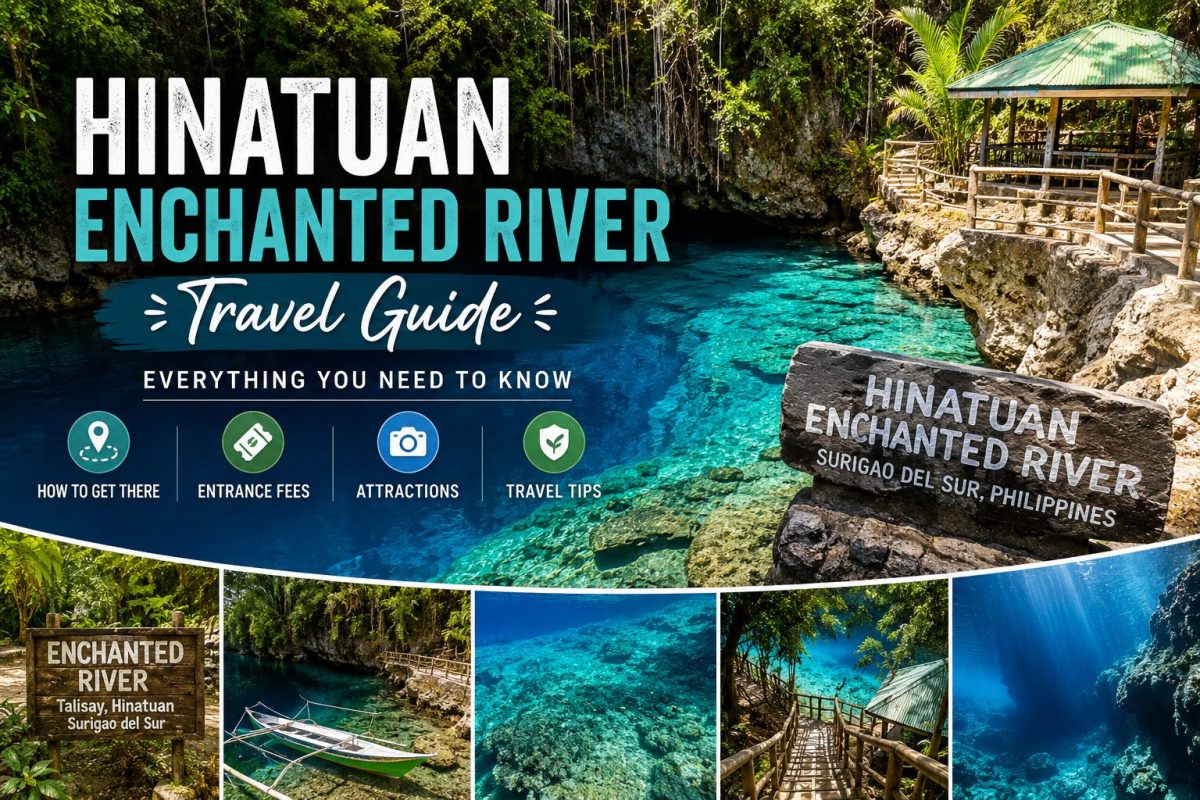
How to Get to Hinatuan, Surigao del Sur

Reaching Hinatuan requires a bit of planning, but the journey is entirely manageable and the routes are well-established. The most popular starting point is Butuan City, the regional center of Caraga, which is served by direct flights from Manila on Cebu Pacific and Philippine Airlines. From Bancasi Airport in Butuan, travelers take a bus or van toward Mangagoy (Bislig) or directly bound for Hinatuan town; the land journey takes approximately 3.5 to 4 hours along the coastal highway that skirts the Pacific. A second option is flying into Davao City, then boarding a Bachelor Express bus at the Ecoland Bus Terminal bound for Mangagoy — a longer 5 to 6 hour ride that passes through some of Mindanao’s most scenic landscapes. For those already exploring southern Mindanao, this Davao route pairs excellently with a stop at the Island Garden City of Samal before heading north toward Surigao del Sur.
Once you arrive at the Hinatuan bus terminal or town center, the river is located in Barangay Talisay, approximately 12 kilometers away via a winding forested road. The standard and most charming way to cover this final stretch is by habal-habal — a motorcycle taxi — whose drivers wait at the terminal and will whisk you through the lush countryside to the park’s registration area. The fare is negotiable, typically ranging from ₱150 to ₱200 per way depending on whether you ask the driver to wait for your return trip (most will, for an agreed total of ₱300–₱400). Alternatively, some visitors arrange a tricycle or a chartered multicab for slightly more comfort, particularly useful if traveling with luggage or young children. Within the park itself, a short complimentary shuttle ferries visitors from the main registration and parking area down the 300-meter forest path to the riverbank, sparing your sandals from the jungle trail.
Travelers coming from Cebu have the additional option of taking a Cokaliong or Medallion Transport ferry to Surigao City, then catching a connecting bus southward through Tandag and Bislig toward Hinatuan — a scenic overnight sea passage that saves on airfare. Bus fare from Surigao City to Hinatuan runs approximately ₱300–₱450 per person. There are no direct flights to Hinatuan itself, so ground transport from the nearest airport city is unavoidable, but the roads are paved and buses are frequent during daylight hours. It is worth noting that Hinatuan has no ATMs at or near the river park, so withdraw sufficient Philippine pesos in Butuan, Davao, or Bislig before making the final leg of your journey. Planning your Mindanao trip well in advance is especially important if you are combining multiple stops; those building an extended itinerary can find additional planning resources in this comprehensive guide to the top 25 best tourist destinations in the Philippines for 2026.
For travelers on a tight schedule, it is entirely feasible to visit Hinatuan as a day trip from Bislig City, which is roughly 45 minutes away by bus and offers better lodging options, a wider selection of restaurants, and more reliable ATM access. Many organized tours from Surigao City and Butuan also offer all-inclusive day packages that bundle transportation, entrance fees, and lunch, which can be a convenient option if you prefer not to arrange each component independently. However, independent travelers who plan carefully consistently report greater flexibility — particularly the ability to time their arrival before the tour buses descend and experience the magical pre-noon quiet of the river with far fewer crowds.
Updated Park Rules, Entrance Fees & Cost Breakdown

To protect the fragile limestone formations of the river’s underwater cave system and maintain the extraordinary clarity of the water, the local government of Hinatuan enforces a comprehensive set of environmental conservation rules that all visitors must follow. The most important regulation — and the one that surprises many first-time visitors — is that swimming inside the main blue pool (the “eye” of the river) is strictly prohibited. This central pool, where the deep cobalt-blue color is most intense and the underwater cave mouth is directly below, has been designated a no-swim zone to prevent physical disturbance to the cave ecosystem and to reduce coliform contamination that was documented in earlier years when the rules were more lenient. Instead, a designated swimming area with safety ropes and buoys has been established approximately 10 meters downstream from the main viewing point, where the water is slightly shallower and the visibility remains exceptional. This is a meaningful conservation effort, and visitors who respect it help ensure that the river remains as pristine for future generations as it is today — a philosophy shared across the Philippines’ finest eco-tourism islands like Siquijor, where responsible travel is similarly emphasized.
The park infrastructure has been thoughtfully redesigned to minimize human impact at the river’s edge. Food and beverages are strictly prohibited near the riverbank — all eating and drinking must be done in the designated talipapa (riverside market and dining area) located approximately 300 meters from the water. Life vests are mandatory for all swimmers in the designated swimming zone and are provided as part of the entrance fee, which is a comforting safety measure given that the water is deep and the currents from the tidal cave system can be unexpectedly strong. Bringing outside food into the river area is not permitted, and plastic bags are banned within the entire park. These rules are actively enforced by park rangers stationed throughout the grounds, so familiarizing yourself with them before arrival avoids any unpleasant surprises.
The cost structure at Hinatuan Enchanted River is refreshingly straightforward and genuinely budget-friendly. The entrance and environmental conservation fee is just ₱50 per person, which includes use of a mandatory life vest for swimmers. A picnic table rental in the designated dining market area costs ₱100 per group and is well worth it for extended stays. The complimentary shuttle that ferries visitors from the registration/parking area to the riverbank is included at no extra charge. There is no fee for using the viewing decks or simply sitting by the river to enjoy the scenery. Sunscreen is not permitted in the water due to its harmful effect on the cave ecosystem — visitors with sensitive skin should simply wear a rash guard or long-sleeved swimwear instead. Cash is the only payment method accepted; there are no card terminals or ATMs anywhere near the river, so plan accordingly and bring sufficient pesos from the nearest city.
Photography and videography are fully permitted throughout the park, and the Enchanted River is undeniably one of the most photogenic natural attractions in the Philippines, with its vivid color gradient from turquoise to deep sapphire creating extraordinary images in any lighting condition. Drone flying, however, requires a special permit from the local government and is subject to restrictions — check current regulations with the park office on arrival if you plan to bring aerial equipment. For travelers seeking to combine their Hinatuan visit with other Caraga Region adventures, the surrounding area offers excellent opportunities for island hopping and beach experiences that complement the river perfectly, making Surigao del Sur a worthy rival to more famous island destinations like budget island-hopping in Palawan.
The Blue Lagoon, Main Viewpoint & The River’s Mystique

The visual centerpiece of the Enchanted River is, without question, the spectacular deep-blue abyss at the heart of the lagoon. Standing on the wooden viewing decks that line the riverbank, you peer down through water of extraordinary clarity into a subterranean chasm of impossible depth, its walls glowing in graduated shades from bright turquoise at the rim to a rich midnight cobalt at the cave mouth far below. Cave divers who have explored the underwater tunnels report that the system extends for hundreds of meters into the limestone bedrock, connecting eventually to the open Pacific — which explains why the water is entirely saltwater despite the river’s location several hundred meters inland. The unique chemistry of the water, combined with the angle of sunlight filtering through the narrow channel above, creates the otherworldly neon-blue glow that no photograph fully captures and no description quite does justice. This phenomenon makes Hinatuan genuinely unique even among the Philippines’ remarkable collection of water attractions — a country whose natural water beauty rivals even the famous dramatic coastlines of the Batanes Islands at the country’s northern tip.
The local folklore surrounding the river is inseparable from the experience of visiting it. According to Surigao del Sur oral tradition, the Enchanted River is guarded by a community of diwata — nature spirits or fairies in Philippine mythology — who are said to live in the underwater caves and emerge at night to protect the river from human desecration. Several local fishermen and early tourists have reported strange incidents over the decades: fish disappearing overnight only to reappear the next morning, unexplained lights seen moving beneath the surface after dark, and a persistent sensation of being watched by unseen presences within the forest canopy. Whether one attributes these phenomena to folklore, natural biology, or the human mind’s tendency to fill in the gaps of the unknown, they add an undeniable layer of atmospheric enchantment to the visit. Park rangers often share these stories with visiting groups, weaving the cultural narrative together with the ecological facts in a way that enriches your understanding of why this place has held such powerful significance for local communities for generations.
The river itself is relatively short — the navigable section from the cave mouth to where it meets the sea spans only a few hundred meters — but every meter of it is visually stunning. As you walk downstream from the main viewpoint toward the designated swimming area, the water transitions from the deep central blue into a series of progressively shallower turquoise pools fringed by overhanging vegetation and smooth limestone outcroppings. Schools of wild fish are visible throughout this stretch, darting between the roots and rocks with the casual confidence of creatures who know they are completely protected within the park boundaries. The designated swimming zone itself, demarcated by bright orange buoys and safety ropes, offers genuinely excellent snorkeling even for those without fins — the water visibility frequently exceeds 15 meters and the marine life density is remarkable for an inland waterway. Bringing your own mask and snorkel is highly recommended, as rental equipment at the park is limited. Those who have snorkeled in other famous Philippine spots will find the Enchanted River a worthy peer to the more celebrated marine reserves featured in any list of the Philippines’ best tourist destinations for 2026.
For photographers, the optimal shooting window is between 9:00 AM and 11:00 AM, when the sun is high enough to penetrate the narrow canyon and illuminate the underwater cave but not yet so directly overhead that it bleaches out the color contrast. A polarizing filter for camera lenses is enormously effective at cutting surface glare and making the underwater depths visible in still photography — without one, even the best cameras struggle to capture the true depth and color of the pool. Drone photography, when properly permitted, produces some of the most striking aerial images in all of Philippine travel photography, as the river’s intense blue cuts a brilliant slash through the dense green of the surrounding forest. Even standard smartphone photography produces astonishing results at this location, however, making it one of the most accessible naturally photogenic places in the entire archipelago.
The Daily Noon Fish Feeding Ritual — Hinatuan’s Most Iconic Spectacle

Every single day, at precisely 12:00 noon, something extraordinary happens at the Hinatuan Enchanted River that has made it one of the most talked-about natural spectacles in the Philippines. A bell rings — or, in some accounts, the park’s speakers begin playing the “Hymn of Hinatuan” — and all swimmers are immediately ordered out of the water. A hush falls over the crowd as park rangers board a small wooden boat and paddle to the center of the main pool. As they scatter rice and feeding pellets across the surface of the water, what happens next is the kind of thing that makes even the most seasoned travelers stop and stare: massive, shimmering schools of wild silver jackfish begin erupting from the deep blue cave mouth below, thousands of them boiling up from the darkness and churning the surface of the river into a sparkling, flashing chaos of scales and fins. The spectacle lasts approximately 15 to 25 minutes and draws spontaneous applause and cries of amazement from every crowd that witnesses it. It is, quite simply, one of the most cinematic and viscerally exciting natural events in Southeast Asia, and it requires absolutely no extra payment to witness — it is included in your ₱50 entrance fee. For nature lovers who have explored other impressive wildlife destinations like the culturally rich destinations of Ilocos Sur, the Enchanted River’s fish feeding offers a completely different but equally memorable category of Philippine wonder.
The scientific explanation for the fish feeding’s reliability is as fascinating as the spectacle itself. The jackfish — primarily large-bodied talakitok and silver barred fish — have been conditioned over many years of daily feeding to associate the noon bell and the presence of boats with food. Because the river’s underground cave system connects to the open sea, these are genuinely wild, free-swimming ocean fish that use the cave as a shelter and return to the open sea at will — they are not farmed, caged, or artificially introduced. The fact that they have voluntarily chosen to remain in the vicinity of the cave and participate in daily feeding is a testament to both the richness of the cave ecosystem and the care with which the park rangers have maintained their trust. Local tradition frames this relationship in spiritual terms: the fish are said to be the companions of the river’s guardian diwata, summoned from the deep each day to receive offerings from the living world above.
To position yourself optimally for the feeding, arrive at the main viewpoint at least 20 minutes before noon and claim a spot on the wooden decking that overhangs the main pool. This elevated angle gives you an unobstructed view directly down into the water as the fish ascend, and the light at midday is perfect for capturing the iridescent flash of thousands of fish in motion. Those who arrive late find the viewing decks crowded and are often stuck behind taller visitors, so early positioning is critical. If you have a waterproof camera or a phone in a waterproof case and you are in the designated swimming zone before the noon bell, the underwater perspective of the fish emerging from below is even more breathtaking than the surface view — though you will be firmly asked to exit the water before feeding begins. Experienced visitors recommend staying in the water until the last possible moment and then climbing out at the edge of the designated zone for the closest possible surface-level view of the eruption.
The fish feeding tradition at Hinatuan is not a manufactured tourist attraction but an organic ritual that has evolved over decades from the practices of local fishermen who once offered food to the river spirits as an act of gratitude for bountiful catches. The current daily performance is a continuation of this tradition, formalized into a park program that has become the most famous event in Surigao del Sur’s tourism calendar. The deep interweaving of ecology, folklore, and daily ritual at the Enchanted River represents something increasingly rare in Philippine tourism — a natural attraction whose meaning transcends the visual and connects visitors to the living spiritual and cultural heritage of the place. It is the kind of experience that inspires the impulse to return, and many visitors who come expecting a beautiful river leave instead with a profound sense of having witnessed something genuinely sacred.
Island Hopping to the Britania Group of Islands, Surigao del Sur

One of the most compelling reasons to spend more than a single day in Surigao del Sur is the extraordinary opportunity to combine your Hinatuan Enchanted River visit with an island-hopping excursion to the Britania Group of Islands, located near the municipality of San Agustin approximately one hour north of Hinatuan. This archipelago of 24 small islands and islets scattered across turquoise Mindanao Sea waters is widely considered one of the Philippines’ finest undiscovered island-hopping destinations — comparable in raw natural beauty to the more famous destinations of the Visayas while receiving a fraction of the tourist traffic. White-sand beaches, crystal-clear snorkeling waters, and the kind of deserted, postcard-perfect islets that have become increasingly rare in more heavily visited areas make Britania a bucket-list addition for any Philippines itinerary. Travelers who prioritize discovering unspoiled island beauty will find that the combination of Hinatuan and Britania creates an itinerary that rivals even a dedicated budget island-hopping trip to Palawan in terms of both value and visual impact.
Island hopping at Britania is typically arranged through the San Agustin Municipal Tourism Office or directly at the designated jump-off point at the Britania beach area. A full-day outrigger boat rental for a group of up to 10 people typically costs between ₱1,500 and ₱2,500, making it highly economical when costs are divided among a group. Solo travelers and small groups can usually join shared tours organized by local tourism operators for approximately ₱350–₱500 per person, which includes boat hire, snorkeling stops at the most colorful reef areas, and beach time on multiple islands including the popular “Naked Island” (Hagonghong Gamay Island) — a pure white sandbar with zero vegetation that rises strikingly from the blue sea. The environmental fee for Britania island hopping is approximately ₱50–₱100 per person, keeping the total per-person cost for a full day of island exploration well within the range of the Philippines’ most budget-friendly beach experiences.
The snorkeling around Britania’s outer islands is genuinely excellent, with healthy coral gardens visible in waters as shallow as two meters and a diversity of reef fish that rewards even casual snorkelers. Sea turtles have been sighted at several of the outer reef areas, and dolphins occasionally escort boats between islands in the mornings. Overnight camping on the larger islands is permitted with proper permits from the municipal tourism office, and a growing number of simple beachfront accommodation options — bamboo cottages and tents — have appeared on the main island, though facilities remain basic and power is intermittent. For those who prefer a more established base, Bislig City offers the best range of comfortable accommodation within day-trip distance of both Hinatuan and Britania. The combination of a morning at the Enchanted River followed by an afternoon island hop at Britania makes for one of the richest single-day outdoor itineraries available anywhere in the Philippines — a fitting entry on any list of the top budget-friendly travel destinations in the Philippines for 2026.
Beyond the islands, the Hinatuan River mouth itself offers an additional aquatic adventure: at the point where the river flows into the open sea, small outrigger boats can be hired for ₱200–₱400/hour to explore the coastal waters, visit nearby fish cages where locally farmed tuna and grouper are raised, and observe the contrast between the river’s intense blue interior water and the greener tidal zone where fresh and saltwater mix. This area is also a productive fishing ground, and early-morning visitors sometimes witness traditional net fishing operations by local fishermen who have worked these waters for generations. The overall landscape of Surigao del Sur — its dense forests, hidden rivers, scattered islands, and abundant marine life — offers a depth of natural experience that rewards visitors who take the time to explore beyond the single famous attraction that draws most travelers to the area.
Where to Eat: The Riverside Talipapa & Hinatuan’s Best Food

The food experience at Hinatuan Enchanted River is centered on the riverside talipapa — a lively market and dining pavilion located approximately 300 meters from the riverbank, near the park entrance and registration area. Because no food or drinks are permitted anywhere near the actual river (to protect the water quality), all eating and drinking is concentrated at this dedicated market, which creates a communal, festive atmosphere particularly around the midday lunch hour after the fish feeding. The talipapa operates on the beloved Philippine paluto system: you browse stalls displaying the day’s fresh catches — mud crabs, tiger prawns, whole tuna belly, squid, sea bass, and a variety of smaller reef fish — purchase what catches your eye, then tell the vendor precisely how you want it cooked. This cook-to-order approach ensures that everything served is freshly prepared and that you are paying only for the seafood you select, with the cooking fee typically charged separately at ₱50–₱100 per dish. The overall food experience at Hinatuan is authentically local, genuinely delicious, and represents exceptional value — a seafood lunch that would cost ₱1,500 in Manila can be had here for ₱300–₱500. This is the kind of value-for-money dining that makes traveling through less-visited provinces of the Philippines so rewarding, as also evidenced by the culinary richness of destinations like Vigan City in Ilocos Sur, where traditional Filipino cuisine reaches similar heights of affordability and flavor.
The absolute must-order dish at the Hinatuan talipapa is the fresh mud crab or tiger prawns cooked in sweet chili garlic sauce — the garlic is fried in generous amounts of local coconut oil until golden, then tossed with chilies and a reduction of soy sauce, sugar, and calamansi (Philippine lime) that caramelizes around the shellfish into a fragrant, sticky glaze. Eating this with your hands, a mound of steamed white rice, and a cold bottle of local softdrink while seated under a palm-leaf awning with the sound of the river nearby is one of the quintessential low-cost pleasures of Philippine regional travel. Alternatively, the whole grilled fish — typically bangus (milkfish) or maya-maya (red snapper) — arrives butterflied and charred over natural charcoal, served with a vinegar-soy dipping sauce sharpened with crushed garlic and bird’s-eye chili. A platter of fresh lato (sea grapes — a type of seaweed) dressed with calamansi and fish sauce is the local salad and provides a refreshing, briny counterpoint to the richer cooked dishes.
Budget eaters can compose an excellent meal at the talipapa for as little as ₱150–₱200 per person by choosing smaller fish, sharing dishes across the group, and ordering plenty of steamed rice (typically ₱15–₱20 per cup). A more indulgent feast — featuring a whole crab, a plate of prawns, grilled fish, lato salad, and rice — costs approximately ₱400–₱500 per person and represents extraordinary value for the quality. Cold drinks including bottled water, soft drinks, and fresh buko (young coconut) juice are available from the market stalls. It is important to note that the talipapa does not accept credit or debit cards, so all payments must be in cash. Larger groups should designate one person to consolidate their food order and negotiate the paluto fee upfront with the vendor to avoid any confusion at payment time.
For those who prefer to dine at a proper restaurant rather than the market-style talipapa, the nearest options are in Hinatuan town center (12 km away) and Bislig City (approximately 45 minutes north). Hinatuan town has several simple carinderias (turo-turo style eateries) offering rice meals with fish or pork for ₱60–₱100. Bislig has a wider selection including proper sit-down restaurants, a small Jollibee franchise, and a handful of local seafood specialists along the municipal waterfront. For early arrivals at the river who want to skip the midday crowd at the talipapa, packing a simple breakfast from Bislig before departure — pandesal rolls with peanut butter, hard-boiled eggs, and a thermos of instant coffee — is a sensible and economical alternative to buying food at inflated convenience prices near the park entrance.
Where to Stay Near Hinatuan — Budget Accommodation Options

Choosing where to stay for your Hinatuan visit depends largely on your budget, your tolerance for remoteness, and how many days you plan to spend exploring Surigao del Sur. The most practical and recommended base for the majority of budget travelers is Bislig City, approximately 45 minutes north of Hinatuan town. Bislig offers the region’s best selection of affordable guesthouses and mid-range hotels, reliable electricity and water supply, several restaurants and carinderias, a functioning ATM network, and good connectivity to both Hinatuan (via habal-habal or tricycle) and the Britania Group of Islands (approximately 30 minutes further north). Budget guesthouses in Bislig typically charge ₱350–₱600/night for a clean room with fan and private bathroom; mid-range options with air-conditioning and more modern furnishings are available from ₱700–₱1,200/night. This is the kind of practical, wallet-friendly accommodation planning that experienced budget travelers in the Philippines — including those who have previously explored off-the-beaten-path destinations like the mystical island of Siquijor — tend to prioritize when exploring remote provincial destinations.
For travelers who prefer to stay closer to the river itself, Hinatuan town has a limited but viable selection of small guesthouses and homestay accommodations, most charging ₱300–₱500/night for basic rooms. The advantage of staying in Hinatuan is the proximity to the river — you can arrive at the park before the tour groups and enjoy the magical early-morning atmosphere — but the disadvantage is the relative lack of dining options and the absence of reliable ATM services. Several homestay families in Barangay Talisay (the barangay where the river is located) occasionally offer very basic accommodation in the ₱200–₱300/night range for backpackers, though advance arrangement through the municipal tourism office is necessary. Camping on the river grounds themselves is not permitted, as the park closes at approximately 5:00 PM daily and all visitors must exit before sunset.
For those arriving from Butuan and planning to make Hinatuan a one-day excursion before heading elsewhere in Mindanao, Butuan City itself offers excellent hotel value in the ₱500–₱1,500/night range, with easy onward connections to Cagayan de Oro, Davao, and the rest of the Caraga Region. Butuan has a full range of accommodation including international-style hotels, business hotels with reliable WiFi and air-conditioning, and budget hostels near the Bancasi Airport that cater specifically to transit travelers. Several travelers report that a two-night base in Bislig — one day for the Enchanted River and one day for Britania island hopping — represents the optimal itinerary for combining both of Surigao del Sur’s flagship attractions without unnecessary travel time. Those planning a broader Mindanao circuit can find additional accommodation advice in the comprehensive overview of the best solo travel destinations in the Philippines for 2026.
Regardless of where you choose to base yourself, always book accommodation in advance during peak season (March to May) and during Philippine national holidays, when domestic tourism surges and available rooms in Bislig and Hinatuan fill up days in advance. During the low season (July to October), rates are generally negotiable and walk-in guests can often secure significant discounts. Power outages are not uncommon in Surigao del Sur due to the province’s remote location; budget accommodations typically have limited or no backup generators, so bring a portable power bank for your devices. The roads between Bislig and Hinatuan are paved but narrow, and nighttime travel by habal-habal should be avoided — plan your departure from the river to arrive back in Bislig well before dark.
Best Time to Visit Hinatuan Enchanted River

The ideal time to visit the Hinatuan Enchanted River is during the dry season from March to June, when rainfall is minimal, the skies are reliably clear, and the river water reaches its most breathtakingly brilliant clarity. During these months, the reduced surface runoff from the surrounding forest means that no silt or organic matter clouds the water’s surface, and the full depth of the cave system is visible from the viewing decks — on the clearest days, the water near the cave mouth achieves a luminous quality that borders on the supernatural. The months of April and May represent the peak of the dry season and offer the most consistent weather for photography and swimming, though they also coincide with the Philippine summer holiday period and the highest visitor numbers of the year. Traveling in March or June provides an excellent compromise — the weather remains reliably dry but the crowds are significantly thinner, making for a more peaceful and photogenic experience. For travelers who enjoy planning comprehensive Philippine adventures during the optimal travel window, the same dry season principles apply to many of the country’s finest destinations covered in this guide to the top 25 best tourist destinations in the Philippines for 2026.
The wet season from July to October brings heavy rainfall to Surigao del Sur, and while the river itself remains accessible and beautiful, surface runoff occasionally causes temporary cloudiness in the downstream swimming areas after sustained rain. The roads to Hinatuan, though paved, can become slippery and challenging for habal-habal travel after heavy showers, and the coastal waters around the Britania islands can be rough enough to make island hopping inadvisable during typhoon months. However, the wet season is not entirely without appeal — accommodation rates are lower, the vegetation surrounding the river is at its most lushly emerald-green, and the forest ecosystem is alive with the sounds and sights of the rainforest at its most vibrant. The fish feeding ritual at noon continues year-round regardless of weather, so this iconic experience is never off the table regardless of when you visit. Typhoon season in Surigao del Sur typically runs from September to November; checking the Philippine Atmospheric, Geophysical and Astronomical Services Administration (PAGASA) weather forecast before departure is strongly recommended during these months.
For the absolute best combination of weather, water clarity, manageable crowds, and overall experience, arriving on a weekday morning in late March or early April is the sweet spot that experienced Philippines travelers consistently recommend. The light at this time of year is warm and golden by mid-morning, the river water is at its clearest, the forest birds are active and visible, and the fish feeding ritual unfolds against a backdrop of brilliant blue sky and dappled sunlight through the forest canopy that makes the entire scene feel almost impossibly cinematic. Whatever time of year you visit, however, the Enchanted River has a quality of timeless magic that transcends seasonal variation — the deep blue of the cave, the wild fish ascending at noon, and the ancient forest silence broken only by birdsong are experiences that speak to something fundamental in the human relationship with wild, beautiful places. Like the wind-swept hills of Batanes or the dramatic cliffs of the Batanes Islands, Hinatuan rewards visitors who come with open hearts and genuine respect for the natural world.
Philippine public holidays — particularly Semana Santa (Holy Week) in late March or April, All Saints’ Day weekend in early November, and the Christmas-New Year break in late December — bring surges of domestic tourists to Hinatuan that can double or triple the normal visitor numbers. If you must visit during these periods, arriving at the park’s opening time (typically 7:00–8:00 AM) before the tour buses from Butuan and Davao arrive is the most effective strategy for maintaining a degree of tranquility. Local guides note that even on the busiest summer weekends, the 7:30–9:30 AM window at the river retains a relative quietness before the crowd swells — early birds who appreciate the magical pre-noon atmosphere are reliably rewarded for their early rising with a quality of experience far beyond what afternoon visitors typically receive.
💰 6 Essential Money-Saving Tips for Visiting Hinatuan Enchanted River
The Hinatuan Enchanted River is already one of the most affordable major natural attractions in the Philippines, but these six strategies will help you stretch every peso even further while ensuring a richer, more rewarding experience than most visitors manage to have.
Cebu Pacific and Philippine Airlines offer flights from Manila to Butuan (BXU) from as low as ₱1,200–₱1,800 when booked 4–6 weeks in advance on weekdays. The first morning flight — typically departing Manila at 5:00–6:00 AM and arriving Butuan by 7:30 AM — allows you to catch the earliest bus to Hinatuan and arrive at the river by 11:30 AM, giving you the morning swim and the noon fish feeding on the same day. Avoid booking the last flight of the day, which consistently runs the risk of delays that eliminate your entire river day.
The moment you arrive at the Hinatuan bus terminal, habal-habal drivers will approach offering rides to the river. Before accepting any fare, negotiate a round-trip package with a single driver who agrees to wait for your return — a fair price is ₱300–₱350 for the complete service. This is significantly cheaper than two separate one-way rides (which would cost ₱300–₱400 total without waiting time negotiated) and gives you a reliable driver who knows the road and can be reached if you want to extend your stay. Always confirm the agreed price and departure time before entering the vehicle to avoid disputes later.
There are no ATMs within practical distance of the Hinatuan Enchanted River. Butuan City and Bislig City both have BDO, BPI, and Metrobank ATMs that reliably dispense Philippine pesos; withdraw everything you need for your entire stay before making the final leg of your journey. Budget conservatively: ₱2,000–₱3,000 per person covers two days including accommodation, transport, entrance fees, two lunches at the talipapa, and the Britania island hop, with some reserve for unexpected expenses. Running out of cash in a remote provincial area with no ATM access is both stressful and entirely avoidable.
Boat rental at Britania is priced per boat, not per person, making group travel dramatically more economical. A private boat for 8–10 persons costs ₱2,000–₱2,500 — just ₱250–₱313 per person, far below the shared tour rate of ₱400–₱500. If you are traveling solo or as a couple, proactively approach other travelers at your guesthouse or at the Bislig municipal tourism office to organize a shared group. Filipino domestic tourists are generally friendly and open to splitting costs with foreign travelers, and the municipal tourism office can often facilitate group matching for the same-day island hop.
The Bislig City public market sells hyper-fresh seafood at prices dramatically below what you will pay at any restaurant — a kilo of live mud crabs costs ₱180–₱250 here versus ₱400–₱600 at the talipapa near the river. If your accommodation has a kitchen or you can arrange a paluto-style cook at a market stall, an evening feast at the Bislig wet market the night before your Hinatuan day trip is one of the most enjoyable and cost-effective dining experiences in Surigao del Sur. Pack leftover bread, fruits, and drinks from the market for a breakfast the next morning before heading to the river.
Visiting Hinatuan in March or June — the shoulders of the Philippine dry season — delivers virtually identical weather and water quality to the peak April–May window, but with guesthouse rates 20–30% lower (due to reduced domestic tourism demand), significantly less crowded river conditions, and easier access to affordable shared transport. Budget airline tickets for these months are also generally 15–25% cheaper than the peak summer holiday fares. The combination of lower transport costs, cheaper accommodation, and less crowded experiences makes March and June the most strategically optimal months for the budget-conscious traveler who wants the complete Surigao del Sur experience without the peak-season premium. Planning your entire Philippines budget travel itinerary with this shoulder-season strategy in mind will consistently deliver better value across every destination, as documented in the comprehensive ultimate 2026 Philippines travel guide.
❓ Frequently Asked Questions
🇵🇭 Answer the Call of the Enchanted River — Surigao del Sur Awaits You
This guide has walked you through everything you need to know to visit the Hinatuan Enchanted River in Surigao del Sur with confidence and ease: how to get there from Manila, Cebu, Butuan, and Davao; the updated 2026 park rules and entrance fees; the exact costs for transport, food, and accommodation; the best time of year and day to experience the river at its most magical; the iconic noon fish feeding ritual that no visitor will ever forget; the extraordinary island-hopping opportunities at the nearby Britania Group of Islands; and the practical money-saving strategies that make this remote Mindanao treasure genuinely accessible to budget travelers. Whether you are a nature lover, a photographer, a solo adventurer, or a family seeking something truly extraordinary, Hinatuan delivers an experience that will remain with you for the rest of your life. For travelers building a comprehensive Philippines bucket list, this destination deserves a place alongside the heritage streets of Vigan City, the marine paradise of Samal Island, and the mystical shores of Siquijor.
The Philippines is one of the most remarkably diverse travel destinations on earth, and one of its greatest gifts to the world’s travelers is the sheer variety of its natural wonders — from the otherworldly rice terraces of the Cordillera to the underground rivers of Palawan, from the volcanic crater lakes of Luzon to the crystal-blue subterranean seawater of Hinatuan. What makes these places truly special is not just their visual beauty, extraordinary as that is, but the living cultural heritage and ecological richness that surrounds them. The Enchanted River is not merely a beautiful body of water — it is a place where ecology, folklore, community, and natural science intersect in ways that remind us of the profound and ancient relationship between Filipino people and the natural world they have stewarded for generations. Visiting with respect, with curiosity, and with a willingness to follow the rules that protect it is the highest tribute you can pay to this remarkable place.
So pack your rash guard, withdraw your pesos, set your alarm for the first morning flight to Butuan, and prepare to stand at the edge of one of the most beautiful things in the natural world — a river that glows like a portal to another world and calls wild fish from the ocean depths with the sound of a bell at noon. The Enchanted River is waiting. Surigao del Sur is waiting. The Philippines — generous, beautiful, and utterly alive — is waiting. For more inspiration on where your Philippine adventure can take you next, explore the full range of destinations covered in the top 20 budget-friendly Philippines destinations for 2026. Mabuhay!







 Facebook
 Twitter