
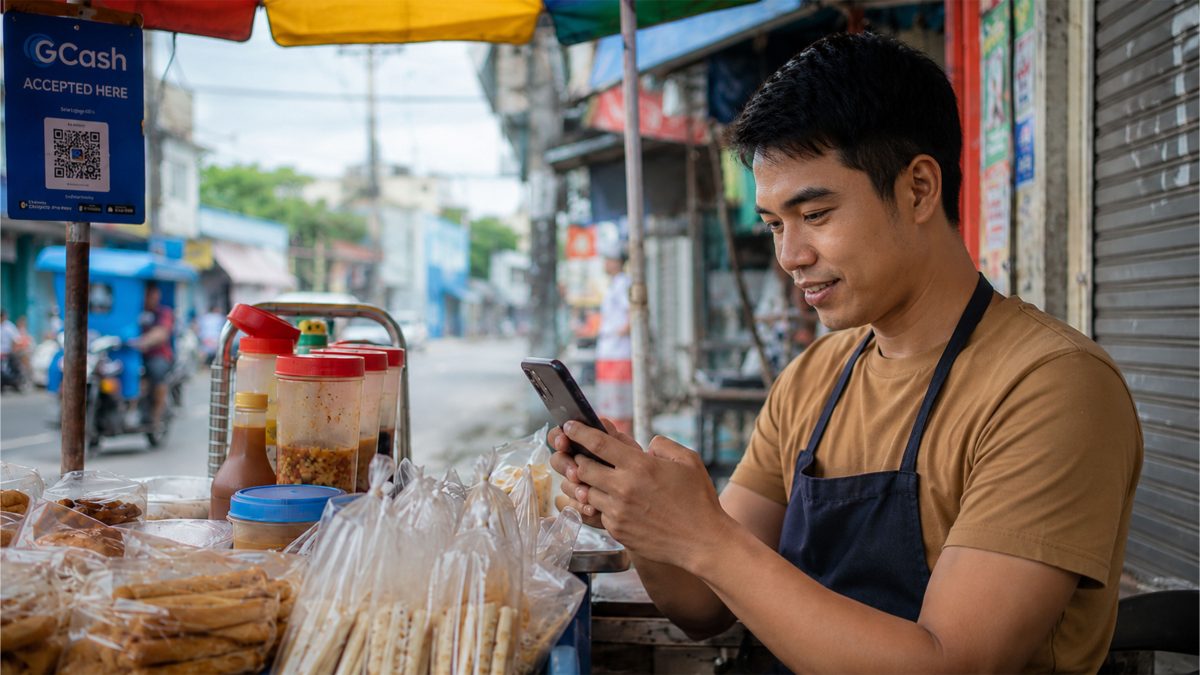
Most customers only see the finished product—a packed order arriving at their doorstep or a social media page filled with positive reviews. What they rarely see are the years of trial and error, long workdays, and countless small decisions that often shape a successful online business.
Long before the first online order arrives, before the positive customer reviews appear, and before a small business begins generating consistent income, there is usually a period that few people see.
It is the stage where an entrepreneur is still figuring things out.
For many Filipinos, that stage happens in public.
It happens at roadside stalls, market corners, transport terminals, and busy sidewalks where vendors spend hours serving customers one transaction at a time. While these businesses may appear modest from the outside, they often become training grounds for some of the most important entrepreneurial skills a person can develop.
The growing number of Filipinos transitioning from traditional selling into online business reveals something interesting about entrepreneurship. Success rarely begins with sophisticated strategies or expensive investments. More often, it begins with learning how people behave, what they value, and why they choose one seller over another.
A street vendor learns these lessons every day.
Consider a vendor selling banana cue and turon outside a public school. During rainy days, customer traffic drops significantly, affecting daily earnings. By creating a social media page and accepting advance orders, that same vendor can reach customers beyond the immediate neighborhood and generate sales even when foot traffic slows.
Without realizing it, the vendor is collecting practical business knowledge.
These experiences may seem ordinary, yet they mirror many of the same principles discussed in modern entrepreneurship programs. Customer behavior, pricing strategy, inventory management, and relationship building are not concepts limited to corporate boardrooms. They are skills developed through daily interaction with real people.
As digital commerce continues to grow, those skills are becoming increasingly valuable.
According to the Philippine Statistics Authority, micro, small, and medium enterprises account for the overwhelming majority of businesses operating in the Philippines.
According to DTI data, micro, small, and medium enterprises account for more than 99% of businesses operating in the Philippines. Many begin as small family-run ventures before gradually expanding through digital platforms and online marketplaces
The growth of e-commerce platforms, social media marketplaces, and digital payment systems has expanded those opportunities significantly.

For many families, a small business is not simply a source of income but a long-term investment in education, housing, and financial security.
A vendor whose customer base was once limited to a few hundred people within walking distance can now potentially reach thousands through social media, online marketplaces, and e-commerce platforms. What once required renting additional space or opening a second location can sometimes be achieved through a smartphone and reliable internet connection.
Yet technology alone is not what creates successful entrepreneurs.
One misconception about online business is that digital tools automatically produce results. In reality, moving from street selling to online selling often introduces a completely different set of challenges. Product photography becomes important. Customer inquiries arrive at all hours. Competition expands dramatically. Marketing requires creativity rather than simply occupying a good physical location.
Many aspiring entrepreneurs discover that online business is less about technology and more about trust.
Customers cannot physically inspect products before purchasing. They rely on reviews, communication, and seller credibility. A delayed response or inaccurate product description can quickly affect purchasing decisions. In this environment, the relationship-building skills developed through years of face-to-face selling become a significant advantage.
This is where many former vendors excel.
They understand the importance of customer service because they have practiced it for years. They know how to communicate clearly. They understand that every customer interaction contributes to a business’s reputation.

Programs supported by the Department of Trade and Industry continue to encourage Filipino entrepreneurs to strengthen their business skills and explore digital opportunities.
The appeal of these stories goes beyond revenue or business expansion. They reflect a path that many ordinary Filipinos can realistically imagine for themselves.
For many Filipino families, entrepreneurship is deeply connected to stability and opportunity. Additional income can help fund education, support relatives, improve living conditions, or provide financial security during uncertain periods. A growing business often affects an entire household rather than just the owner.
This explains why stories of ordinary entrepreneurs resonate so strongly.
People recognize themselves in these journeys.
Not everyone dreams of building a large company. Many simply hope to create a better future for their families. Seeing someone start with limited resources and gradually achieve success makes that goal feel more attainable.
Research from the Philippine Statistics Authority consistently highlights the important role small businesses play in the country’s economy. Behind those statistics are individuals making countless decisions every day, balancing risk and opportunity while pursuing growth.
What often separates successful entrepreneurs from unsuccessful ones is not intelligence, luck, or access to capital.
It is adaptability.
The ability to learn new skills. The willingness to adjust when circumstances change. The discipline to continue despite slow progress.
These qualities become increasingly important in an economy where technology, consumer preferences, and market conditions evolve rapidly.
Organizations such as the Philippine Trade Training Center continue to provide resources for aspiring entrepreneurs because business success today requires continuous learning. The most effective entrepreneurs understand that growth is not a destination but an ongoing process.
Perhaps the most valuable lesson hidden within these stories is that entrepreneurial potential is often found in places people least expect.
The vendor serving customers on a sidewalk may already be developing skills that future business owners spend years trying to master. The side hustle that generates a small amount of income today may eventually become a primary source of financial stability. The individual experimenting with online selling after work may be laying the foundation for something much larger.
Success stories are often presented as dramatic transformations, but the reality is usually far less glamorous.
Growth happens through repetition. Through learning. Through mistakes. Through showing up consistently even when progress feels invisible.
That is why the journey from sidewalk sales to online success remains meaningful. It is not simply a story about business. It is a story about adaptation, persistence, and recognizing opportunities that others might ignore.
The most successful online entrepreneurs may not be working in corporate offices or launching high-profile startups. Many are operating modest stalls, packing products from spare rooms, or learning digital selling one customer at a time. Their stories matter because they remind us that economic opportunity is often created through persistence rather than privilege. In an economy where adaptability continues to matter, the willingness to learn, improve, and embrace change may be one of the most valuable business advantages a person can possess.





 Facebook
 Twitter