
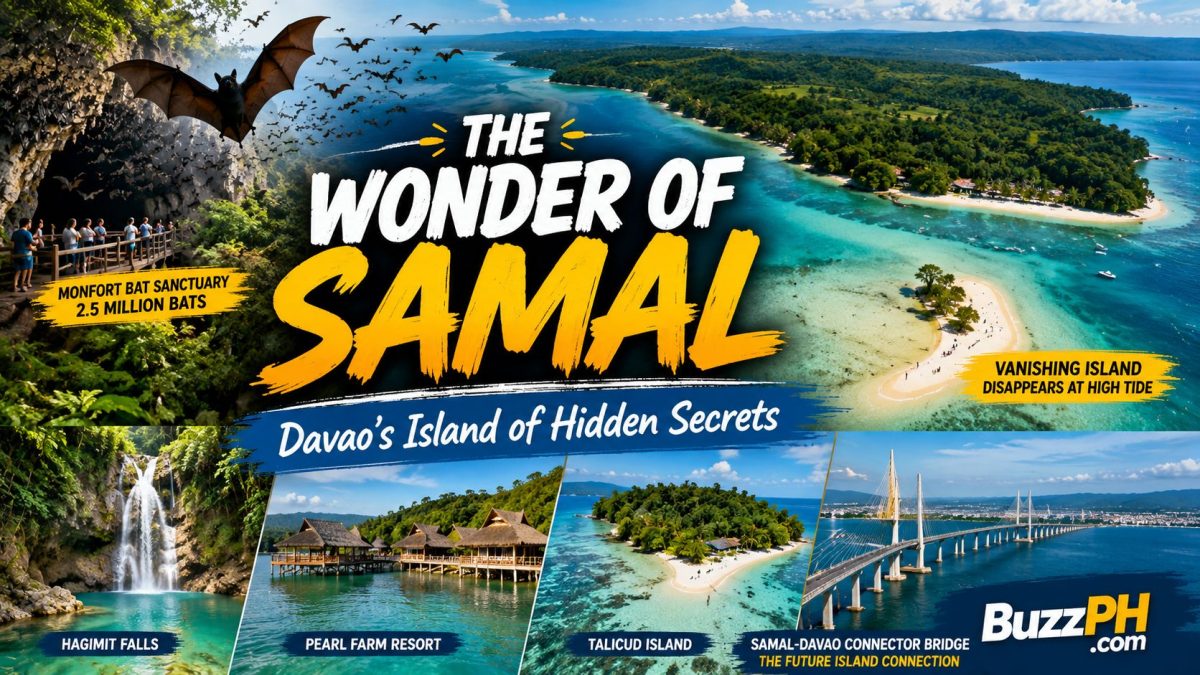
Sparking Curiosity: What Makes Samal So Fascinating?
The Island Garden City of Samal, widely known as IGACOS, is the kind of destination that surprises even experienced Philippine travelers. Situated in Davao del Norte and separated from Davao City by the narrow Pakiputan Strait, it is an island that carries the geographical proximity of a suburb yet the soul of a completely untouched paradise. Its official name is not just ceremonial—Samal genuinely is a garden city, lush with tropical vegetation, fruit orchards, sprawling coconut groves, and an extraordinary biodiversity that has earned it several international distinctions. The island spans approximately 280 square kilometers and is home to a diverse population of fisherfolk, resort operators, farmers, and indigenous communities, all coexisting in a relatively harmonious, unhurried rhythm of island life.
What truly sets Samal apart from other Philippine island destinations is its remarkable ecological diversity packed into a surprisingly accessible package. This is not a remote island requiring lengthy inter-island flights or grueling overland journeys. You can be sitting in a Davao City coffee shop at nine in the morning and standing barefoot on a white-sand beach at Samal by ten. That accessibility is part of its charm, but it has never come at the cost of authenticity. The island still feels genuinely wild in its interior, genuinely pristine along its quieter shores, and genuinely Filipino in its culture and hospitality. For travelers exploring the top tourist destinations in the Philippines for 2026, Samal is a destination that consistently punches well above its weight.
The island is home to several distinct ecological zones, each offering its own character. The coastline alternates between resort-heavy stretches of powdery white sand in Babak, rugged limestone cliffs draped in forest, and quieter mangrove-fringed coves that see very few visitors. Moving inland, the terrain rises gently into rolling hills covered in durian, banana, and coconut plantations. Caves punctuate the limestone foundations of the island, the most famous of which is, of course, the extraordinary Monfort Bat Cavern. Rivers and streams cascade down the interior hills, feeding waterfalls like the beloved Hagimit Falls before eventually reaching the sea. This layered geography creates a destination where a single itinerary can encompass caves, waterfalls, beaches, and sandbars—all within the same island, all within the same day.
In 2026, the island is in a period of exciting growth and transformation. The Samal Island–Davao City Connector Bridge, one of the most anticipated infrastructure projects in Mindanao, continues its construction across the Pakiputan Strait. When completed, it will link Samal directly to the Davao mainland via a modern bridge spanning approximately 3.98 kilometers, reducing the crossing from a 15-minute ferry ride to a five-minute drive. Tourism stakeholders and local residents alike watch the rising pylons with a mix of excitement and mindful caution, hoping that increased accessibility will bring prosperity without eroding the island’s essential character. For now, the ferry crossing remains part of the Samal experience—a brief, beautiful transition from the rhythm of the city to the rhythm of the sea.
The Gentle Guardians of the Night: Monfort Bat Sanctuary
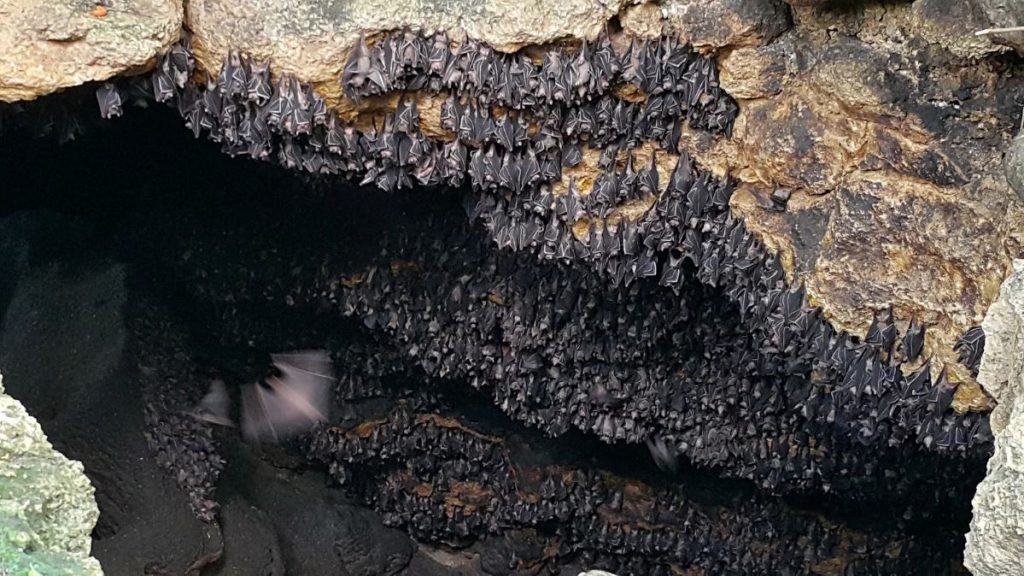
Few natural attractions in the entire Philippines can claim a Guinness World Record, but the Monfort Bat Sanctuary on Samal Island does so with quiet, remarkable distinction. Located in the Tambo district of Babak, the sanctuary is home to the world’s largest single colony of Geoffroy’s rousette fruit bats (Rousettus amplexicaudatus), with more than 2.5 million individuals sharing a single cave system defined by five natural openings. The sheer scale of this colony is almost incomprehensible until you are standing at the cave mouth as dusk approaches and the evening flight begins. In a matter of minutes, the sky above the sanctuary transforms from clear blue to a living, undulating black river of wings—millions of silent, purposeful creatures streaming out in search of the island’s abundant fruit trees and flower nectar.
Despite their imposing numbers, these bats are completely gentle and pose no threat to visitors. Geoffroy’s rousette is a frugivorous species, meaning it feeds exclusively on fruit, nectar, and pollen. It does not hunt insects or carry the echolocation equipment of insectivorous bat species. The colony is, in fact, an ecological treasure of enormous agricultural importance. Each night, the millions of bats fan out across mainland Davao and surrounding areas, pollinating the famous durian orchards, banana plantations, and wild forest trees that define the region’s agricultural landscape. Without these bats, the natural regeneration of Mindanao’s tropical forests would be significantly slower. Visiting the sanctuary, in other words, is not just a wildlife spectacle—it is a lesson in the elegant interdependence of an entire ecosystem.
The Monfort Bat Sanctuary is privately owned and managed by the Monfort family, who have been stewards of this extraordinary natural heritage for decades. Visitors access the cave through a well-maintained trail with proper viewing decks that allow safe, respectful observation without disturbing the colony. Local guides—friendly, knowledgeable, and genuinely passionate about the bats—accompany every group and provide fascinating narration about the colony’s history, the bats’ life cycle, and the conservation efforts that have kept this world record intact. The entrance fee is very reasonable at around ₱80 to ₱100 per person for Filipino tourists, with slightly higher rates for foreign visitors. Tours are best experienced either early in the morning when the bats are returning from their nightly foraging, or just before dusk when the great evening exodus begins.
Getting to the Monfort Bat Sanctuary from the Babak ferry landing is straightforward. A tricycle from the port area will take you there in approximately 15 to 20 minutes, and most tricycle drivers are well-acquainted with the location. If you are booking a comprehensive island day tour through your accommodation or a local tour operator, the bat sanctuary is almost always included as a standard stop. Given its status as arguably the most unique attraction in all of Mindanao, it is not a place to skip. Many travelers who visit the Philippines multiple times and consider themselves well-traveled across the archipelago cite the Monfort Bat Sanctuary as one of the most genuinely unexpected and awe-inspiring experiences they have ever had. This is the kind of encounter that reminds you why travel matters. For returning OFWs rediscovering Philippine destinations, it is especially worth the trip.
The Magic of the Disappearing Sandbar: Vanishing Island
Of all the natural wonders in Samal’s remarkable portfolio, Vanishing Island may be the most poetic. Located just off the coast of Babak, this striking sandbar does exactly what its name promises: it appears with the withdrawing tide and disappears entirely beneath the sea when the water returns. During low tide, a broad, luminous stretch of pure white sand emerges from the shallow waters, studded with clusters of resilient mangrove trees whose gnarled, salt-weathered roots grip the sand with quiet tenacity. At high tide, the sandbar slips beneath the surface, leaving only the tops of the mangroves visible above the open water—a haunting, beautiful sight that looks like a forest growing directly from the middle of the sea.
Visiting Vanishing Island during low tide is one of the most magical experiences available anywhere in Mindanao. The shallow waters surrounding the sandbar are crystal clear, warm, and absolutely teeming with marine life. Colorful sea stars dot the sandy floor in oranges, reds, and purples. Small fish dart between the mangrove roots. The water rarely exceeds knee depth across the sandbar itself, making it perfectly safe for families with young children and non-swimmers alike. Walking across the submerged edges of the sandbar in ankle-deep water, with the open Davao Gulf stretching in every direction, creates a genuinely surreal sensation—the illusion that you are walking on the surface of the sea itself. Photographs taken here have a quality that makes viewers question their reality.
The logistics of visiting Vanishing Island require a small amount of planning, primarily around the tide schedule. The island is accessible only during low tide, typically for a window of three to four hours. Local boatmen near the Babak area are highly experienced and knowledgeable about the daily tidal patterns, and they will always guide visitors to arrive during the optimal window. A small outrigger boat hire to reach the sandbar typically costs between ₱200 and ₱400 per group for the round trip, with waiting time included. The crossing takes only about 10 to 15 minutes. It is worth noting that the sandbar can become moderately busy on weekend afternoons, so weekday visits or early morning low tides offer a significantly more tranquil and photogenic experience. Bringing waterproof footwear is recommended, as the approach to the boat and the sandbar itself involves wading through shallow water.
For travelers on a tight itinerary, Vanishing Island combines beautifully with a morning visit to the Monfort Bat Sanctuary, making for a single powerful half-day loop from the Babak port area. Those who are more leisurely in their pace may want to spend the entire morning at the sandbar, snorkeling in the surrounding waters or simply lying on the sand and letting the stillness settle over them. Pack your own snacks and water, as there are no vendors on the sandbar itself. The nearest refreshments are available at small stalls near the boat landing area on the Samal coast. This island is a quintessential reminder of why the Philippines consistently ranks among the world’s top travel destinations—its natural spectacles are utterly without peer.
Hidden Nature and Cascading Waters: Hagimit Falls
Samal Island is so closely associated with its beaches and sea that many visitors overlook the fact that the island’s interior is equally spectacular. Hagimit Falls stands as the premier inland attraction on Samal, a verdant, multi-tiered cascade system hidden within a dense jungle canyon in the Babak interior. Unlike the grand, singular plunge pools of more famous Philippine waterfalls, Hagimit is characterized by a series of smaller, interconnected limestone pools and cascades, each carved by centuries of flowing water into smooth, ivory-white rock formations. The result is an emerald-green swimming paradise that feels intimate rather than overwhelming—a place where the sound of rushing water and the shade of the forest canopy above create a deeply restorative atmosphere.
The falls are accessible via a well-maintained entrance with a modest fee of around ₱30 to ₱50 per person, making it one of the most affordable natural attractions on the island. Inside, the grounds are clean and well-managed, with picnic tables, basic changing facilities, and designated swimming areas at the various pool levels. Families with children will find the lower pools particularly suitable, as the water depth is controlled and the current is gentle. More adventurous visitors can scramble up the limestone rocks to the higher tiers, where the falls are narrower and faster, and smaller, deeper pools reward those willing to make the short climb. The entire site is surrounded by old-growth trees, ferns, and mosses that create a cool, shaded microclimate even on the hottest days—a welcome and refreshing contrast to the heat of the open beaches.
Local food stalls operate near the entrance of Hagimit Falls, offering grilled corn, fresh coconut, and simple Filipino snacks and meals for ₱50 to ₱150. Bringing your own picnic is also permitted within the grounds, and many families from both Samal and mainland Davao make Hagimit Falls their preferred weekend picnic destination precisely because of this relaxed, family-friendly atmosphere. The falls are at their most impressive during and just after the rainy season (October through December), when the water volume is highest and the surrounding vegetation is at its most vibrantly green. During the dry season (March through May), the flows are more modest but the water is clearer and the swimming conditions are ideal.
Getting to Hagimit Falls from the Babak port area takes approximately 20 to 25 minutes by tricycle. Most day tour tricycle drivers automatically include Hagimit Falls in their standard island loop, alongside the bat sanctuary and one or two beach stops. If you are planning a self-guided visit, the falls are signposted from the main interior road and the entrance is easy to find. For OFWs planning a homecoming trip on a budget, combining Hagimit Falls, Vanishing Island, and the bat sanctuary into a single day-trip itinerary is the single best-value option available on Samal, delivering three completely different experiences for well under ₱1,000 per person.
Iconic Luxury: Pearl Farm Beach Resort
No article about Samal Island would be complete without a proper tribute to Pearl Farm Beach Resort, the iconic property that has defined Philippine luxury beach tourism in Mindanao for decades. Built on the grounds of a former pearl cultivation farm at Malipano Island, which sits just off the southern tip of Samal, Pearl Farm occupies a uniquely beautiful position between the sea and the jungle. Its architecture is one of its most celebrated features: the signature Samal stilt houses and Maranao-inspired villas rise directly from the water on wooden platforms, connected by a series of elevated walkways and bridges that give the entire resort the feeling of a floating village rooted in deep Filipino cultural heritage. This is not generic international hotel luxury—it is a specific, deeply considered expression of Philippine identity expressed through materials, craft, and design.
Pearl Farm has maintained its position at the pinnacle of Mindanao luxury travel by consistently investing in the quality of its guest experience while honoring the cultural and ecological sensitivities of its location. The resort offers a range of accommodation options, from hillside native-style cottages to the spectacular over-water stilt houses that float above the crystal-clear cove. Each room type is immaculately maintained, furnished with locally sourced natural materials, and designed to maximize the connection between the guest and the surrounding sea and forest. The main beach is a pristine crescent of white sand fronting calm, shallow waters ideal for swimming, kayaking, and snorkeling. The resort’s house reef supports healthy coral growth and is home to a colorful diversity of reef fish that can be observed with minimal equipment.
Dining at Pearl Farm is a genuine culinary experience. The resort’s restaurants serve a thoughtfully curated menu of Filipino and international cuisine that leans heavily on the extraordinary fresh seafood available from the Davao Gulf—grilled tuna belly, kinilaw na tanigue, steamed lapu-lapu, and freshly caught prawns prepared in a range of styles. Breakfast buffets are elaborate and beautifully presented, incorporating fresh tropical fruits, traditional Filipino morning staples like champorado and sinangag, and international options for those who prefer a lighter start. Room rates at Pearl Farm start at approximately ₱8,000 to ₱12,000 per night for the hillside cottages and rise significantly for the over-water stilt houses, which can reach ₱18,000 to ₱25,000+ per night depending on the season. These rates include complimentary speed boat transfers from the Waterfront Insular Hotel landing in Davao City.
For travelers who cannot justify the overnight rate but still want to experience Pearl Farm, the resort offers day use packages that provide access to the beach, pools, and restaurants for a set fee. These day passes are a popular option for Davao residents celebrating anniversaries, birthdays, or simply indulging in a luxurious weekend escape. If you are considering Pearl Farm as part of a broader Philippine island-hopping adventure, it pairs particularly well with solo travel to other premier Filipino island destinations—the level of service and the quality of the natural setting here is genuinely comparable to the finest resorts in Palawan and Siargao, often at a more accessible price point.
Modern Luxury and Skyline Views: Discovery Samal
If Pearl Farm represents Samal’s tradition of culturally-rooted luxury, Discovery Samal embodies its modern, aspirational future. The latest flagship property of the Discovery Leisure Company portfolio, Discovery Samal opened to significant local and national attention, bringing a level of contemporary resort architecture and amenity design that had previously been concentrated in Palawan, Boracay, and Metro Manila to the shores of Mindanao. The resort is positioned on a prime elevated beachfront site on Samal, offering sweeping, unobstructed views of the Davao Gulf and, on clear days, the distant silhouette of Davao City across the strait. This combination of modern luxury and dramatic natural backdrop has quickly established Discovery Samal as the most talked-about new resort property in Mindanao.
The resort’s centerpiece is its extraordinary multi-tiered infinity pool system, which cascades down toward the sea in a series of connected pools at different elevations. The effect is visually dramatic and practically magnificent—guests can drift between pool levels while watching the sun set over Davao City, with the lights of the mainland beginning to twinkle against the darkening sky. The rooms and suites at Discovery Samal are designed with a contemporary tropical aesthetic, featuring high ceilings, natural stone finishes, oversized rain showers, and private balconies or plunge pools that maximize the spectacular setting. All dining options at the resort maintain the Discovery brand’s reputation for quality, with a particular emphasis on fresh, locally sourced Mindanao ingredients elevated through modern culinary technique.
Room rates at Discovery Samal begin at approximately ₱10,000 to ₱15,000 per night for deluxe rooms and rise to ₱25,000 and above for suite and villa categories. These rates are competitive with comparable properties in Palawan’s El Nido and Coron, but come with the significant advantage of proximity to a major international airport (Francisco Bangoy International Airport in Davao City), making Discovery Samal one of the most easily accessible luxury resort destinations in the entire Philippines. Direct flights connect Davao to Manila, Cebu, and several other Philippine cities multiple times daily, meaning that a weekend escape to Discovery Samal from almost anywhere in the country requires nothing more than a short flight and a 15-minute ferry ride.
For travelers building a comprehensive Mindanao itinerary, Discovery Samal pairs beautifully with a visit to Davao City’s urban attractions—the People’s Park, the durian stalls along Magsaysay Avenue, the Philippine Eagle Center in Calinan, and the vibrant night market along Roxas Avenue. Spending two nights at Discovery Samal bookended by one night in the city creates a perfectly balanced Davao experience that combines island luxury with urban Filipino culture. This kind of thoughtful, multi-faceted itinerary is exactly what the best Philippine travel guides for 2026 are recommending as the gold standard for Mindanao exploration.
Diver’s Paradise and Beach Purist’s Dream: Talicud Island (Isla Reta)
Sitting just off the southern tip of Samal, Talicud Island—also affectionately known as Isla Reta among the diving community—represents the quieter, more pristine face of the island group. Smaller and significantly less developed than the main Samal Island, Talicud is the destination of choice for travelers who prioritize undisturbed natural beauty over resort amenities, and who are willing to travel just a little further off the beaten path in exchange for solitude and genuine marine splendor. The island’s beaches are powdery-white and almost entirely uncrowded even on busy weekends, lined with coconut palms that lean at characteristically gentle tropical angles over water that shades from pale jade at the shore to deep cobalt blue in the channel beyond the reef.
The diving around Talicud Island is what has earned it a devoted following among underwater enthusiasts from across the Philippines and beyond. The reef systems surrounding the island are in notably good condition, featuring healthy hard and soft coral formations, abundant schooling fish, occasional sea turtle sightings, and a diversity of macro life that keeps underwater photographers returning repeatedly. The relative lack of heavy tourist pressure on Talicud means that its marine ecosystem has been spared the coral bleaching and mechanical damage that has degraded reefs at more heavily visited Philippine destinations. Several dive operators based in Samal and Davao City offer day trip packages to Talicud that include equipment rental, boat transfer, and multiple dives for approximately ₱2,500 to ₱4,000 per person.
For non-divers, Talicud offers superb snorkeling directly from the beach in several locations, where the reef begins at a very shallow depth and the visibility in calm conditions can exceed 15 meters. The island also has a small but growing collection of simple beachfront guesthouses and eco-lodges offering basic rooms with fan ventilation for ₱500 to ₱1,200 per night—an extraordinarily affordable way to experience a genuinely pristine Philippine island overnight. Meals on Talicud are simple, fresh, and centered on whatever the local fishermen brought in that morning: grilled fish, steamed rice, coconut milk-based vegetable dishes, and fresh tropical fruit, typically priced at ₱80 to ₱150 per plate.
Getting to Talicud Island requires a boat from either the Santa Ana Wharf in Davao City (approximately 30 to 45 minutes) or from the main Samal port area (approximately 20 to 30 minutes). Scheduled outrigger boats make the crossing at regular intervals, and private boat hire is also available for those who prefer flexibility. The island has no ATMs, no large supermarkets, and limited mobile signal in some areas—factors that contribute significantly to its unspoiled character and that visitors should prepare for in advance by bringing sufficient cash, snacks, and any personal supplies they may need. For anyone who counts themselves among the Philippines’ growing community of adventure-minded travelers seeking authentic island escapes, Talicud is exactly the kind of discovery that makes Philippine travel so endlessly rewarding.
Affordable Sun and Sand: Kaputian Beach & Public Shores
Not every wonderful beach in Samal is hidden behind a resort gate or accessible only by private boat. Kaputian Beach, located in the municipality of Kaputian on the eastern side of Samal Island, is a genuinely beautiful public beach that offers fine white sand, clean water, and a relaxed, community-centered atmosphere at a fraction of the cost of the resort beaches. The beach is well-maintained, with basic facilities including changing rooms, outdoor showers, and small food stalls lining the shoreline where vendors sell fresh coconut, grilled corn, puso (hanging rice), and simple Filipino food at prices that make eating here a joy rather than an afterthought. Entry fees for public beaches in Kaputian are typically minimal—between ₱20 and ₱50 per person in most cases—and the atmosphere is warmly welcoming and genuinely Filipino.
Beyond Kaputian, Samal Island has numerous smaller public beach areas and barangay shorelines that see very few tourists but offer access to the same beautiful Davao Gulf waters. These “hidden” beaches are typically accessible with the guidance of a local tricycle driver who knows the island well, and visiting them often involves a short, adventurous ride along narrow interior roads through coconut groves and past small fishing villages. The experience of discovering these quieter corners of Samal—sharing the beach with local families, watching fishermen repair their nets, buying freshly caught fish directly from the boat—is, for many visitors, more memorable than any resort pool. This is the authentic Samal that the glossy brochures rarely show but that the island’s most devoted fans return to again and again.
Samal’s public beaches are also the ideal setting for experiencing the island’s local food culture at its most authentic and affordable. Fresh grilled fish purchased directly from beachside vendors—typically bangus (milkfish), tuna, or mackerel—for ₱80 to ₱150 per serving is consistently among the best seafood experiences in the entire Davao region. Local carinderias along the main road between Babak and Kaputian serve complete meals of rice, fish, and vegetables for ₱60 to ₱100 per person, and the quality is frequently excellent. Fresh buko (young coconut) is available everywhere for ₱20 to ₱30 each. Eating this way—simply, freshly, locally—is both the most budget-conscious and the most genuinely satisfying way to fuel a day of island exploration.
For families, groups of friends, or any traveler on a limited budget, a day at Kaputian Beach combined with a morning at the bat sanctuary and a stop at Hagimit Falls creates what is arguably the perfect value-for-money Samal day trip: three distinct, genuinely extraordinary experiences for a total cost that rarely exceeds ₱600 to ₱800 per person all-in, including food and transport. This kind of budget efficiency is precisely why travel writers and experienced Filipino adventurers consistently rank Samal among the best places to visit in the Philippines for both OFWs and local travelers seeking genuine value without compromise.
Logistics Master Guide: How to Get to Samal Island in 2026
Getting to Samal Island is one of the most straightforward inter-island crossings in the Philippines, and the frequency and convenience of the ferry services make spontaneous visits entirely feasible. There are two main departure points from the Davao mainland, each serving different parts of Samal and different types of traveler. Understanding which port serves your needs will save you time, money, and confusion on arrival. The first thing to note is that both crossings are short—the longest is approximately 45 minutes—and ferry services operate at high frequency throughout the day, meaning you are never waiting long regardless of which port you choose.
Route A: Sasa Ferry Port (Km. 11, Davao City) — Best for vehicles and resort-bound travelers. The Sasa Ferry Port operates the large Mae Wess barge and RORO (Roll-On, Roll-Off) ferry service 24 hours a day, seven days a week. Ferries depart approximately every 15 to 20 minutes, making it one of the most frequent inter-island ferry services in Mindanao. Walk-on passenger fare is ₱25 per person each way. Motorcycle fare is ₱130, and standard SUVs or vans pay ₱325 per crossing. This is the recommended route for travelers bringing their own vehicle, for those heading to the resort belt in the Babak area (where Pearl Farm and Discovery Samal are located), and for travelers planning to use the ferry crossing as part of a longer road trip itinerary around Samal Island.
Route B: Santa Ana Wharf, Davao City — Best for backpackers and Talicud-bound travelers. The Santa Ana Wharf operates traditional outrigger passenger boats (lantsa) to various points on Samal Island and to Talicud Island. These boats are colorful, characterful, and entirely functional, carrying passengers across the strait with the rhythmic efficiency that Filipino maritime culture has perfected over generations. The crossing time varies from 15 minutes to 45 minutes depending on your destination. Fares are similarly affordable, with the standard passenger rate comparable to the Sasa ferry. This route is the natural choice for walk-in backpackers, travelers heading directly to Talicud Island, and anyone staying in the downtown Davao City area who wants to avoid the longer taxi ride to the Sasa port.
Once on Samal Island, getting around is primarily done by tricycle, the motorized three-wheeled vehicles that serve as the island’s main mode of local transport. Tricycles are available at both the Babak and Quinawitnan ferry landing areas and can be hired for single point-to-point trips or negotiated as a full-day island tour vehicle. For larger groups, jeepney-style vehicles are also available in some areas for longer routes. There are no ride-hailing apps like Grab operating on Samal Island as of 2026, so cash negotiation with tricycle drivers is the standard mode of arranging transport. Most drivers are honest, friendly, and genuinely knowledgeable about the island’s attractions—don’t hesitate to ask for their recommendations. For those curious about planning a homecoming trip on a budget, Samal’s simple, cash-based transport system is easy to navigate and refreshingly affordable.
Complete Cost Breakdown: Financial Planning for All Budgets
Samal Island is one of the most budget-versatile destinations in the Philippine archipelago. Unlike many island destinations where the cheapest accommodation options are hours away from the main attractions, Samal’s compact geography means that budget travelers are never far from the same beaches, caves, and falls that luxury resort guests access. The following cost breakdown is based on 2026 prices and covers three distinct traveler profiles: the budget day-tripper from Davao City, the mid-range overnight traveler, and the luxury resort guest.
Budget Day Trip (₱500 to ₱1,000 per person): This profile covers a Davao City resident or traveler making a same-day visit to Samal. Round-trip ferry fare from Sasa Port (walk-on): ₱50. Full-day tricycle tour of the island (split between two to four people): ₱100 to ₱150 per person. Entrance fees (bat sanctuary + Hagimit Falls + beach): ₱130 to ₱200 total. Three meals at local carinderias and beachside vendors: ₱200 to ₱350. Miscellaneous (buko water, snacks, sunscreen): ₱50 to ₱100. Total: a rich, full day of Samal’s best attractions for well under ₱1,000 per person.
Mid-Range Overnight (₱3,000 to ₱6,000 per person): This profile suits travelers who want the full Samal experience without the luxury price tag. Budget beachfront guesthouse or small resort accommodation: ₱1,000 to ₱2,500 per night. Round-trip ferry and on-island transport: ₱300 to ₱500. Entrance fees for all major attractions: ₱200 to ₱300. Meals (mix of local carinderias and one resort-style restaurant): ₱600 to ₱1,200 for two days. Activities (snorkeling gear rental, boat hire to Vanishing Island): ₱500 to ₱800. Total for two days/one night: ₱2,600 to ₱5,300 per person, delivering an extraordinarily complete island experience.
Luxury Overnight (₱12,000 to ₱30,000+ per person): For travelers who want the definitive Samal luxury experience, Pearl Farm or Discovery Samal provides accommodation from ₱8,000 to ₱25,000+ per night. Speed boat transfer (Pearl Farm): complimentary. Resort dining (two days): ₱2,000 to ₱5,000 per person. Private island activities (kayaking, spa, snorkeling tours): ₱1,000 to ₱3,000. Total for two days/one night at a luxury resort: ₱11,000 to ₱33,000+ per person—comparable to international luxury beach destinations but with a deeply Filipino soul. For OFWs planning a premium homecoming splurge, this level of Samal indulgence is a deeply satisfying investment that the best OFW homecoming guides consistently recommend.
💰 8 Expert Money-Saving Tips for Your Samal Island Trip
Samal Island rewards the prepared traveler. These eight tips, drawn from real visitor experience and local knowledge, will help you maximize every peso and make the most of what this extraordinary island has to offer.
Weekends on Samal can see significant crowds, particularly at public beaches and the ferry ports. Visiting on a Tuesday, Wednesday, or Thursday gives you shorter queues at every attraction, a more peaceful beach experience, and occasionally better negotiating power with tricycle drivers whose schedules are less booked. Many guesthouses and smaller resorts also offer lower rates on weeknights compared to Friday and Saturday nights, so a midweek overnight can save you ₱200 to ₱500 on accommodation alone. The ferry is still frequent on weekdays, so your access is in no way compromised.
The moment you step off the ferry at Babak, you will be approached by tricycle drivers offering island tours. Rather than accepting the first rate offered, take a moment to negotiate a comprehensive full-day rate covering all major attractions. A reasonable rate is ₱400 to ₱600 for the entire vehicle for a full-day loop, which when split between two to four passengers works out to ₱100 to ₱200 per person. Always confirm the specific itinerary stops, expected wait times at each site, and an explicit “no additional charges” understanding before departing. Having GCash as a backup payment option can also be helpful if you run short of cash.
While cash remains king in the remote and rural parts of Samal Island, GCash QR payment is increasingly accepted by tricycle drivers, small carinderias, and local guesthouses. There are limited ATMs on the island, and those that exist may not carry sufficient cash during peak season weekends. Loading your GCash wallet to ₱2,000 to ₱3,000 before crossing the ferry, and withdrawing ₱1,000 to ₱2,000 in cash for smaller vendors who do not accept digital payments, gives you the flexibility to handle any payment situation on the island without stress. Never rely solely on credit cards outside of the large resorts.
The Vanishing Island sandbar is only accessible during low tide, and arriving at the wrong time of day means missing it entirely. Check the PAGASA tidal charts for the Davao Gulf at the official PAGASA website (pagasa.dost.gov.ph) before your trip and identify the specific low tide window for each day of your visit. Build your Samal itinerary around this window rather than fitting the sandbar into a pre-fixed schedule. A low tide window of 5:00 to 9:00 AM, for example, pairs perfectly with an early ferry crossing and a morning at the sandbar followed by a midday bat sanctuary visit. This kind of tide-informed planning is the difference between experiencing the sandbar at its magical best versus missing it entirely.
If Talicud Island is on your itinerary, investing in a basic snorkeling set before your trip is one of the best value-for-money decisions you can make. A decent mask-and-fins set from any SM or Robinson’s sports department in Davao City costs ₱400 to ₱800 and will serve you for multiple trips across multiple years. On the island, snorkel gear rental from local operators or dive shops can cost ₱150 to ₱300 per day per person, meaning a group of four pays ₱600 to ₱1,200 for a single day’s rental. Owning your own gear eliminates this cost entirely and gives you the freedom to snorkel for as long as you like without watching the clock or negotiating extensions with a rental operator.
The single most powerful budget lever on Samal Island is where you choose to eat. Local carinderias along the Babak–Kaputian road serve fresh, home-cooked Filipino meals for ₱60 to ₱100 per person, including rice, a protein dish, and soup. The quality is consistently good, and the portions are generous. Compare this to resort restaurants where a single entre can easily cost ₱400 to ₱800, and the savings over a two-day trip for a family of four amount to ₱3,000 to ₱6,000. Eating local is also the most authentic way to experience Samal’s food culture—the freshly grilled fish, the kinilaw made with that morning’s catch, and the ginataang gulay cooked in fresh coconut milk are experiences that resort menus simply cannot replicate.
If a Pearl Farm or Discovery Samal stay is on your bucket list, resist the temptation to book during peak season (December, January, Holy Week, and May). Instead, target the July to October window, when both resorts implement lower rack rates and run promotional packages to maintain occupancy during the slower months. Savings of 20 to 35 percent on room rates are common during this period, and the resort experience—beach quality, service level, food—remains identical to peak season. Pair a low-season resort booking with an airline seat sale from Manila or Cebu, and a two-night Pearl Farm or Discovery Samal stay can become surprisingly affordable for what it delivers.
The IGACOS local government has implemented environmental protection regulations across the island’s protected sites, including the Monfort Bat Sanctuary and several marine protected areas. Violations such as using flash photography at the bat cave, disturbing coral reefs while snorkeling, or dumping waste in designated clean zones can result in fines that will immediately exceed your entire trip budget. Beyond the financial implications, respecting these rules is simply the right thing to do—Samal’s extraordinary biodiversity is the direct result of decades of conservation effort, and every visitor has a responsibility to contribute to its continuation rather than its erosion. Following the rules costs nothing; ignoring them can cost thousands and, more importantly, contributes to the long-term degradation of an irreplaceable natural heritage.
❓ Frequently Asked Questions About Samal Island
🇵🇭 Samal Island Is Waiting for You—And It Has Never Been More Ready
This guide has taken you through everything that makes the Island Garden City of Samal one of the most extraordinary travel destinations in the Philippines—from the Guinness-record bat colony and the mystical disappearing sandbar to the cascading limestone pools of Hagimit Falls, the pristine diving grounds of Talicud Island, the iconic luxury of Pearl Farm, and the modern splendor of Discovery Samal. We have walked you through every ferry crossing, every tricycle negotiation, every peso of cost, and every practical consideration that will help you travel smarter, spend less, and experience more. Samal is not a destination that requires a large budget, a long flight, or elaborate advance planning—it requires only curiosity, a willingness to step onto a ferry, and an openness to being surprised. Whether you are comparing it against other top Philippine tourist destinations for 2026 or simply looking for a perfect weekend escape from Davao City, Samal will consistently deliver far more than you expect.
The key message of this guide is one of accessibility. Samal’s wonders are not locked behind expensive resort gates or reachable only by chartered flights. A world-record bat colony, a vanishing sandbar teeming with sea stars, a jungle waterfall, a pristine diving reef, and some of the freshest grilled fish in Mindanao are all available to any traveler with ₱500 in their pocket and a willingness to explore. The island rewards the curious and the spontaneous as generously as it rewards the well-heeled and the well-planned. It is, in the truest sense, a destination for everyone. For solo travelers, families, couples, divers, beachcombers, eco-tourists, and luxury seekers alike, Samal Island offers a version of paradise that feels precisely, personally, joyfully tailored to each individual visitor.
So pack light, load your GCash, charge your camera, check the tide chart for Vanishing Island, and head for the Sasa Ferry Port. The sea breeze is warm, the water is clear, two and a half million bats are waiting to greet the dusk, and one of the Philippines’ most rewarding island experiences is just fifteen minutes across the strait. Samal Island is ready for you in 2026—and it will leave you changed, rested, and already planning your return. Mabuhay!







 Facebook
 Twitter