
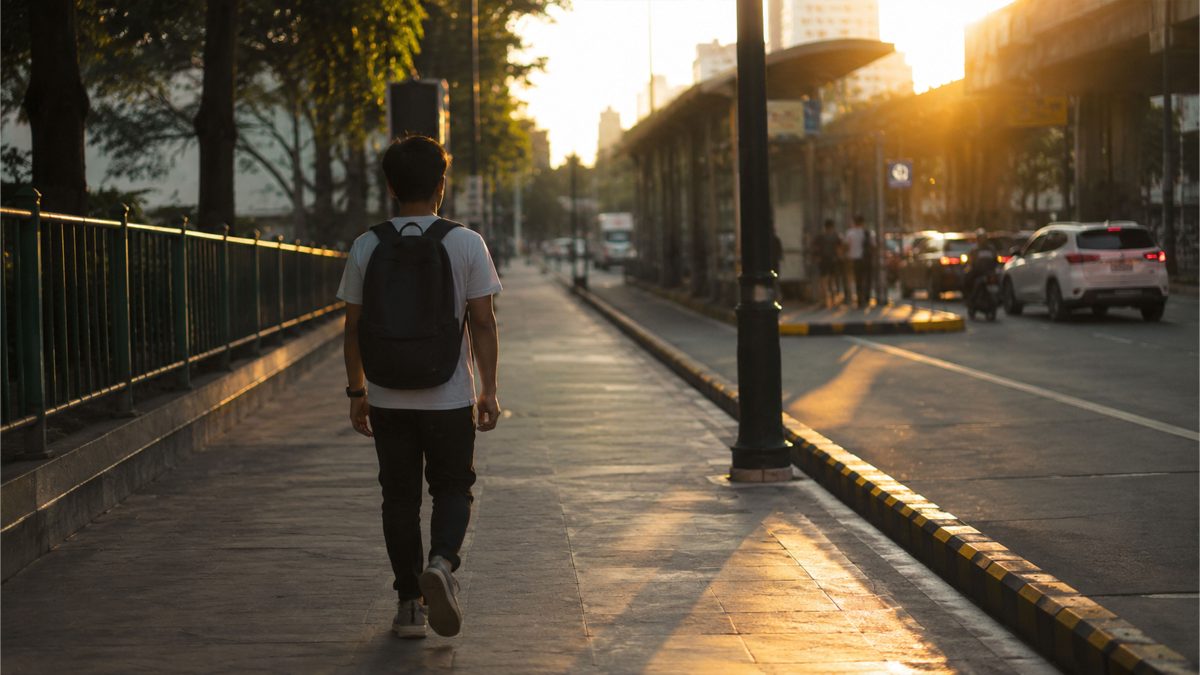
Daily walking benefits are becoming more noticeable for people trying to stay healthy without the pressure of intense fitness routines. I still remember the afternoon I decided to walk home from a meeting in Ortigas instead of grabbing a Grab ride. The sun was brutal, the sidewalks uneven, and my office shoes were a terrible idea. But somewhere along the quieter streets near Kapitolyo, my head began to clear, the knot in my chest loosened, and for the first time in weeks, I noticed the sky turning that soft Manila orange.
I still remember the afternoon I decided to walk home from a meeting in Ortigas instead of grabbing a Grab ride. The sun was brutal, the sidewalks uneven, and my office shoes were a terrible idea. By the time I reached the quieter streets near Kapitolyo, something had shifted. My head felt clearer, the knot in my chest from the day’s emails had loosened, and for the first time in weeks, I noticed the sky turning that soft Manila orange. I wasn’t trying to “get my steps in.” I was just moving. And it worked.
In a country where fitness often means intense Zumba classes, CrossFit boxes, or expensive gym memberships, walking has quietly become the thing many of us are returning to—not because it’s trendy, but because it fits the shape of our actual lives. It asks for almost nothing and gives back more than we expect. No equipment, no membership, no perfect body required. Just shoes you already own and the willingness to step outside.
What makes daily walking feel newly essential now is how it quietly pushes back against the way we’ve been living. Metro Manila life compresses us: long commutes, desk hours that bleed into nights, the constant pull of group chats and deadlines. Many of us are tired in a way that sleep alone doesn’t fix. We’re mentally cluttered.
A 30-minute walk doesn’t magically solve burnout, but it creates a small pocket of space where thoughts can settle instead of spin. One colleague told me she started walking around her village after dinner and suddenly found herself processing conversations with her aging parents differently—less reactive, more patient. The movement gave her nervous system room to breathe.
There’s a subtle emotional recalibration that happens when you walk consistently. You begin to notice your own rhythms. Some days the walk feels like shedding weight you didn’t know you were carrying. Other days it’s simply proof that your body still knows how to move without force.
In a culture that celebrates hustle and endurance, walking offers a different kind of strength: the kind that comes from showing up gently, repeatedly, for yourself. It’s not about transformation in 30 days. It’s about the slow accumulation of steadiness.
According to the World Health Organization, many daily walking benefits include improved mental well-being and reduced health risks linked to sedentary lifestyles, regular physical activity like walking can help improve mental well-being, reduce symptoms of anxiety, and lower the risks linked to sedentary lifestyles. That may partly explain why many people are beginning to see movement less as punishment and more as a form of daily care.
I’ve seen this in small, ordinary moments around us. The security guard in our building who walks laps during his break and says it keeps his blood pressure from spiking. The mother in her mid-40s who walks her kids to school then continues alone for another twenty minutes, admitting it’s the only time her mind isn’t juggling a thousand worries.
Even among younger professionals who once chased high-intensity workouts, many are choosing evening walks now—not to burn calories aggressively, but to reclaim some sense of being inside their own bodies after hours of sitting and scrolling.
What surprises people most about the daily walking benefits is how they reach beyond the physical. The simple act of moving through space at your own pace can soften the edges of anxiety or that low-grade restlessness many of us carry. It invites presence. You hear your own breathing. You feel the ground.
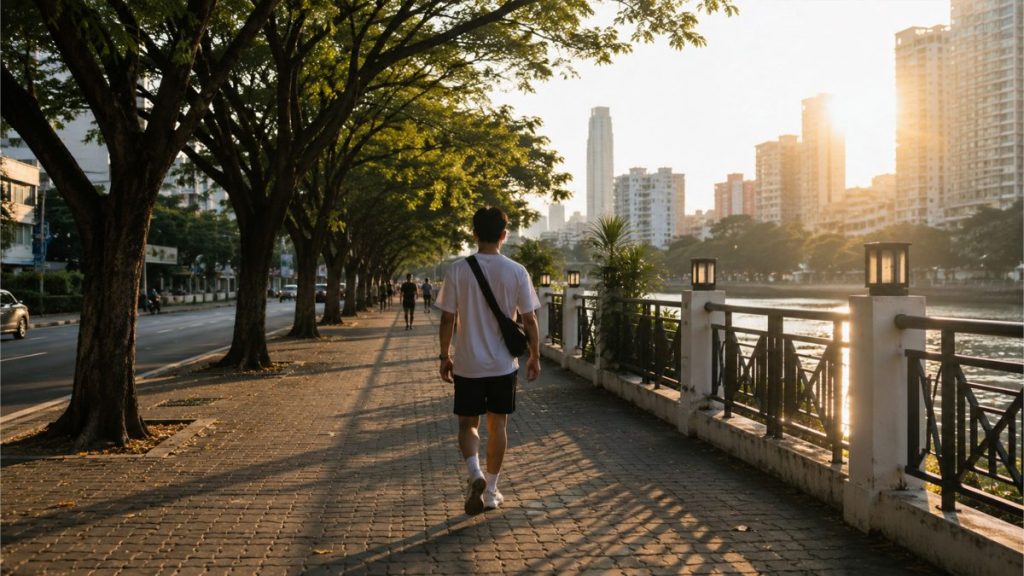
In places like Rizal Park or along certain stretches near the Pasig River when the light is right, walking even reconnects you to a version of Manila that feels almost tender—layers of history, street life, and ordinary resilience unfolding around you.
Even the idea of choosing walking over passive transportation has become part of a wider conversation around healthier routines and reducing overly sedentary habits. Research on physical inactivity and modern lifestyles continues to show how long hours of sitting can quietly affect both physical and mental health over time.
Of course, it isn’t always poetic. Sidewalks can be treacherous. The heat can be punishing. Safety and air quality are real considerations, especially for women walking alone. Yet that’s part of why it matters: walking forces us to engage with our environment honestly.
It asks us to choose routes that work, times that feel safer, and small adaptations—like early morning walks or using nearby malls as weather-proof tracks—that fit our imperfect reality instead of waiting for perfect conditions.
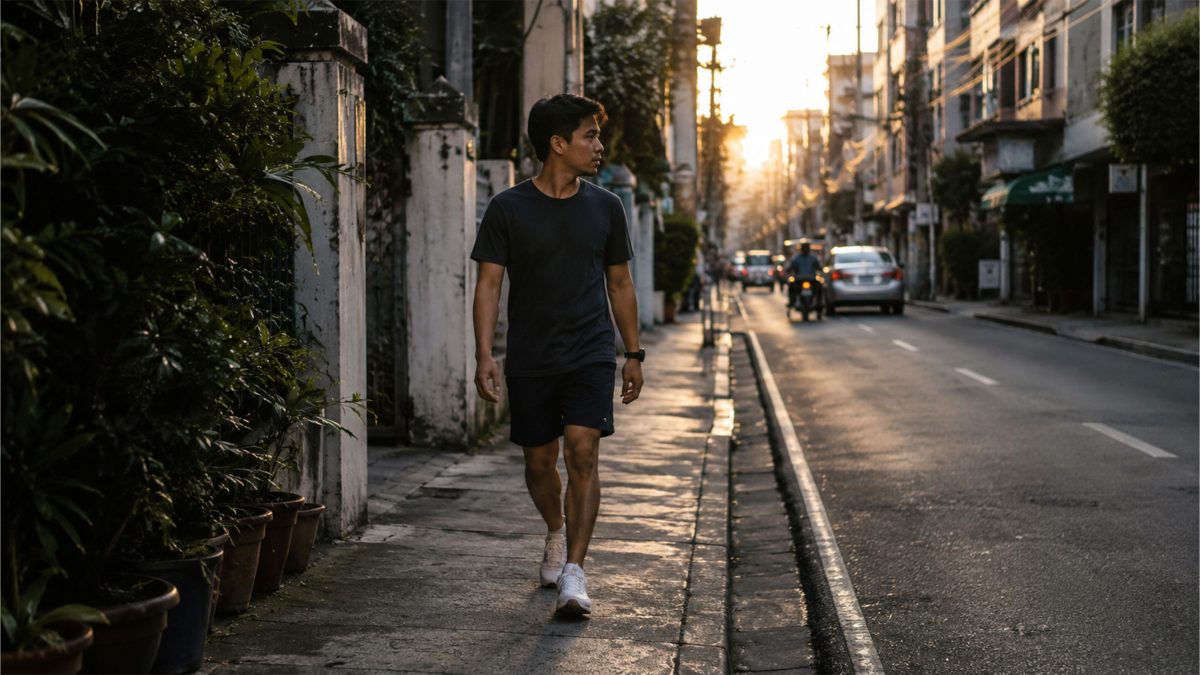
Many of the most meaningful daily walking benefits come from its simplicity and consistency rather than intensity. It doesn’t promise a new body or dramatic before-and-after photos. It offers something more sustainable: a daily reminder that movement can be nourishing rather than punishing.
In the long run, that shift in relationship—to exercise, to your body, to time itself—might be the real reason it’s gaining quiet respect again. Studies connected to global physical activity recommendations have repeatedly emphasized that consistent moderate movement can produce meaningful long-term health benefits without requiring extreme fitness routines.
We don’t need another fitness revolution that burns us out. What many of us seem to be craving is a practice that meets us where we are—tired, busy, hopeful, human.
A pair of comfortable shoes. A door. And the decision to keep putting one foot in front of the other.
Sometimes the most effective thing isn’t the loudest or the most complicated. It’s the one you can actually keep doing, day after ordinary day, until it becomes part of who you are.



 Facebook
 Twitter