

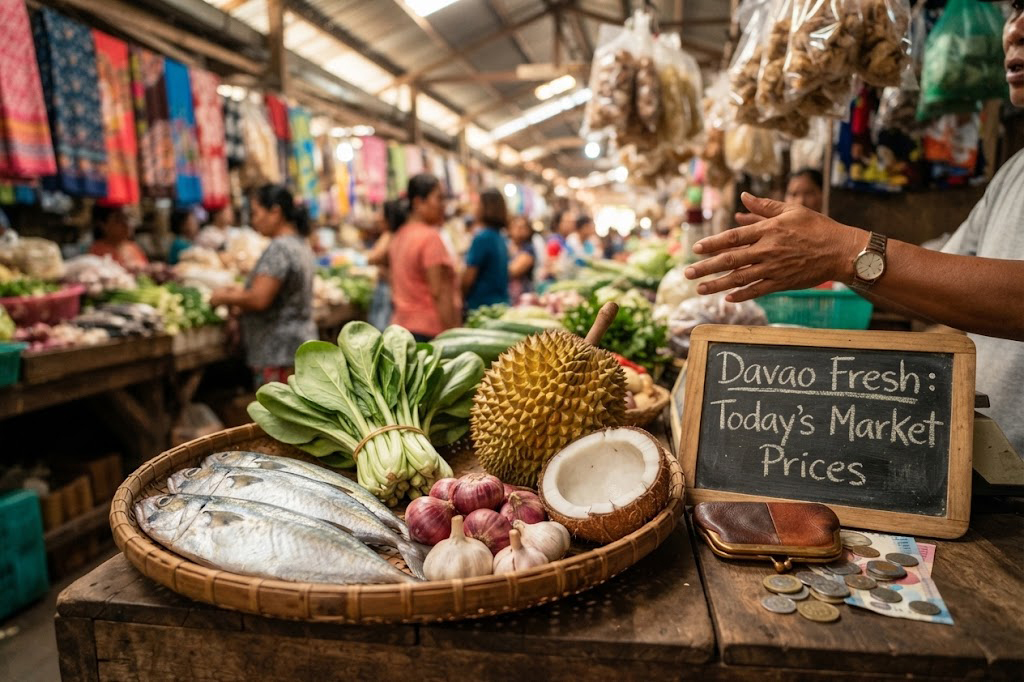
Food prices in Davao have become an increasingly critical concern for households managing their monthly budgets in 2026. Recent Philippine Statistics Authority (PSA) data highlight significant price pressures across major food categories, including rice, vegetables, and fish. However, the exact financial impact is not uniform across every household; what a family spends depends heavily on consumption habits, dietary choices, and where they buy their weekly provisions.
For many families across Davao City and the greater region, grocery and market trips dictate household financial planning. Essential staples such as rice, fish, local vegetables, cooking oil, and meat consume a substantial portion of monthly income, particularly during periods of simultaneous price volatility and shifting supply chains.
What the Latest Davao Food Inflation Data Show
According to the latest reports from the Philippine Statistics Authority (PSA), food inflation in the Davao Region remained elevated, registering at 10.5 percent year-on-year. Rice recorded a sharp inflation rate of 26.0 percent, while vegetables, tubers, plantains, cooking bananas, and pulses surged by 22.8 percent. Fish and other seafood also saw significant upward pressure at 16.3 percent.
The burden is substantially heavier for vulnerable demographics. For Bottom 30% Income Households in the region, food inflation reached 14.4 percent, driven by a 31.2 percent spike in rice prices and a 29.6 percent increase in vegetable costs.
These regional averages, however, represent a statistical basket of goods rather than a fixed universal bill. Furthermore, the Davao Region encompasses both urban centers like Davao City and surrounding provinces, meaning local price dynamics at major trading hubs can vary significantly from provincial retail stalls.
Ground-Level Realities: Bankerohan and Agdao Markets
To understand how these numbers translate to daily life, one must look at traditional wet markets such as Bankerohan Public Market and Agdao Public Market—the primary lifelines for budget-conscious Davao households. Unlike commercial supermarkets that factor in centralized warehousing, cold storage, and distribution overheads, wet markets offer a clearer picture of raw agricultural supply fluctuations.
When regional weather disturbances or transport bottlenecks impact farm-to-market routes from Bukidnon and surrounding agricultural zones, vegetable and fruit prices shift almost immediately at these stalls. Families shopping here quickly learn to pivot toward seasonal alternatives rather than rigid meal plans. Furthermore, early morning marketing or late-afternoon closing hours often yield better bargaining opportunities on perishable goods, helping savvy home cooks shave crucial percentages off their weekly marketing totals.
Practical Budgeting Strategies for Davao Households
Navigating elevated food prices without sacrificing nutritional quality requires deliberate adjustments tailored to local market conditions:
- Prioritize Seasonal and Regional Produce: Swap out out-of-season vegetables for locally abundant alternatives supplied by Davao del Sur and neighboring agricultural provinces. Buying what is currently in season drastically lowers per-kilo expenses.
- Diversify Carbohydrate Sources: With rice prices experiencing prolonged volatility, incorporating locally available root crops like sweet potatoes (kamote), cassava, and plantains (saba) helps cushion grain expenditure while offering high fiber.
- Buy Direct and in Bulk: Procuring dry goods, spices, and cooking essentials from wholesale distributors or cooperative outlets minimizes retail markups that traditional grocery stores impose.
- Plan Weekly Around Market Cycles: Aligning marketing trips with fresh shipment arrivals ensures better quality and more favorable bargaining leverage at local wet markets.
- Embrace Batch Cooking and Meal Prepping: Reducing food waste by intentionally planning leftovers into subsequent meals stretches every kilo of meat or seafood purchased, ensuring maximum value from your weekly food budget.
Conclusion
Managing household food expenses in Davao during 2026 demands flexibility and informed purchasing habits. By understanding official regional trends, utilizing local market resources efficiently, and adapting meal plans to seasonal supply shifts, families can maintain financial stability and nutritional health even amidst ongoing economic headwinds.







 Facebook
 Twitter