

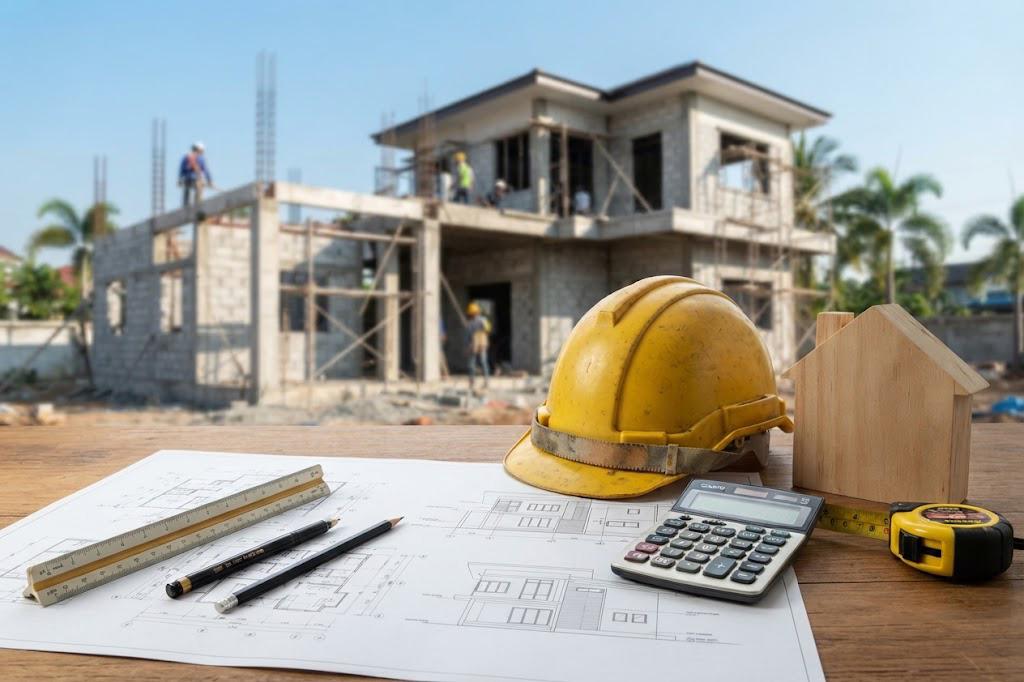
House Construction Cost Philippines 2026 estimates require navigating complex macroeconomic variables, fluctuating material markets, and strict local regulatory compliance. Relying on outdated or generalized cost-per-square-meter figures often leads to severe project stalling or financial overruns.
According to baseline building permit statistics from the Philippine Statistics Authority (PSA), raw structural permits average around ₱13,058.66 per square meter nationwide, but a fully finished, move-in-ready residential build realistically ranges between ₱20,000 and ₱70,000+ per square meter depending on architectural specifications, material grades, and geographic site conditions.
This guide delivers a professional, transparent financial and technical breakdown to help you plan your construction accurately from blueprint to turnover.
2026 Cost Per Square Meter Breakdown by Finish Tier
As verified through current contractor estimates across major metropolitan and provincial hubs, construction costs are categorized by finishing tiers:
- Economic / Low-Cost Tier (₱20,000 – ₱35,000 / sqm): Utilizes standard Concrete Hollow Blocks (CHB), basic corrugated GI roofing, standard ceramic tiles, PVC doors, basic electrical rough-ins, and plain cement slab finishes. Best for tight-budget builds or provincial housing projects.
- Standard / Mid-Range Tier (₱35,000 – ₱50,000 / sqm): Features upgraded homogeneous tiles, skim-coated and painted walls, aluminum-framed windows, gypsum board ceiling systems, modular kitchen cabinetry, and branded electrical fixtures.
- High-End / Luxury Tier (₱50,000 – ₱70,000+ / sqm): Incorporates premium large-format imported tiles, smart home automation wiring, floor-to-ceiling glass systems, custom architectural millwork, solid wood paneling, and advanced waterproofing membranes.
Real-World Cost Projections by House Size
To establish a realistic total budget for standard-tier residential construction, use these baseline calculations:
- Starter Bungalow (60 sqm Floor Area): ₱2.1M to ₱3.0M total budget.
- Two-Storey Family Home (100 sqm Floor Area): ₱3.5M to ₱5.0M total budget.
- Spacious Residence (150 sqm Floor Area): ₱5.25M to ₱7.5M total budget.
Itemized 100 SQM Budget Distribution (Engineering Baseline)
In standard residential construction under national building code standards, fund allocation follows a strict structural and finishing proportion:
- Structural Works (Foundation, Columns, Beams, Slabs): ~28% of total budget (₱700,000 – ₱1,120,000)
- Masonry & Plastering (CHB Laying & Mortar): ~11% (₱275,000 – ₱440,000)
- Roofing System & Insulation: ~10% (₱250,000 – ₱400,000)
- Tiles & Floor Finishes: ~9% (₱225,000 – ₱360,000)
- Doors, Windows & Glazing: ~9% (₱225,000 – ₱360,000)
- Electrical System & Fixtures: ~8% (₱200,000 – ₱320,000)
- Plumbing, Sanitary & Septic Systems: ~8% (₱200,000 – ₱320,000)
- Painting & Surface Finishes: ~6% (₱150,000 – ₱240,000)
- Carpentry & Built-in Cabinetry: ~5% (₱125,000 – ₱200,000)
- Site Overhead & Contingency: ~6% (₱150,000 – ₱240,000)
Current 2026 Material Price Benchmarks
To audit contractor quotations effectively, reference these average hardware store market baselines:
- Portland Cement (40kg bag): ₱260 – ₱300
- Deformed Steel Bars (12mm, Grade 40): ₱220 – ₱250 per 6-meter length
- Concrete Hollow Blocks (4” thickness): ₱18 – ₱24 per piece
- Marine Plywood (1/4”): ₱450 – ₱560 per sheet
Hidden Capital Outlays Homeowners Often Miss
Failing to budget for pre-construction and post-construction regulatory requirements is the leading cause of project budget shortfalls. Account for these necessary expenses:
- Regulatory Permits & LGU Clearances: Ranging from ₱30,000 to over ₱100,000, covering Barangay clearances, zoning, fire safety inspection certificates (FSIC), and building permits mandated by local government units.
- Professional Design & Engineering Fees: Legally mandated signed and sealed architectural, structural, electrical, and plumbing plans drafted by licensed professionals typically run 8% to 12% of direct construction costs.
- Utility Infrastructure Tap-ins: Securing permanent electrical meters from distribution utilities (such as Meralco or regional electric co-ops) and local water district connection fees add ₱30,000 to ₱80,000.
- Site Prep, Retaining Walls & Fencing: Perimeter security fencing, steel vehicle gates, site excavation, and a standard concrete septic vault add ₱150,000 to ₱400,000 depending on lot topography.
- Mandatory Contingency Fund: Maintain a strict 10% to 15% cash buffer for material price volatility, weather delays, or unexpected foundation modifications.
Professional Recommendations for Home Builders
- Never Start Without Complete Blueprints: Avoid engaging contractors on a “pakyaw” or rough estimate basis without approved, signed engineering blueprints and a detailed Bill of Quantities (BOQ).
- Verify Contractor Licensing: Ensure your contractor or builder holds an active PCAB (Philippine Contractors Accreditation Board) license to guarantee legal accountability and structural workmanship standards.








 Facebook
 Twitter