

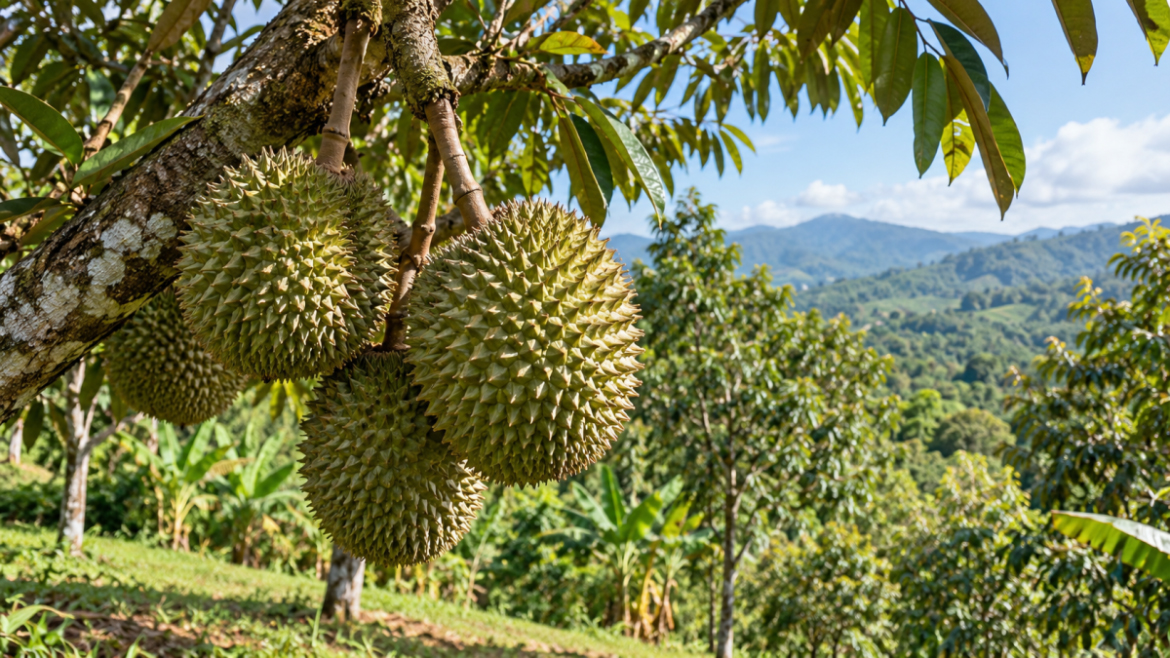
If you want to grow durian in Mindanao successfully, mastering proper orchard establishment, exact tree spacing, soil selection, and rigorous canopy management from day one is essential. Durian farming is one of the most promising long-term fruit-growing investments in the region, particularly across the Davao provinces, but achieving high commercial yields requires technical precision rather than guesswork.
“Durian is not a crop you plant and forget. In Davao and across Mindanao, long-term success comes down to meticulous orchard design—proper soil drainage, exact tree spacing, and rigorous canopy management from day one.”
— Engr. Rolando P. Salazar, Senior Agricultural Engineer and Regional Orchard Consultant, DA-XI.
1. Essential Orchard Setup & Practical Planting Metrics
To establish a productive durian orchard in Mindanao, skip the guesswork and follow these proven field specifications:
- Ideal Soil & Topography: Durian thrives best in deep, rich, well-drained clay loam or sandy loam soil rich in organic matter, with a preferred soil pH between 6.0 and 6.5. Avoid waterlogged flatlands unless intensive drainage canals are constructed.
- Standard Tree Spacing: Plant grafted seedlings at a distance of 8 meters by 8 meters or 10 meters by 10 meters in a square or triangular layout. This ensures adequate sunlight penetration and air circulation as the canopies mature.
- Planting Hole Dimensions: Dig planting holes measuring at least 60 cm x 60 cm x 60 cm. Mix the topsoil with fully decomposed organic manure or compost before setting the root ball at level ground to prevent collar rot.
2. Recommended Orchard Layout & Spacing Diagram
A properly laid-out orchard prevents overcrowding, reduces fungal disease pressure, and maximizes fruit yield per hectare.
[ 10 Meters ]
+------------------------------------------+
|  (Tree A)                              (Tree B) |
|                                          |
|                                          |
|                                          |
|  10 Meters                               |
|                                          |
|                                          |
|                                          |
|  (Tree C)                              (Tree D) |
+------------------------------------------+
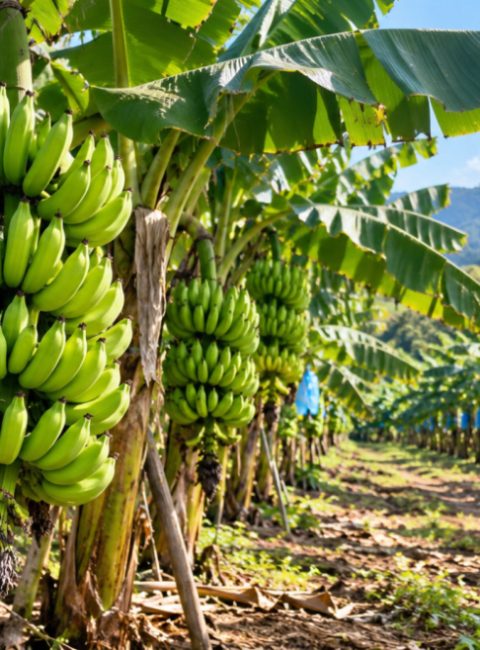
* Note: Intercropping with short-term cash crops (like bananas or legumes)
  can be utilized in the open center aisles during the first 3 years.
3. Pruning Timelines & Canopy Management
Managing your durian trees through distinct growth phases is critical for structural strength and flower induction:
- Formative Stage (Years 1–3): Train the young tree to develop a strong central leader trunk. Remove low-hanging branches up to 1 meter from the ground to prevent soil-borne pathogen splash.
- Maintenance Stage (Years 4–6): Select 3 to 5 well-spaced primary scaffolding branches radiating evenly around the trunk. Prune out water sprouts, crossed branches, and diseased wood annually right after the harvest season.
- Pruning Schedule Notice: Complete all heavy pruning immediately following your final harvest sweep to allow fresh flushes to harden before the next flowering season.
4. Fertilization Programs and Water Management
A balanced nutritional regimen directly impacts fruit quality, pulp sweetness, and overall tree resilience:
- Vegetative Phase: Apply nitrogen-heavy organic and inorganic fertilizers every 3 to 4 months during the first three years to stimulate rapid leaf and branch development.
- Reproductive Phase: Shift toward high-phosphorus and high-potassium formulations as trees approach the flowering and fruit-setting stages to enhance fruit weight and prevent premature flower drop.
- Irrigation Requirements: Young seedlings require consistent soil moisture, while mature fruit-bearing trees benefit from a brief dry stress period to trigger synchronized flowering, followed by regular watering once fruit development begins.
5. Pest, Disease, and Phytophthora Management
Managing regional threats is vital to protecting your capital investment over the orchard’s lifespan:
- Root Rot (Phytophthora palmivora): The most critical threat in humid tropical climates. Prevent infection by maintaining raised planting berms, ensuring rapid surface drainage, and applying recommended bio-fungicides or copper-based treatments when necessary.
- Durian Borer and Fruit Borers: Monitor developing fruit clusters closely during the early stages. Practice strict field sanitation by burying fallen, infested fruits to break the pest lifecycle.
6. Current Market Context & Davao Production Insights
While technical management drives orchard health, understanding market trends helps guide commercial planning:
- Regional Production Volume: The Philippine Statistics Authority reported that the Davao Region produced 64,621.28 metric tons of durian, maintaining its position as a primary production hub.
- Farmgate Pricing Trends: First-quarter data highlights a 33.4% year-on-year growth in regional farmgate prices, reflecting strong domestic and export demand. However, growers must factor in local transport, fertilizer input costs, and post-harvest handling losses when calculating net orchard returns.


 Facebook
 Twitter