
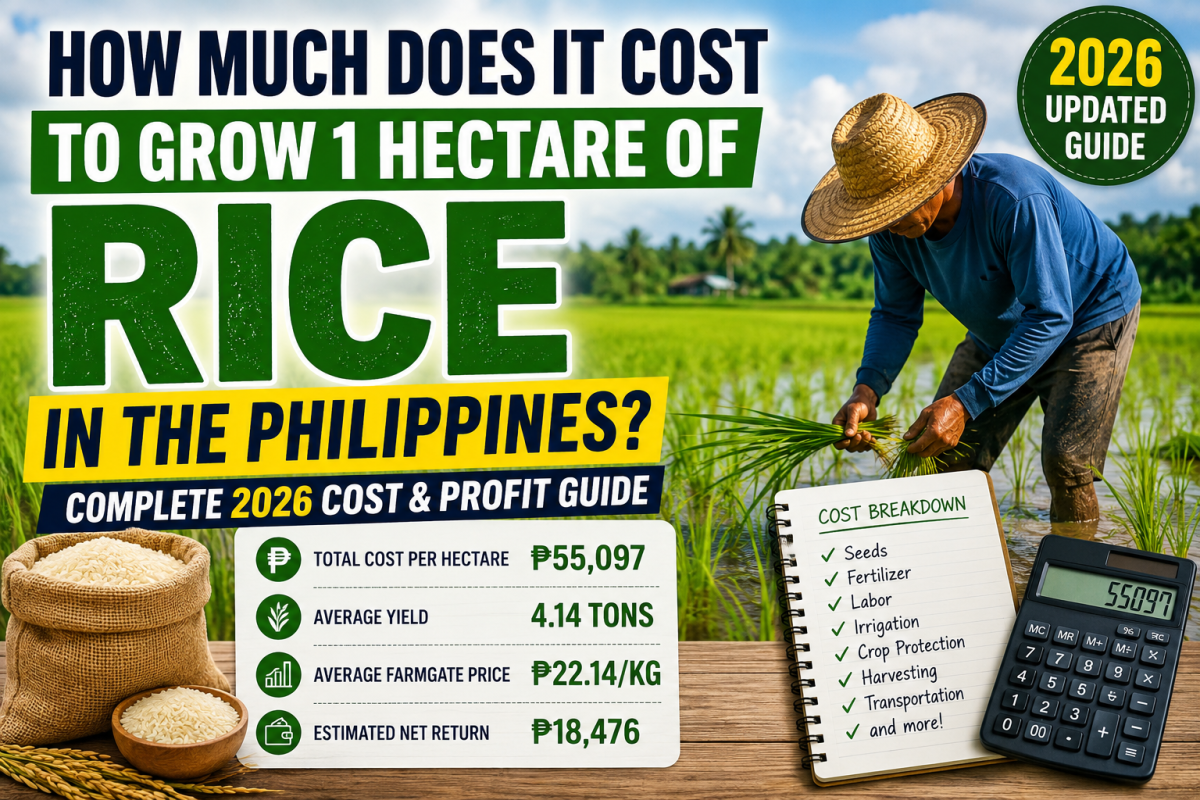
Cost to grow 1 hectare of rice in the Philippines depends on several factors, including land preparation, seeds, fertilizer, labor, irrigation, crop protection, harvesting, and transportation. For farmers planning a 2026 rice crop, understanding these expenses alongside expected yield and palay prices is essential for estimating how much capital may be needed and whether the farm can generate a positive return.
For 2026, the latest Philippine Statistics Authority (PSA) production-cost data provide a useful benchmark. The PSA estimated that the average cost of producing palay in the Philippines was ₱55,097 per hectare in 2025, equivalent to ₱13.26 per kilogram. Average net returns were estimated at ₱18,476 per hectare.
However, that national average should not be treated as a fixed price for every farm. Production costs vary depending on the region, irrigation, farming method, labor requirements, input prices, land arrangements, and yield.
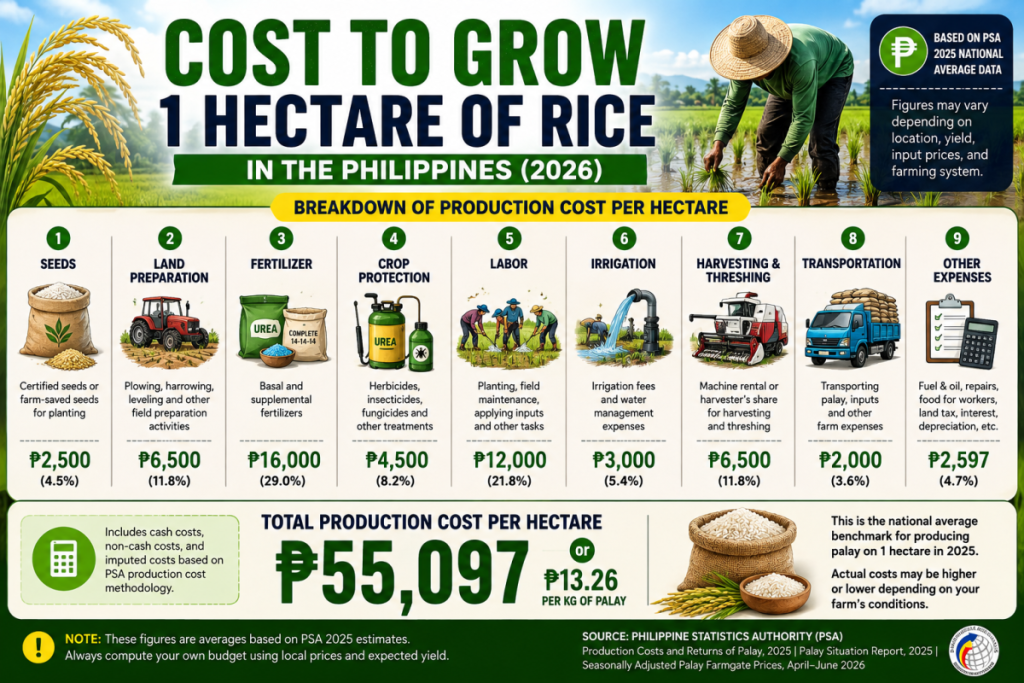
For someone planning to cultivate one hectare of rice in 2026, a practical starting budget is therefore around ₱55,000 or more per cropping season, with actual expenses potentially higher depending on local conditions.
| Major figure | Latest available benchmark |
|---|---|
| Average production cost | ₱55,097/hectare |
| Average production cost | ₱13.26/kg |
| Average net return | ₱18,476/hectare |
| Average 2025 palay yield | 4.14 metric tons/hectare |
| April–June 2026 average farmgate price | ₱22.14/kg |
The PSA reported that national palay yield reached 4.14 metric tons per hectare in 2025, up from 4.11 metric tons in 2024. Central Luzon recorded the highest regional yield at 5.16 metric tons per hectare.
The cost of producing one hectare of rice starts with preparing the field. Land preparation may involve plowing, harrowing, leveling, and other activities needed before planting. The actual expense depends on whether the farmer owns machinery, rents equipment, or hires a contractor.
For many small farmers, machinery rental can represent a significant cash expense because tractors and other farm equipment require fuel, maintenance, and operators. A farmer who owns equipment may have lower direct cash expenses but still needs to account for fuel, repairs, depreciation, and other ownership costs.
Seeds are another important expense. The amount required depends on the rice variety and planting method. Direct-seeded rice, for example, can have different seed requirements from transplanted rice. The cost also varies depending on whether farmers use certified seeds, farm-saved seeds, or other planting materials.
Fertilizer can become one of the largest variable expenses in rice production. The amount used depends on soil condition, variety, expected yield, nutrient requirements, and the farmer’s fertilization program. Prices can also change during the season.
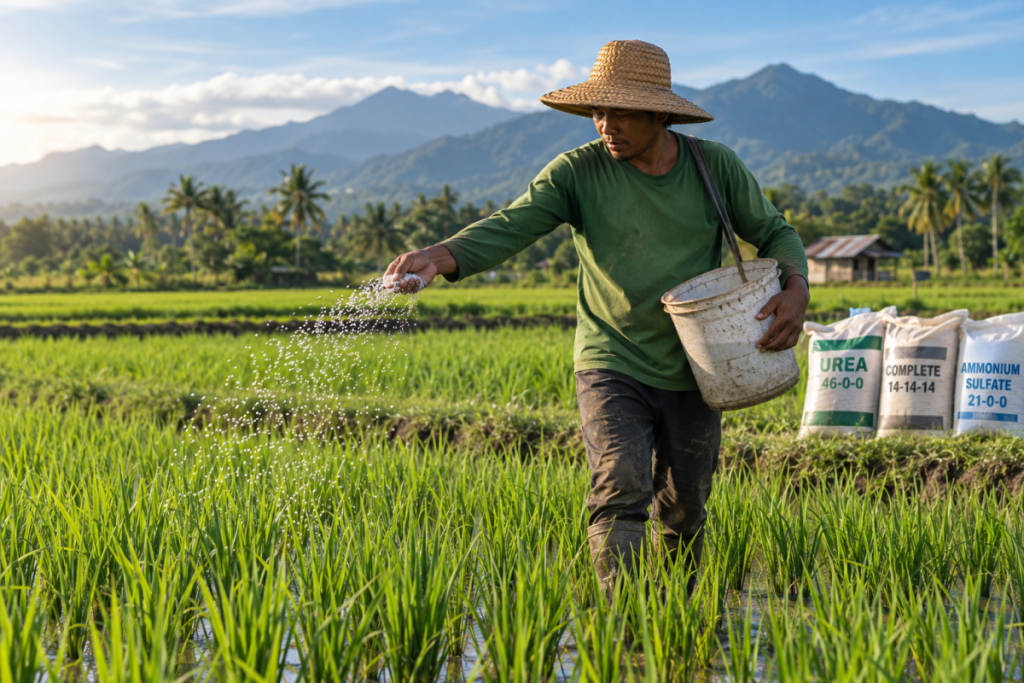
Farmers should therefore avoid using a single nationwide fertilizer budget as though it applies to every field. A soil-based nutrient management program can help prevent unnecessary fertilizer applications while ensuring that the crop receives the nutrients it needs.
Crop protection is another cost to consider. Herbicides, insecticides, fungicides, and other crop-protection products may be needed depending on weed pressure, pests, diseases, weather, and the rice variety being grown.
Not every hectare will require the same amount of pesticide or herbicide. In some seasons, farmers may spend relatively little on crop protection, while a serious pest or disease problem can increase expenses considerably.
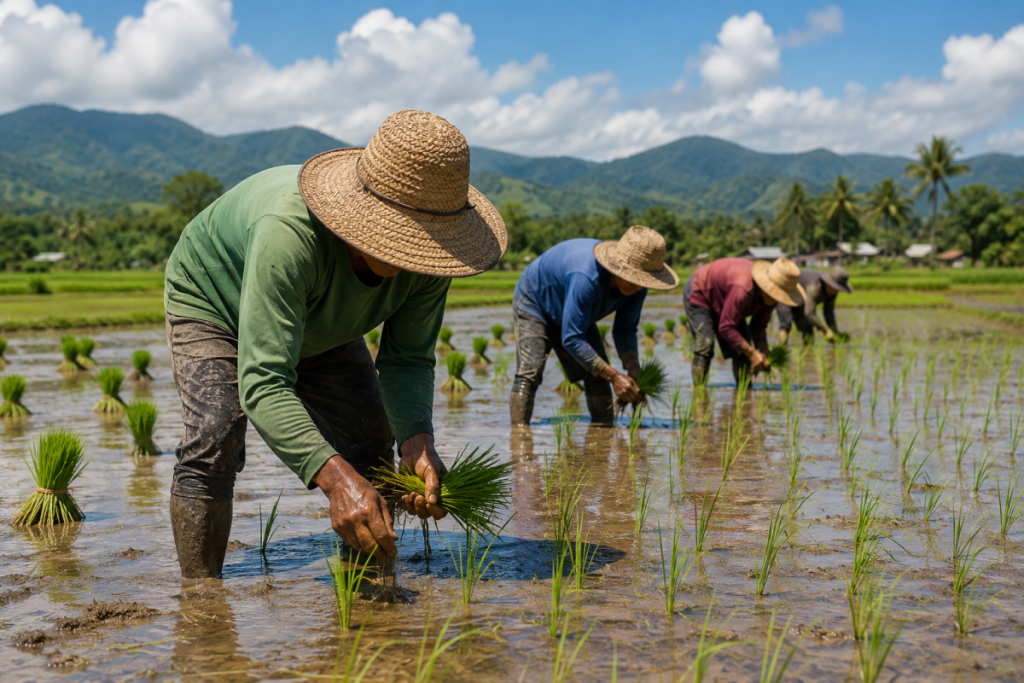
Labor also plays a major role in the economics of rice farming. Labor may be needed for planting, transplanting, fertilizer application, spraying, field maintenance, irrigation management, harvesting, and other activities.
The PSA’s production-cost methodology includes hired labor as well as unpaid operator, family, and exchange labor when calculating production costs. This is important because a farm can appear cheaper if a farmer does not assign a monetary value to family labor, even though that work still has an economic cost.
Irrigation is another factor that can affect both cost and productivity. Irrigated farms may have irrigation fees and other related expenses, but reliable water availability can also support more consistent production.
The difference between irrigated and non-irrigated farming can be significant. For example, PSA data from SOCCSKSARGEN for 2025 showed average production costs of ₱49,348 per hectare for irrigated farms compared with ₱36,714 for non-irrigated farms. However, irrigated farms also generated higher gross and net returns in that regional dataset.
After the crop reaches maturity, farmers have to account for harvesting and threshing. Depending on the location and available equipment, these activities may involve machine rental or a harvester’s share of the harvested crop.
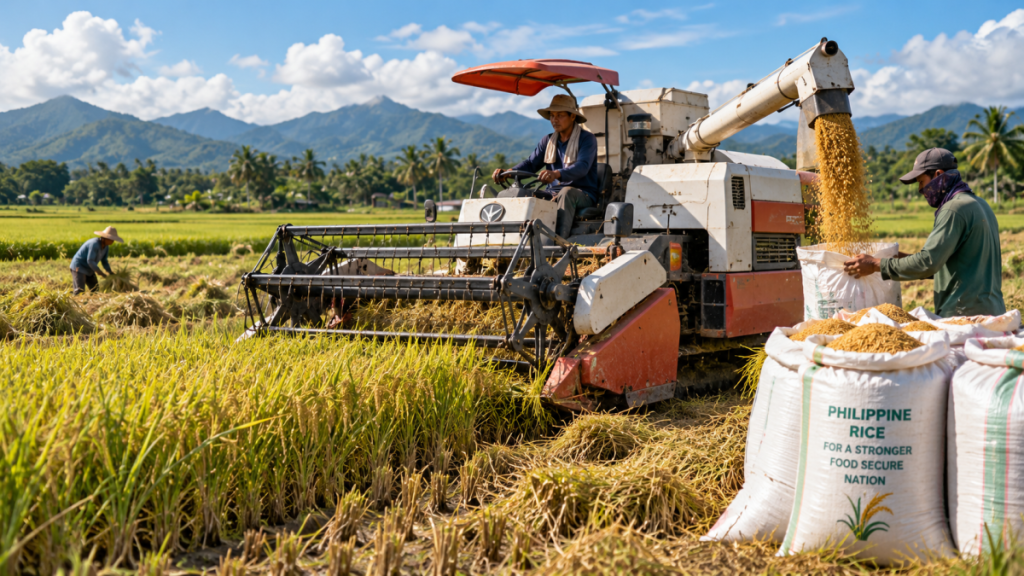
Transportation is another expense that is sometimes overlooked when preparing a farm budget. Palay may need to be transported from the field to a drying facility, trader, cooperative, or other buyer. Fuel prices, distance, road conditions, and the volume being transported can all affect the final cost.
Farmers may also encounter expenses for food for hired workers, repairs, fuel and oil, equipment depreciation, interest on operating capital, land taxes, and other farm-related costs. The PSA’s methodology includes these categories when calculating total production costs.
Because of these differences, the ₱55,097 national average should be viewed as a benchmark rather than a guaranteed 2026 budget. A farmer in one province may spend considerably less, while another farmer may spend substantially more.
The location of the farm is particularly important. In the PSA’s 2025 estimates, average production costs ranged from ₱43,536 per hectare in Caraga to ₱66,261 per hectare in Cagayan Valley. Central Visayas had the highest production cost per kilogram at ₱16.79, while Central Luzon had the lowest at ₱11.82.
For a farmer planning a one-hectare operation, a simple working budget can therefore begin with approximately ₱55,000 in production costs, followed by adjustments for local conditions.
| Expense category | What the farmer should budget for |
|---|---|
| Land preparation | Plowing, harrowing, leveling and machinery |
| Seeds | Certified or other planting materials |
| Fertilizer | Basal and supplemental applications |
| Crop protection | Herbicides, insecticides and other treatments |
| Labor | Planting, maintenance and field operations |
| Irrigation | Water fees and related expenses |
| Harvesting/threshing | Machine rental or harvester’s share |
| Transportation | Moving palay and farm inputs |
| Fuel and repairs | Machinery and farm equipment |
| Other costs | Food, interest, depreciation and miscellaneous expenses |
This table is intentionally presented as a budgeting framework rather than a fixed price list. Local prices should be inserted before a farmer commits capital.
The next question is more important: How much can one hectare earn?
The answer depends mainly on yield and the farmgate price of palay.
The PSA recorded an average national palay yield of 4.14 metric tons per hectare in 2025, equivalent to about 4,140 kilograms.
Meanwhile, the PSA reported that the seasonally adjusted average farmgate price of palay increased to ₱22.14 per kilogram during April to June 2026, up from ₱21.25 per kilogram during January to March 2026.
Using 4,140 kilograms as an example:
4,140 kg × ₱22.14 = ₱91,659.60
That would represent an estimated gross value of about ₱91,660 per hectare before production costs.
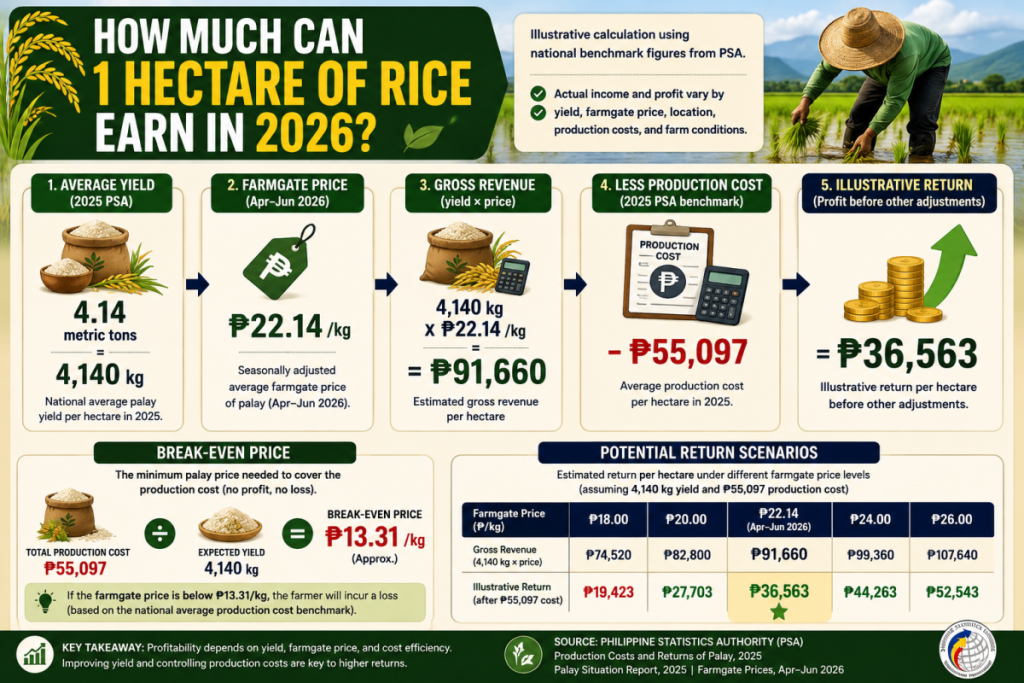
If the farmer spent ₱55,097 to produce the crop, the simplified calculation would be:
₱91,660 − ₱55,097 = ₱36,563
Under those assumptions, the farm could generate an estimated net return of approximately ₱36,563 per hectare.
However, this should be treated strictly as an illustrative calculation, not a guaranteed profit. Actual farm income can be much higher or lower because both yield and farmgate price change from place to place and from season to season.
The timing of the sale can also make a major difference. PSA farmgate prices are based on the prices farmers receive at the first point of sale, net of the marketing costs paid by farmers.
For example, a farmer producing 4,000 kilograms of palay would receive:
| Farmgate price | Gross sales from 4,000 kg |
|---|---|
| ₱18/kg | ₱72,000 |
| ₱20/kg | ₱80,000 |
| ₱22/kg | ₱88,000 |
| ₱24/kg | ₱96,000 |
| ₱26/kg | ₱104,000 |
If production costs were ₱55,097, the resulting return before any additional adjustments would range from approximately ₱16,903 at ₱18/kg to ₱48,903 at ₱26/kg.
This illustrates why rice farming profitability cannot be judged from production cost alone. A farmer can have an efficient farm but still earn less if the selling price is weak or the harvest is damaged.
The reverse is also true. A higher farmgate price can substantially improve returns when the farm produces a good harvest.
There is also an important distinction between cash expenses and total economic costs.
The PSA explains that total costs include cash costs, non-cash costs, and imputed costs. Cash costs are direct payments such as hired labor, fertilizer, and chemicals. Non-cash costs can involve payments made in kind, while imputed costs represent the opportunity cost of using owned resources.
This distinction matters when farmers calculate profitability.
For example, suppose a farmer owns the land and uses family labor. The farmer may not physically pay rent or wages, but that does not mean those resources have zero economic value.
A realistic farm business calculation should consider what those resources could have earned elsewhere.
This is one reason why farmers may sometimes report a different “profit” from the official PSA net-return figure. The two calculations may use different definitions of cost.
Another useful measure is the cost per kilogram of palay.
At the national level, the PSA estimated the average production cost at ₱13.26 per kilogram in 2025. This provides a useful benchmark for understanding the minimum selling price needed to cover the full production cost under the assumptions used in the PSA estimates.
For example, if a farmer’s actual production cost is ₱13.26 per kilogram and the farmgate price is ₱22 per kilogram, the difference is ₱8.74 per kilogram before considering how the farmer’s specific cost structure and other factors affect the final return.
At 4,000 kilograms, that difference would be:
4,000 × ₱8.74 = ₱34,960
Again, this is a simplified calculation rather than a guarantee of profit.
Farmers should also pay attention to yield. Increasing yield without disproportionately increasing production costs can improve profitability because many farm expenses are spread across a larger harvest.
For example, a farmer producing 3,500 kilograms and another producing 4,500 kilograms may have similar expenses for some activities, but the second farmer has more palay over which to spread those costs.
This makes productivity, input efficiency, water management, pest management, and proper timing important parts of farm profitability.
The 2025 PSA figures also show why regional conditions matter. Northern Mindanao recorded the highest average net returns at ₱32,436 per hectare, followed by the Davao Region at ₱29,860 per hectare in the national production-cost estimates.
For farmers in Mindanao, this provides a useful reminder that national averages do not necessarily represent local performance. Soil, rainfall, irrigation, varieties, farm size, access to machinery, labor costs, and local buyers can all change the economics.
Another important consideration is land arrangement.
A farmer cultivating owned land may have a different cost structure from someone renting farmland or giving a portion of the harvest to a landowner under a sharing arrangement. The PSA recognizes landowner’s share, lease rental, and rental value of owned land as separate cost considerations in its methodology.
Therefore, before planting one hectare, farmers should calculate their own expected expenses instead of simply copying a national average.
A useful planning formula is:
Total Production Cost = Seeds + Land Preparation + Fertilizer + Crop Protection + Labor + Irrigation + Harvesting + Transport + Other Costs
Then:
Gross Income = Harvested Palay × Farmgate Price
And:
Estimated Net Return = Gross Income − Total Production Cost
Farmers can also calculate their break-even price:
Break-Even Price = Total Production Cost ÷ Total Kilograms Harvested
For example, if the total cost is ₱55,000 and the harvest is 4,000 kilograms:
₱55,000 ÷ 4,000 = ₱13.75 per kilogram
The farmer would need to receive approximately ₱13.75 per kilogram just to cover that production cost under the simplified assumptions.
If the harvest falls to 3,000 kilograms while costs remain at ₱55,000, the break-even price rises to approximately ₱18.33 per kilogram.
This is why yield losses can quickly affect profitability.
Weather is another major risk. Drought, excessive rainfall, typhoons, flooding, pests, and diseases can reduce yield while some expenses have already been incurred.
Market prices can also change between planting and harvest. Farmers should therefore avoid assuming that today’s farmgate price will necessarily be the price received several months later.
The latest PSA data illustrate how quickly prices can move. The seasonally adjusted farmgate price rose from ₱17.60 per kilogram in the fourth quarter of 2025 to ₱21.25 in the first quarter of 2026, then to ₱22.14 in the second quarter.
For someone starting a one-hectare rice farm in 2026, the safest approach is to prepare a farm-specific budget before spending money.
Start by identifying whether the field is irrigated or rainfed. Check the local price of certified seeds, fertilizer, herbicides, pesticides, machinery rental, labor, fuel, harvesting, drying, and transportation. Then estimate a conservative yield rather than assuming an ideal harvest.
It is also wise to create at least three scenarios:
Low-yield scenario: poor harvest or unfavorable weather.
Expected scenario: normal yield based on the farm’s historical performance.
High-yield scenario: favorable weather and good crop management.
The same should be done with selling prices. A conservative farm budget should not depend entirely on the highest price available in the market.
The most important takeaway is that growing one hectare of rice in the Philippines can cost roughly ₱55,000 based on the latest national PSA benchmark, but the actual amount can vary considerably by location and farming conditions. The PSA’s 2025 data show a national average production cost of ₱55,097 per hectare and an average net return of ₱18,476.
For 2026, the economics can look different depending on the price received for palay. The PSA reported an average seasonally adjusted farmgate price of ₱22.14 per kilogram for April to June 2026, while national palay yield in 2025 averaged 4.14 metric tons per hectare.
Using those figures together can produce a potentially attractive return on paper, but farmers should remember that they represent different reference periods and national averages. They should not be interpreted as a guaranteed profit for every hectare.
A better approach is to use the national figures as a starting point and replace them with actual local costs and expected yield before planting.
For a farmer considering one hectare, the basic question is not simply, “How much does it cost to grow rice?”
The more useful question is:
“How much will my hectare cost to produce, how many kilos can it realistically produce, and what price can I reasonably expect when I sell?”
Once those three numbers are known, the potential profitability of the farm becomes much easier to estimate.
Quick 2026 reference:
- National average palay production cost: ₱55,097/hectare
- Average production cost: ₱13.26/kg
- Average 2025 yield: 4.14 metric tons/hectare
- Average net return: ₱18,476/hectare
- April–June 2026 seasonally adjusted farmgate price: ₱22.14/kg
- Example gross revenue at 4.14 tons and ₱22.14/kg: about ₱91,660
- Example return after ₱55,097 cost: about ₱36,563
These figures are benchmarks and illustrative calculations, not guarantees. Actual rice-farming costs and profits depend on the farm’s location, ecosystem, variety, yield, input prices, labor, land arrangement, weather, and selling price.




 Facebook
 Twitter