

Ha Giang — The Ultimate Frontier Loop, Northern Vietnam
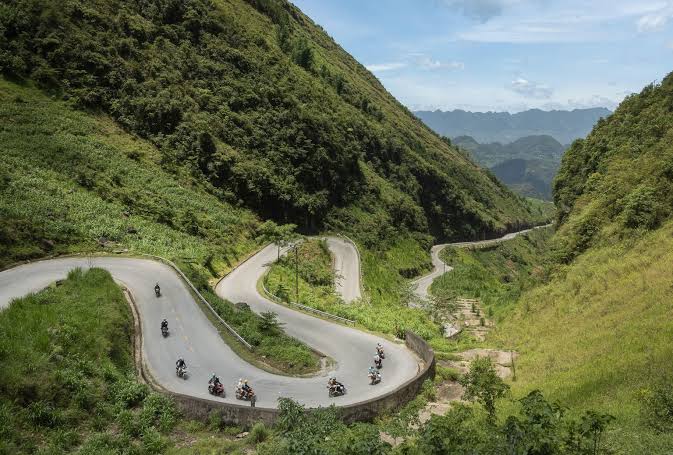
Ha Giang sits at the very tip of Vietnam’s northernmost edge, pressed up against the Chinese border and largely bypassed by the tour buses that swarm Sapa’s terraced hillsides. This is where Vietnam stops feeling like a destination and starts feeling like a frontier. The province is defined by the Dong Van Karst Plateau—a UNESCO Global Geopark—and its landscape of jagged, bare limestone peaks rising steeply from narrow valley floors, connected by one of the most dramatic road networks in all of Southeast Asia. What makes Ha Giang genuinely special isn’t just the scenery, though the scenery alone would justify the journey. It’s the combination of raw geography with a living cultural tapestry of ethnic minority communities, including the H’mong, Lo Lo, Pu Peo, and Giay peoples, many of whom still live in ways their grandparents would recognize. Visiting Ha Giang doesn’t feel like consuming a destination—it feels like being briefly permitted inside a world that has its own rules and rhythms.
The central experience of any Ha Giang visit is the Ha Giang Loop, a roughly 350-kilometer circuit typically completed over three to four days on a motorbike. The loop snakes through Quan Ba Pass—nicknamed Heaven’s Gate—where the road crests a ridge and the valley below simply drops away in a manner that forces even the most jaded traveler to stop and stare. Further along, the Ma Pi Leng Pass connects Dong Van to Meo Vac via an 8-kilometer stretch of road carved directly into the cliffs above the Nho Que River gorge. The river below, impossibly turquoise against the grey limestone, is visible hundreds of meters beneath your wheels. Stopping at the viewpoints here, watching local women in elaborately embroidered H’mong dress walk goats along trails carved into cliff faces, is the kind of experience that restructures your sense of what travel can be. Beyond the pass, the weekly Dong Van Sunday Market draws ethnic minority traders from across the surrounding mountains, selling livestock, locally woven textiles, homemade rice wine, and fresh mountain produce that you won’t find anywhere else in the country.
Getting to Ha Giang from Hanoi is straightforward: overnight sleeper buses depart nightly from My Dinh Bus Station and arrive in Ha Giang City after approximately six hours, with tickets costing between 250,000 and 300,000 VND. From Ha Giang City, motorbike rental shops cluster near the town centre and charge 150,000 to 200,000 VND per day for a reliable semi-automatic. If riding independently feels daunting—the roads genuinely demand respect, with sudden gravel stretches and steep descents—hiring an Easy Rider guide, a licensed local driver who you ride pillion with, costs approximately 600,000 to 900,000 VND per day and includes the guide’s accommodation as well as their intimate knowledge of local eating spots and village shortcuts. Budget accommodation along the loop starts at around 150,000 VND per night for a basic guesthouse room, while charming homestays that include a home-cooked dinner of mountain vegetables and river fish typically run 300,000–500,000 VND. Meals at local eateries in the villages cost between 30,000 and 60,000 VND per dish. Budget a daily total of around 600,000–900,000 VND inclusive of food, accommodation, and petrol when riding independently.
The best time to visit Ha Giang falls within two distinct windows. September through November brings the golden season when rice terraces in the lower valleys turn amber before harvest, while October and November see the rocky plateau above Dong Van blooming pink with tam giac mach buckwheat flowers—a sight that has become one of Northern Vietnam’s most photographed spectacles and one that still manages to feel genuinely moving when seen in person. March is a second option, when peach and plum blossoms dot the valleys. Avoid the rainy months from June through August if you’re riding the loop—the roads become genuinely hazardous with mudslides and slick surfaces, and the views are frequently obscured by thick cloud cover. Before departing Ha Giang City, make sure to obtain the required permit at the police checkpoint near the town bridge—this is free, takes only a few minutes, and is mandatory for all foreigners entering the restricted border zone.
Pu Luong Nature Reserve — The Peaceful Sapa Alternative, Thanh Hoa Province
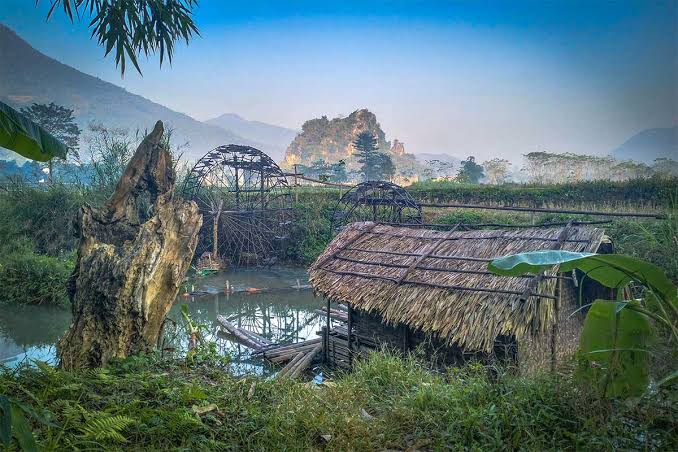
Imagine Sapa’s dramatic rice terraces, but remove the crowded main streets lined with silver jewelry shops, the trudging queues for cable cars, and the tour groups trailing behind guides with color-coded umbrellas. Replace all of that with absolute, almost disorienting tranquility, and you begin to understand what Pu Luong Nature Reserve offers. Located in Thanh Hoa Province, roughly three to four hours southwest of Hanoi, Pu Luong is a protected area of around 17,662 hectares encompassing towering limestone peaks, dense primary forest, terraced rice paddies that descend in neat, mirrored steps from the hilltops to the valley floor, and a string of traditional Muong and Thai ethnic minority villages that have maintained their stilt-house architecture and traditional farming practices for generations. Unlike Sapa, where the commercial pressure of mass tourism has quietly reshaped the cultural landscape over the past decade, Pu Luong still feels like a place where travelers are guests rather than consumers. The pace of life here is dictated by the rice cycle, the seasons, and the sound of water wheels turning in the streams.
The main activities in Pu Luong revolve around the valley itself. Trekking between villages is the primary pursuit—well-worn trails connect settlements like Don, Hieu, Kho Muong, and Son Ba Muoi, passing through bamboo groves, across wooden footbridges, and along the edges of terraced fields that reflect the sky like a series of irregular mirrors. Hidden waterfalls are scattered throughout the reserve—Hieu Waterfall near Ban Hieu village is the most accessible and drops in a broad, foamy curtain into a natural swimming pool that is blissfully refreshing during the hot season. Wildlife watching is also possible for patient visitors: the reserve is home to rare langur monkeys, civets, and hundreds of bird species, and early-morning walks along the forest edge regularly reward those who rise before the mist lifts. Cycling is another wonderful option, with most homestays offering bike rentals for 50,000–100,000 VND per day, allowing you to cover the valley floor at a pace slow enough to stop whenever something catches your eye.
Accommodation in Pu Luong ranges from rustic but comfortable homestays in traditional stilt houses at around 200,000–350,000 VND per person per night (including dinner and breakfast) to boutique eco-lodges like Pu Luong Retreat and Pu Luong Natura that charge 1,500,000–3,500,000 VND per night but deliver a genuinely luxurious experience with infinity plunge pools overlooking the terraces. For budget travelers, the homestays in Ban Hieu or Ban Kho Muong villages represent extraordinary value—the meals alone, typically featuring home-raised chicken, slow-cooked river fish, fresh bamboo shoots, and a small jug of com ruou (fermented rice wine), are worth the journey. Getting there is most efficiently done via a direct limousine shuttle from Hanoi’s Old Quarter, with services like Tien Minh or Pu Luong Excursions charging around 390,000 VND one way and dropping passengers directly at major lodges or the central Don Village. Public buses exist but require multiple connections through Thanh Hoa city, adding several hours to the journey.
The single best advice for visiting Pu Luong is to stay for at least two full nights, three if your schedule allows. One night is simply not enough to slow down to the reserve’s pace, and the experience of waking early on your second morning, when the valley is completely swathed in low cloud and the only sounds are roosters and water rushing over rocks, is qualitatively different from arriving and departing within 24 hours. The best months to visit are May and September—transitional periods when the terraced fields transition between vivid green planting season and the golden pre-harvest glow—though the reserve is genuinely beautiful year-round. Avoid the major Vietnamese public holidays, particularly Tet (Lunar New Year, usually late January or early February), when domestic tourism peaks and homestays book out weeks in advance at elevated rates.
Bai Tu Long Bay — The Quiet Twin to Halong Bay, Quang Ninh Province

Halong Bay is undeniably one of Vietnam’s greatest natural spectacles, and no honest travel writer would claim otherwise. But anyone who has stood on the deck of a Halong cruise at sunrise and realized they are sharing the moment with two dozen other identical vessels within sight—each one piloted in the same circuit, stopping at the same caves, parking in the same lagoons—knows that something important is lost when a world-heritage landscape becomes a managed conveyor belt. Bai Tu Long Bay, located immediately northeast of Halong Bay and sharing its exact geological heritage of thousands of limestone karst islands rising from calm, jade-green waters, offers the same overwhelming visual drama with a fraction of the maritime traffic. The reason is simple: most standard Halong cruises hold permits only for the central Halong UNESCO zone and cannot legally sail into Bai Tu Long’s waters. The result is a bay that feels, on most mornings, as though it exists outside of time.
The highlights of a Bai Tu Long Bay cruise are numerous and genuinely different from what Halong’s busiest zones offer. Thien Canh Son Cave, discovered relatively recently and far less visited than Halong’s Hang Sung Sot, features enormous stalactite and stalagmite chambers that are dramatically lit and accessible only by the handful of boats permitted in the bay. Kayaking through the maze of limestone arches and into hidden lagoons is the quintessential activity here—without the traffic congestion of the main Halong zone, you can paddle into enclosed coves where the only sound is water dripping from the rock and the occasional call of a kingfisher. The Vung Vieng floating fishing village, a community of families living entirely on the water aboard brightly painted wooden houses, offers a window into a way of life that is rapidly disappearing across the bay region. A visit here, often arranged as a guided rowing-boat excursion from the cruise ship, takes around 45 minutes and is invariably one of the most memorable parts of any bay itinerary.
To access Bai Tu Long Bay, you must specifically seek out boutique cruise operators that hold the required northeastern bay permits. Operators like Bhaya Cruises, Heritage Line, and Indochina Junk offer dedicated Bai Tu Long itineraries departing from Halong International Cruise Port rather than the heavily congested Tuan Chau Marina used by most budget Halong packages. Prices for Bai Tu Long cruises reflect the added exclusivity and typically start at around 3,500,000–5,000,000 VND per person for a two-night, three-day package, with premium vessels charging 8,000,000 VND and above. This is notably more than a budget Halong overnight, but the difference in experience is substantial enough that regular Vietnam travelers consistently recommend the upgrade. From Hanoi, reaching Halong City takes approximately three to four hours by road, with shuttle buses from the Old Quarter costing around 200,000–350,000 VND per person; most cruise operators include port transfers in their package rates.
The optimal Bai Tu Long itinerary is a three-day, two-night cruise rather than the standard one-night Halong package. With two nights aboard, the vessel can sail well into the northeastern reaches of the bay where day-trip boats never venture, reaching isolated anchorages near Cap La Island where the water is shallow enough to see the seafloor and the surrounding islands are entirely free of any human infrastructure. The best months for bay cruises are March through May and September through November, when the weather is settled and the sea is calm. July and August bring heat and occasional typhoon activity. December and January can feel misty and cool, but the low season prices during these months can make the experience surprisingly affordable, with some operators reducing rates by 30 to 40 percent.
Ba Be National Park — Jungles and Jade Lakes, Bac Kan Province
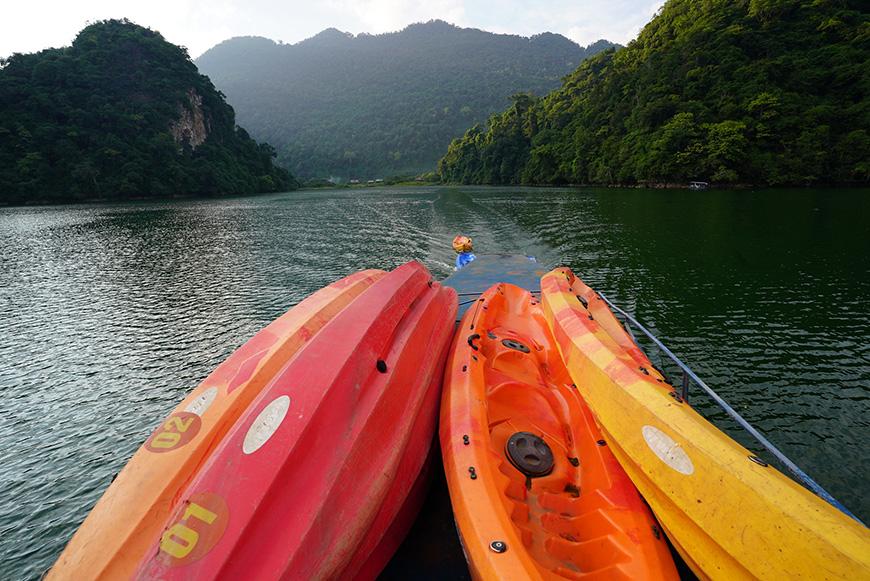
Centered around Vietnam’s largest natural freshwater lake, Ba Be National Park is a haven for nature lovers and the kind of quiet, immersive travelers who are more interested in paddling through limestone tunnels than posing for selfies at tourist checkpoints. The park encompasses nearly 23,000 hectares of protected primary rainforest, towering karst limestone cliffs, deep river gorges, and the three interconnected lakes that give it its name—Ba Be translating literally as “Three Lakes” in Vietnamese. These lakes, fed by the Nam Cham and Cho Leng rivers and stretching for approximately 8 kilometers, sit at an elevation of around 145 meters above sea level and are surrounded by a wall of forested limestone peaks that drop almost vertically into the water. The effect, especially on calm mornings when the surface is mirror-flat and the mist rises slowly from the forest edge, is genuinely ethereal. Ba Be was recognized as a Ramsar Wetland of International Importance in 2011 and remains one of the most biologically diverse regions in all of Southeast Asia, home to over 550 plant species, 299 bird species, and a staggering array of fish, reptile, and mammal species, including the endangered Delacour’s langur.
The main mode of exploration at Ba Be is by water. Renting a kayak from the park’s central area costs around 200,000 VND per day, and paddling independently across the glassy lake surface into the narrow channels and inlets is an experience of rare, unhurried beauty. The most dramatic destination by water is Puong Cave, a 300-meter-long limestone tunnel carved through a mountain by the Nang River, inhabited by tens of thousands of bats and accessible by paddling or riding a longtail boat directly through its dark, echoing interior. The cave is part of most guided boat tours originating from Cho Ra Town or the national park headquarters and is included in standard tour packages costing around 300,000–500,000 VND per group for a half-day boat trip. Trekking options within the park are equally rewarding—a full-day jungle walk to Dau Dang Waterfall passes through primary forest where rare primates and hornbills are regularly spotted, and the cascade at the end is powerful enough to feel, in the classic phrase, like standing inside a thundercloud. Local guides can be hired through the park headquarters for approximately 300,000–400,000 VND per day and are strongly recommended for the more remote trails.
The most atmospheric accommodation choice at Ba Be is a homestay in Pac Ngoi Village, a settlement of the Tay ethnic minority group built on traditional wooden stilts overlooking the Chuong River at the lake’s edge. Several families here offer overnight packages that include a simple but generous dinner of Tay-style grilled river fish, sticky rice, and local vegetables, a shared bathroom, a sleeping mat or basic bed, and breakfast the following morning, all for approximately 250,000–350,000 VND per person. Eating at local restaurants in Cho Ra Town, about 18 kilometers from the park, costs as little as 30,000–50,000 VND for a bowl of pho or a plate of rice with meat. Getting to Ba Be requires a journey of roughly 240 kilometers from Hanoi via Bac Kan City. Public buses from Hanoi’s My Dinh Station run to Bac Kan City (around 5 hours, 120,000–150,000 VND), from which a local songthaew or motorbike taxi to the park costs an additional 80,000–120,000 VND. For groups of three or more, hiring a direct private minivan from Hanoi to the park headquarters (approximately 1,500,000–2,000,000 VND for the vehicle) often works out cheaper and far more convenient.
The ideal time to visit Ba Be National Park is during the dry season from October through April, when the lake levels are stable, the jungle trails are passable, and the weather is clear enough for the lake’s famous mirror-like reflections. The rains from May through September swell the rivers and occasionally flood the lower trails, though the lush vegetation during this period is extraordinary and the waterfalls are at their most powerful. Allow a minimum of two days and two nights to experience the park properly—a single day trip from Hanoi, while technically possible, leaves virtually no time for the lake, the cave, and the jungle trails, which together represent the park’s full range. Weekend visits should be booked in advance, particularly during Vietnamese public holidays, as Pac Ngoi’s homestays are popular with domestic travelers from Hanoi who make the drive specifically for the lake’s famous sunrise views.
Cao Bang & Ban Gioc Waterfall — The Far Northeast, Cao Bang Province
Cao Bang Province occupies a remote corner of Vietnam’s far northeast that the vast majority of international travelers never reach, and that distance—both physical and metaphorical—is precisely what makes it so rewarding for those who make the effort. The province was designated a UNESCO Global Geopark in 2018, recognizing its extraordinary concentration of geological features: jagged karst peaks, deep river valleys, ancient volcanic formations, and cave systems that stretch for kilometers underground. The human landscape is equally compelling, with a patchwork of Tay, Nung, H’mong, and Dao ethnic minority communities whose traditional practices in weaving, farming, and architecture remain deeply rooted in a culture that predates the modern Vietnamese state. Cao Bang City itself is a modest, unhurried provincial capital with decent guesthouses, good local food, and almost no infrastructure pitched at international tourists—which, depending on your travel philosophy, is either a limitation or one of the best things about it.
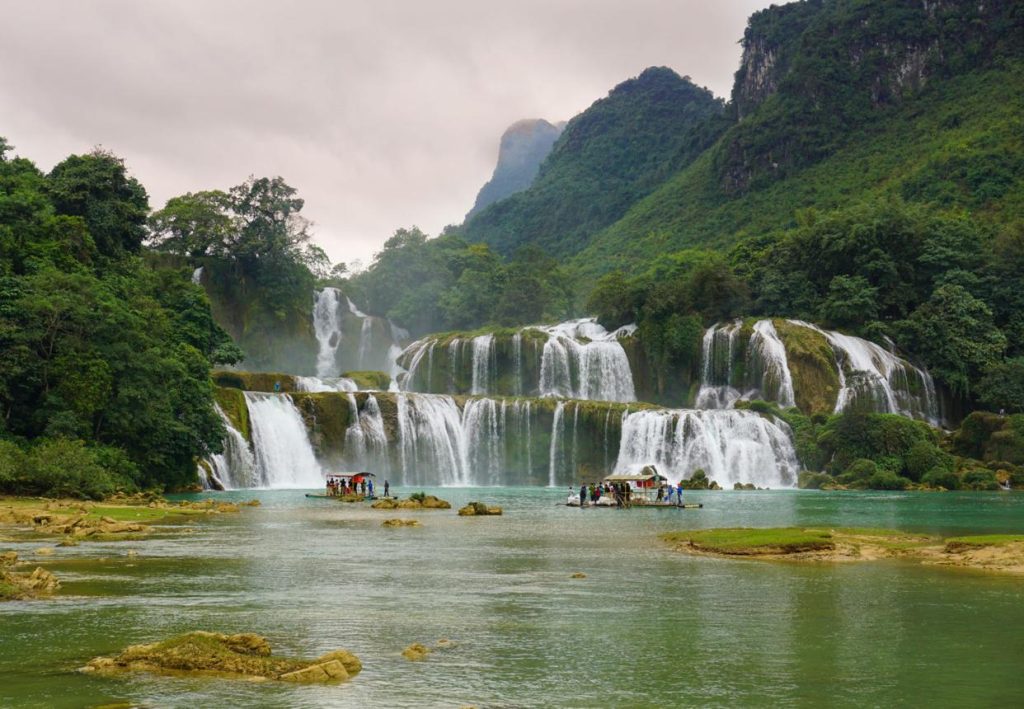
The crown jewel of the province is Ban Gioc Waterfall, located approximately 90 kilometers north of Cao Bang City in the Trung Khanh District along the border with China’s Guangxi Province. At roughly 300 meters wide and 30 meters tall, Ban Gioc is one of the largest waterfalls in Southeast Asia and is split into three main tiers that cascade over broad, flat limestone shelves before plunging into a wide, turquoise pool. On the Vietnamese side, a modest park area with boat docks and a small market of souvenir stalls has been developed around the falls. The experience of paying the 45,000 VND entry fee, then an additional 50,000 VND to board a bamboo raft piloted by a local boatman who poles you directly to the base of the thundering central cascade, is one of those travel moments that hits harder in person than any photograph can convey—the scale and sound and spray of the water, combined with the surreal sight of Chinese tourism rafts doing identical circuits on the opposite bank, creates something genuinely unlike anything else in Vietnam.
Just 4 kilometers from Ban Gioc, Nguom Ngao Cave is a must-visit addition to any Cao Bang itinerary. Stretching for nearly 2.8 kilometers underground through a cathedral-scale limestone system, the cave features some of the most spectacular naturally lit stalagmite and stalactite formations in the country, including formations that locals have given names like “The Fairy Forest” and “The Stone Dragon.” The entry fee is 45,000 VND, and a guided walk through the accessible portion takes approximately 45 minutes. Back in Cao Bang City, basic guesthouses in the market area charge 200,000–350,000 VND per night for clean double rooms, and the local food scene is quietly excellent—Cao Bang is famous throughout Vietnam for its banh cuon Cao Bang, a delicate rolled rice sheet stuffed with mushroom and pork, and trung vit lon (fertilized duck egg) served with fresh herbs and a tart dipping sauce, both available from street vendors for 20,000–40,000 VND per portion. A motorbike rental in Cao Bang City costs around 150,000–180,000 VND per day, which is the most flexible way to reach Ban Gioc and the cave independently.
Getting to Cao Bang from Hanoi requires commitment: the journey by bus takes approximately 7 to 8 hours along winding mountain roads, with sleeper or seating buses departing from My Dinh Bus Station several times daily at a cost of around 200,000–280,000 VND. The journey time alone means that allocating at least three full days to Cao Bang Province makes logistical sense—one day for the bus journey and settling in, one day for Ban Gioc and Nguom Ngao Cave, and a third day to explore the geopark’s other features or make the return journey at a leisurely pace. Some particularly adventurous travelers combine Cao Bang with Ba Be National Park on a loop itinerary, moving between the two via a 3–4 hour drive through spectacularly rural mountain scenery on a route that connects Bac Kan Province to the northeast. This kind of multi-destination loop, with Hanoi as the starting and ending point, represents one of the most rewarding itineraries available in Northern Vietnam for independent travelers with a week or more to spare.
💰 Money-Saving Tips for Exploring Northern Vietnam’s Hidden Gems
Northern Vietnam is already one of Southeast Asia’s most affordable regions, but a few smart habits can stretch your budget even further—without compromising a single memorable experience.
Overnight sleeper buses connecting Hanoi to Ha Giang, Cao Bang, and other northern destinations depart in the late evening and arrive in the early morning, effectively turning your overnight transit into a free night of accommodation. A sleeper bunk seat from Hanoi to Ha Giang costs around 250,000–300,000 VND, saving you an entire night’s guesthouse fee. Buy tickets directly from the bus station counter rather than through travel agents to avoid commission markups of 50,000–100,000 VND per ticket.
The food gap between local eateries and tourist-facing restaurants in Northern Vietnam can be enormous in price and surprisingly small in quality. A full bowl of pho or bun bo at a local com binh dan shop costs 30,000–50,000 VND, while the same dish at a restaurant catering to backpackers might cost 80,000–120,000 VND. Follow the midday crowd—local workers eating lunch are always clustered around the best-value kitchens—and default to dishes that are prepared fresh in large batches, as these turn over quickly and are invariably excellent.
Many of Northern Vietnam’s hidden gems require private or semi-private transport to reach efficiently, and the per-person cost drops dramatically when split between three or four travelers. A private minivan from Hanoi to Ba Be National Park that costs 2,000,000 VND total becomes 500,000 VND per person for a group of four—cheaper than taking multiple public connections. If you’re traveling solo, post in travel forums or hostel noticeboards in Hanoi to find others heading to the same destination and coordinate transport sharing.
Homestays in villages like Pac Ngoi (Ba Be), Ban Hieu (Pu Luong), and the Ha Giang Loop settlements are typically 30–50 percent cheaper when booked directly with the family rather than through online platforms or Hanoi travel agencies. Facebook is your best tool here—many village homestay owners maintain active Facebook pages with photos and contact numbers, and a simple direct message in English will usually receive a reply within a few hours. Direct booking also means more of the money goes to the host family rather than the platform.
In remote destinations like Ha Giang’s outer loop, Cao Bang’s Trung Khanh District, and Pu Luong’s village network, ATMs either do not exist or frequently run out of cash during peak domestic travel periods. Withdraw enough VND from Hanoi before departing to cover your entire trip, including a 20 percent buffer for unexpected expenses. Cards and mobile payments are essentially useless at rural homestays and local roadside kitchens. Carrying smaller denomination notes (10,000 and 20,000 VND bills) makes paying for street food, motorbike fuel, and small entry fees far easier.
The shoulder months of April–May and late September–early October offer an ideal combination of good weather and manageable crowds, and accommodation prices during these windows are often 20–30 percent lower than peak season rates in October–November (when Ha Giang’s buckwheat flowers peak) and December–January (when domestic tourism surges during Vietnamese holidays). Booking everything at least two weeks in advance during these shoulder periods secures the best rates without the last-minute stress of peak season availability. Visiting on weekdays rather than weekends further reduces competition for the most popular homestays.
❓ Frequently Asked Questions
🇵🇭 The North Awaits: Pack Your Bags and Discover Vietnam Beyond the Postcards
This guide has walked you through five of Northern Vietnam’s most extraordinary and undervisited destinations—from the frontier drama of Ha Giang’s karst loop and the serene paddy valleys of Pu Luong, to the secluded waters of Bai Tu Long Bay, the jungle-fringed lakes of Ba Be National Park, and the thundering border cascade at Ban Gioc. Each destination offers something genuinely irreplaceable: landscapes untouched by mass tourism, cultural encounters rooted in living tradition, and the particular satisfaction of having traveled somewhere that most visitors to Vietnam never find.
The best part? These extraordinary experiences are available at prices that make them accessible for travelers from across Southeast Asia, including from the Philippines. With budget carriers connecting Manila and Hanoi at competitive fares, and daily expenses in Northern Vietnam’s hidden gem destinations sitting comfortably below what you’d spend on a weekend in Boracay, there has never been a better moment to explore beyond the familiar and invest your travel budget in something genuinely transformative. If you’ve been inspired by destinations like Hinatuan Enchanted River or the islands of Palawan, Northern Vietnam’s hidden corners will resonate with that same spirit of adventure and awe.
So plan your dates, book your sleeper bus, charge your camera, and head north. The buckwheat flowers of Ha Giang bloom for only a few weeks each year. The mist over Ba Be lake lifts by mid-morning. The longtail boats at Puong Cave depart at dawn. Northern Vietnam’s hidden gems reward those who show up, slow down, and pay attention. Chuc mung hanh trinh—happy travels!








 Facebook
 Twitter