

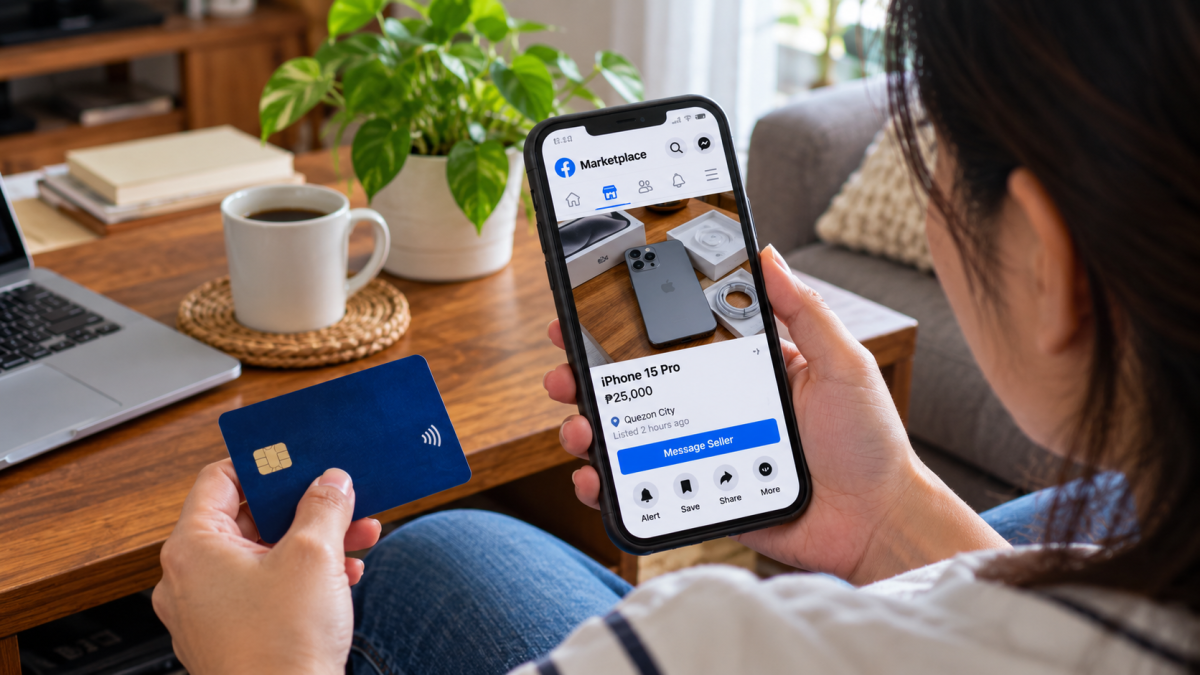
Editor’s Note: This guide was compiled in consultation with digital consumer safety analysts and draws directly from active advisory data released by the Philippine National Police Anti-Cybercrime Group (PNP-ACG) and the Cybercrime Investigation and Coordinating Center (CICC). Our team continually tracks evolving peer-to-peer digital fraud trends across Metro Manila and key provincial hubs to help Filipino consumers transact safely.
Facebook Marketplace scams in the Philippines have become an escalating concern, as the platform cements itself as the go-to digital bazaar for locals—whether you are clearing out pre-loved items in Quezon City, hunting for a student laptop in Manila, or launching a small side-hustle. Unfortunately, the platform’s frictionless accessibility makes it an absolute favorite for cybercriminals and organized syndicates.
According to threat intelligence reports from the PNP-ACG and the CICC, online shopping scams and marketplace fraud remain among the most reported cybercrimes in the country. From sophisticated, real-time fabricated GCash payment receipts to multi-layered fake courier traps, scammers are constantly refining their engineering tactics.
Drawing from consumer protection insights and law enforcement advisories, here are 15 critical red flags to help you identify fraud, protect your funds, and secure your transactions.
Part 1: Red Flags When Dealing with Fake Sellers
If you are a buyer hunting for a deal, protect your hard-earned cash by watching out for these warning signs:
1. The Price is Dramatically Below Market Value
- The Tactic: A brand-new flagship smartphone or a high-end motorcycle listed at 50% below standard retail.
- Why it’s a red flag: Scammers use extreme discounts as psychological bait to manufacture intense urgency, pushing buyers to wire money before checking details.
- What to do: Always cross-reference market averages on trusted platforms like Carousell Philippines. If the price defies economic logic, walk away immediately.
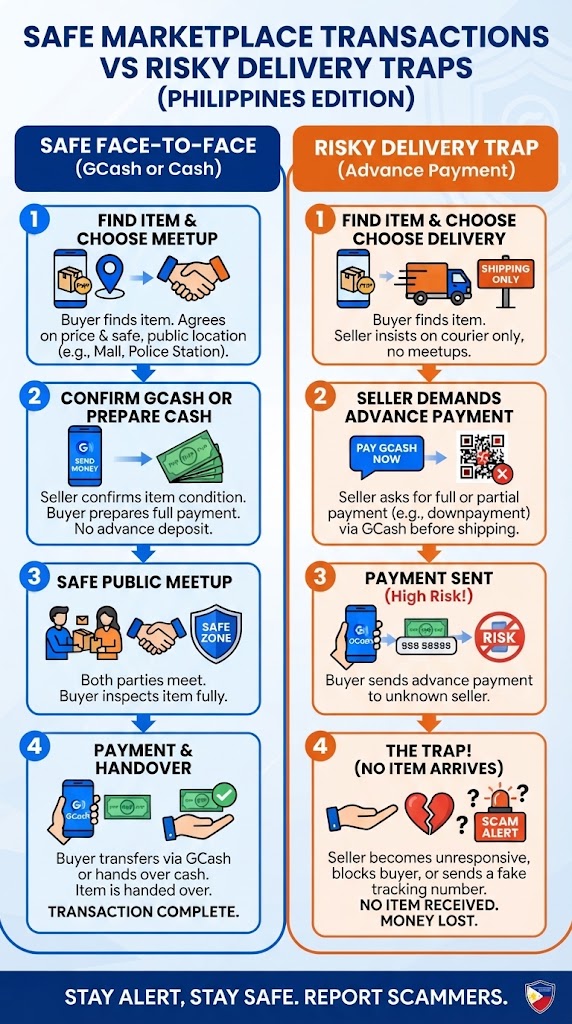
2. Total Refusal of Meetups or Cash on Delivery (COD)
- The Tactic: The seller claims they are stationed in a distant province or working overseas and insists on a 100% advance bank or e-wallet transfer before shipping.
- Why it’s a red flag: Legitimate local merchants understand buyer hesitation and are typically open to secure public meetups or services offering Cash on Delivery (COD) or Cash on Pickup (COP).
- What to do: Prioritize face-to-face transactions in safe public zones, such as mall security areas, bank lobbies, or PNP-designated “Safe Meetup Zones.”
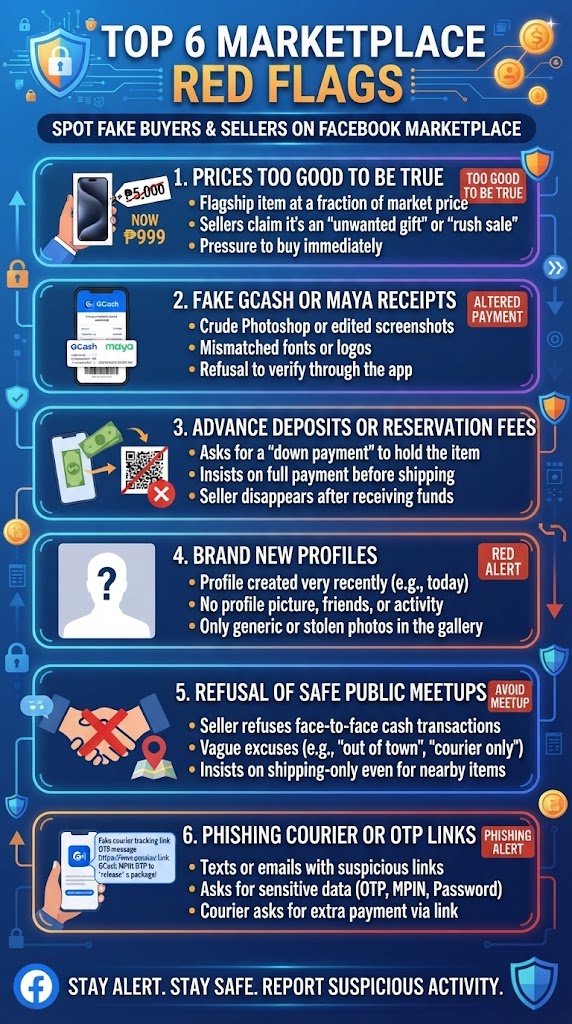
3. Suspiciously Fresh, Blank, or Cloned Profiles
- The Tactic: The seller’s profile was created days or weeks ago, lacks personal history, has zero mutual connections, or uses stolen photos of real individuals.
- Why it’s a red flag: Fraudsters frequently burn through disposable or hacked accounts once reports pile up against them.
- What to do: Inspect the seller’s transparency history—look for account longevity, genuine activity, and consistent engagement.
4. Reluctance to Provide Dynamic Video Proof
- The Tactic: When asked to take a quick video of the item with a handwritten note displaying today’s date, the seller makes excuses (e.g., broken camera, item already packed).
- Why it’s a red flag: They likely do not possess the physical item and are using stolen stock photos lifted from legitimate listings.
- What to do: Never finalize an unverified transaction without real-time, undeniable visual proof of ownership.
5. Immediate Urgency to Move Chat Off Facebook Messenger
- The Tactic: The seller abruptly insists on shifting the conversation to WhatsApp, Viber, Telegram, or SMS.
- Why it’s a red flag: Moving off-platform strips away Meta’s native chat oversight and security reporting tools, shielding the scammer from tracking.
- What to do: Keep all negotiations, price agreements, and discussions strictly within Facebook Messenger.
6. Requests for Irreversible Payment Channels
- The Tactic: Insistence on payment methods with zero buyer protection, such as unverified personal remittance centers (Palawan Express, Cebuana Lhuillier) or direct cryptocurrency transfers.
- Why it’s a red flag: Once cash is collected at a remittance counter, it is virtually untraceable and impossible to reverse.
- What to do: Use protected payment gateways or regulated e-wallets that maintain strict KYC (Know Your Customer) audit trails.
7. Vague Descriptions and Generic Promo Photos
- The Tactic: The listing relies entirely on polished manufacturer images rather than actual, unedited photos of the item’s current state.
- Why it’s a red flag: It hides structural defects, wear-and-tear, or the complete non-existence of the merchandise.
- What to do: Request clear, detailed photos showing serial numbers, accessories, and all angles of the item.
Part 2: Red Flags When Dealing with Fake Buyers
Sellers face unique risks on Marketplace, particularly concerning financial engineering and courier fraud traps.
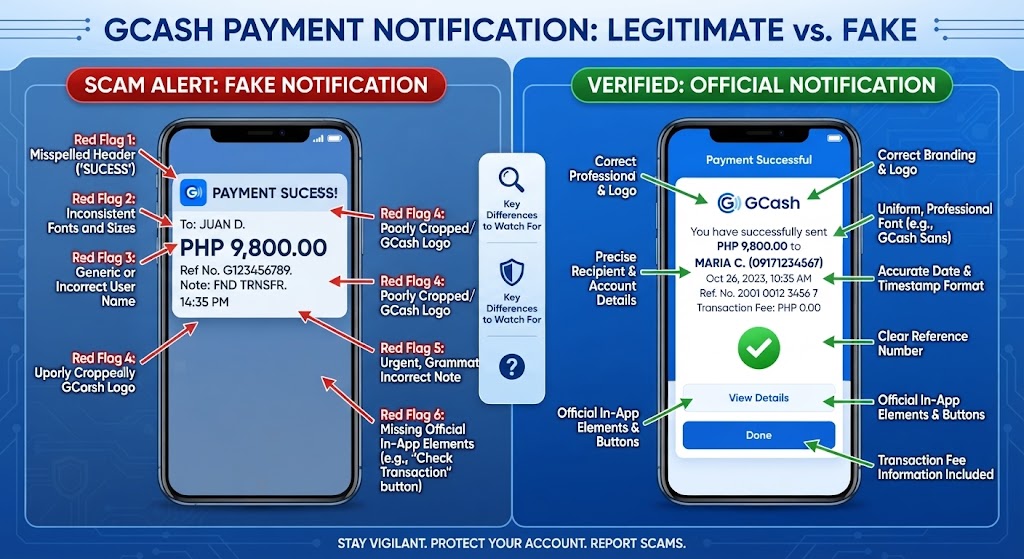
8. Fabricated E-Wallet or Bank Transfer Screenshots
- The Tactic: The “buyer” sends a digital screenshot showing a successful GCash, Maya, or InstaPay transfer, rushing you to hand over the item to a waiting Lalamove or Maxim rider.
- Why it’s a red flag: Cybercriminals use mobile editing tools or cloned apps to generate hyper-realistic fake transaction receipts in seconds.
- What to do: Never rely on screenshots. Always open your official mobile banking or e-wallet application to verify that the funds are physically reflected in your ledger.
9. Spoofed SMS Notifications Masquerading as Bank Alerts
- The Tactic: You receive an incoming text message (SMS) claiming a bank or e-wallet credit has occurred, even though your actual app shows no balance increase.
- Why it’s a red flag: Spoofed text headers can mimic official bank message threads to deceive sellers.
- What to do: Rely strictly on in-app notifications and real-time balance checks, never on incoming SMS prompts.
10. The Overpayment Scam (“Palit-Ulo” / Fake Change Trap)
- The Tactic: The buyer sends an amount higher than your listed price (e.g., sending ₱5,000 for a ₱3,000 item) and asks you to return the “excess change” via GCash alongside the item. Later, their original transfer is flagged as fraudulent or reversed.
- Why it’s a red flag: This classic cash-trapping technique leaves you stripped of both your product and your own cash.
- What to do: Reject any transaction involving cash-out or change-returning arrangements. Exact payment amounts only.
11. Fake Courier Dispatch Deposits (The “Rider Scam”)
- The Tactic: A buyer books a delivery service (Lalamove, Grab, or Move It) to pick up your item, but tells you that you must first pay a “rider insurance fee,” “dispatcher deposit,” or “activation fee” via GCash to complete the booking.
- Why it’s a red flag: Legitimate courier platforms never ask sellers to send advance fees to personal accounts to clear a delivery.
- What to do: Book your own riders through official apps or enforce Cash on Pickup (COP) where the rider handles cash collection upon item turnover.
12. Manufactured Emergencies and High-Pressure Tactics
- The Tactic: The buyer claims they urgently need the item for a medical emergency, a flight out of the country, or an immediate surprise gift, pressuring you to bypass standard checks.
- Why it’s a red flag: Urgency is a psychological lever used by fraudsters to shut down critical evaluation.
- What to do: Slow down. Verify credentials thoroughly regardless of how urgent the buyer claims the situation is.
13. Phishing Links Disguised as “Escrow” or “Buyer Verification”
- The Tactic: The buyer sends a link claiming it’s a secure courier authentication portal or a “GCash Merchant Verification Form” required to receive payment.
- Why it’s a red flag: These are credential-harvesting phishing sites designed to capture your Facebook login, banking passwords, or MPIN.
- What to do: Never click external links sent by users. Official platforms do not require external login pages to process peer-to-peer transfers.
14. Complex Proxy Shipping and International Proxies
- The Tactic: The buyer claims to buy the item as a gift for family in the Philippines while working abroad, offering extra cash if you ship through complicated freight or proxy networks.
- Why it’s a red flag: High incidence of chargeback fraud and fraudulent payment handshakes.
- What to do: Stick strictly to local, direct, and verifiable transactions within your region.
15. Stubborn Evasion of Voice Calls or Direct Verification
- The Tactic: The user consistently refuses a quick phone call, voice note, or video chat on Messenger, citing excuses like “broken microphone” or “in a meeting.”
- Why it’s a red flag: Fraudsters operating multiple fake profiles simultaneously avoid live voice calls to conceal their identities, accents, or locations.
- What to do: A quick 30-second voice check immediately verifies whether you are communicating with a legitimate counterparty.
What to Do If You Fall Victim to a Marketplace Scam
If you or someone you know has been targeted by fraudulent activity on Facebook Marketplace, law enforcement agencies recommend taking these immediate steps:
- Secure Your Digital Accounts: If you clicked a phishing link or shared credentials, change your passwords immediately, enable Two-Factor Authentication (2FA), and terminate all active sessions.
- Contact Financial Institutions Immediately: Report fraudulent transfers to your bank’s customer service or e-wallet support portals (e.g., GCash Help Center or Maya Support) to flag the destination account.
- Consolidate Evidence: Capture full-resolution screenshots of chat logs, profile URLs, transaction reference numbers, and phone numbers.
- File an Official Report: Escalate the incident to specialized cybercrime units:
- PNP Anti-Cybercrime Group (PNP-ACG): File a report at your nearest police station or via their official channels.
- Cybercrime Investigation and Coordinating Center (CICC): Call the 1382 national consumer hotline or visit the CICC Website.
- National Bureau of Investigation (NBI) Cybercrime Division: For formal legal investigation support.






 Facebook
 Twitter