
Revised Opening Paragraph
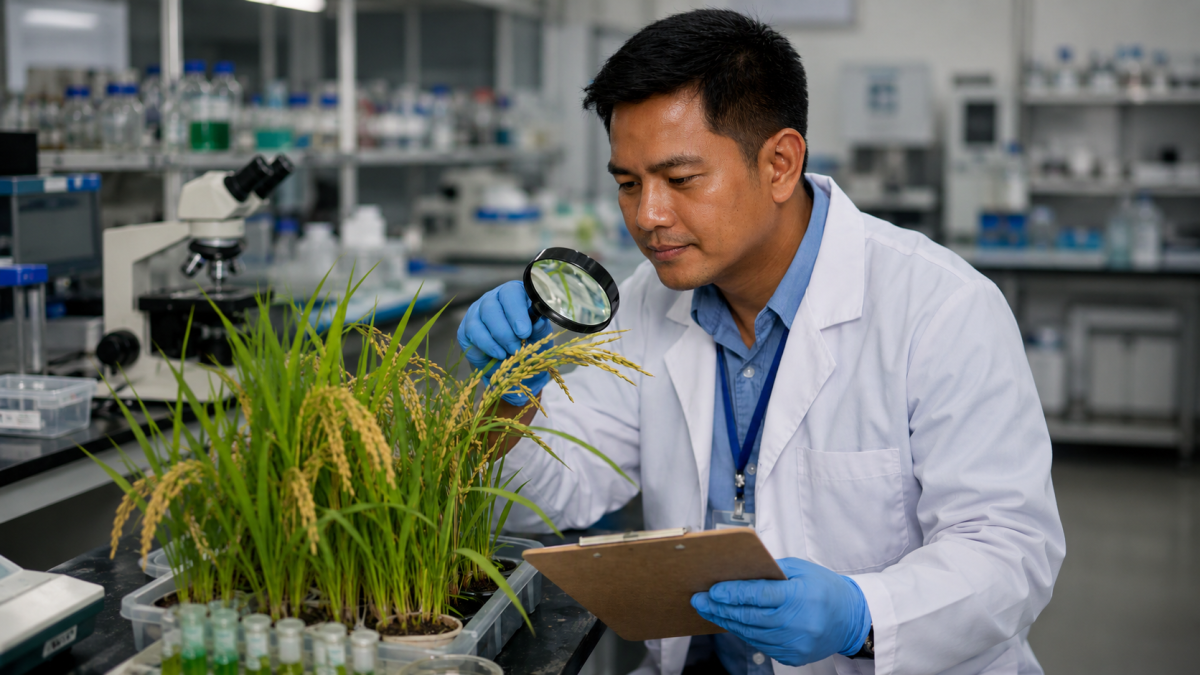
Flood-tolerant rice varieties identified by researchers in the Philippines and Thailand could help farmers protect rice production in areas increasingly affected by prolonged flooding and salty soils. The breeding lines showed an ability to withstand both prolonged submergence and high salinity, offering potential genetic traits for developing rice varieties better suited to climate-related stresses.
Researchers in the Philippines and Thailand have discovered breeding lines capable of withstanding both extended flooding and high salinity, characteristics that may contribute to the creation of climate-resilient rice varieties for farms facing increasing extreme weather and saltwater intrusion.
This research, carried out by the Philippine Rice Research Institute (PhilRice) in partnership with Khon Kaen University in Thailand, identified four rice breeding lines—SSal3, SSal15, SSal24, and SSal36—that demonstrated tolerance to both submergence and salinity.
Submergence occurs when rice plants remain submerged for a prolonged duration, while salinity pertains to the presence of excessive salt in soil or irrigation water. Both of these conditions can severely weaken or even kill rice plants, leading to diminished harvests for farmers.
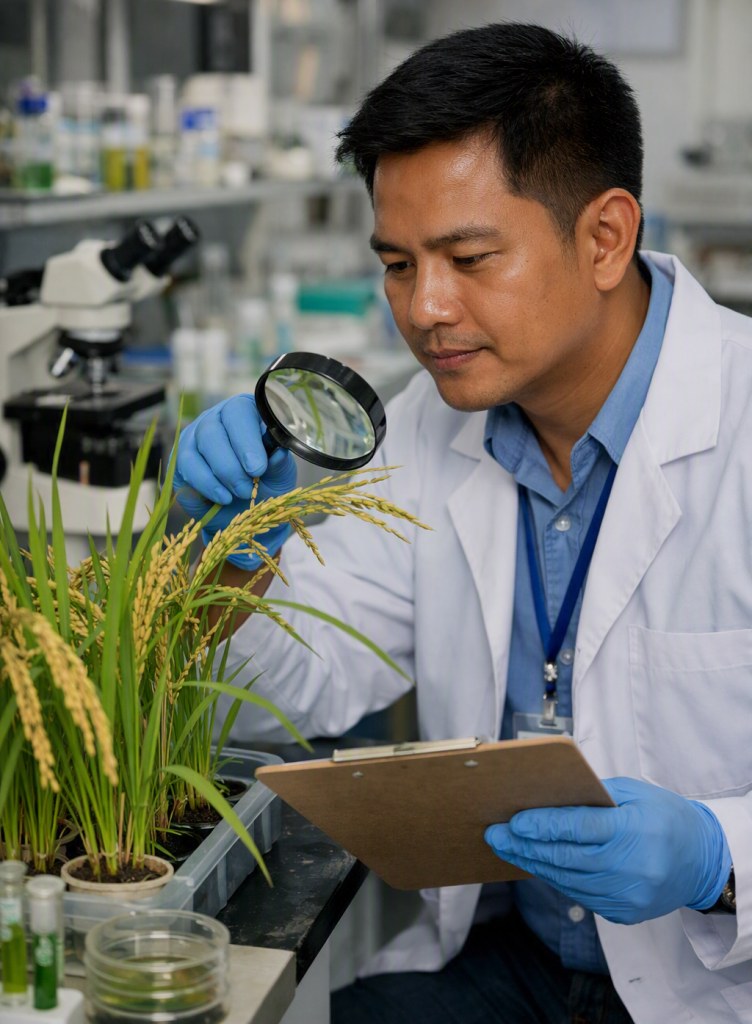
The study, entitled “Seeds of Survival: Unraveling Rice Breeding Lines for Dual Tolerance to Submergence and Salinity,” assessed the breeding lines for their capacity to endure these two stressors. Additionally, researchers investigated the physiological and molecular responses of the plants to pinpoint traits associated with tolerance.
Field assessments conducted during the 2024 wet season revealed four elite breeding lines that exhibited tolerance to prolonged flooding, along with 33 breeding lines that were tolerant to salinity. Notably, SSal3, SSal15, SSal24, and SSal36 were found to be tolerant to both environmental challenges.
Molecular analysis has also validated the existence of the Sub1 gene, which is linked to flood tolerance, as well as the Saltol quantitative trait locus, a genetic segment associated with salinity tolerance. These genetic indicators assist breeders in identifying rice lines that could be beneficial in creating future varieties with combined resistance to both flooding and salinity.
Lead researcher Christopher C. Cabusora stated that the findings address field conditions that are increasingly prevalent in rice cultivation regions. “There are already areas experiencing these combined stresses, and that is where many of our current varieties fall short,” Cabusora remarked.
He emphasized that the objective is to create climate-resilient technologies that can aid farmers in preventing crop failures and economic setbacks as environmental pressures intensify.
The development of the breeding lines necessitated extensive screening and assessment of thousands of breeding materials through traditional breeding techniques.
“Our main limitations are human resource, breeding capacity, and resources. Much of our work relies on traditional, labor-intensive methods, requiring us to screen thousands of breeding materials and repeat evaluations for reliability,” Cabusora said.
The subsequent stage of the research will involve testing the identified breeding lines in real field conditions in regions impacted by both flooding and salinity prior to their recommendation for broader application.
“For farmers, seeing is believing. That’s why we conduct field demonstrations in as many locations as possible,” Cabusora added.




 Facebook
 Twitter