
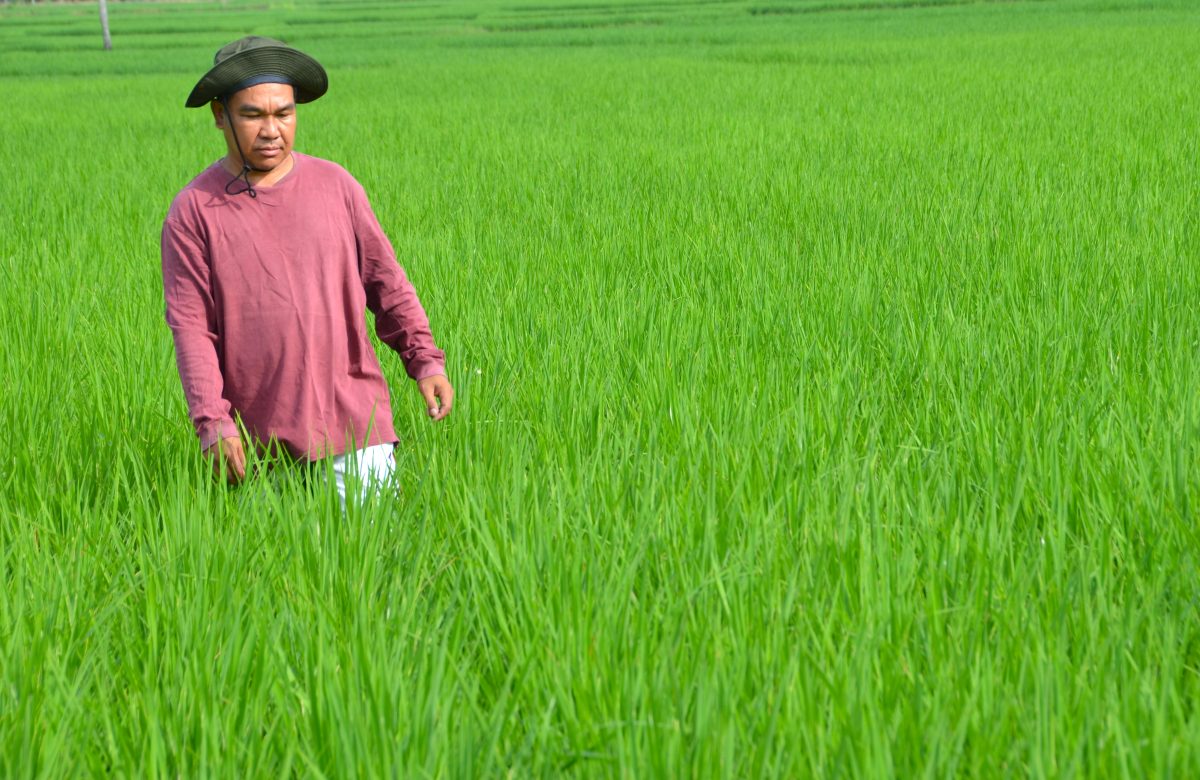
Rice farmer harvest 8.2 tons per hectare has become an inspiring example of high-yield farming in the Philippines after a farmer from Bansalan, Davao del Sur achieved an estimated harvest of 8.2 metric tons from a one-hectare rice field. The result highlights how improved hybrid rice varieties and proper farm management can significantly increase productivity beyond the national average.
The current national average rice yield per hectare is 4.17 metric tons, according to Statista, which based its information on reports by the U.S. Department of Agriculture. That’s equivalent to 84 50-kilogram bags of palay or unmilled rice.
However, Mhar H. Baclay, a farmer in Bansalan, Davao del Sur, was able to harvest 103 bags of fresh palay from his 0.80 hectare rice field with an average of about 64 kilogram per bag, reports the Bansalan Agriculture Farmers Information and Technology Service Center.
If it has to be rounded up to a hectare, his total harvest is 8.2 tons.
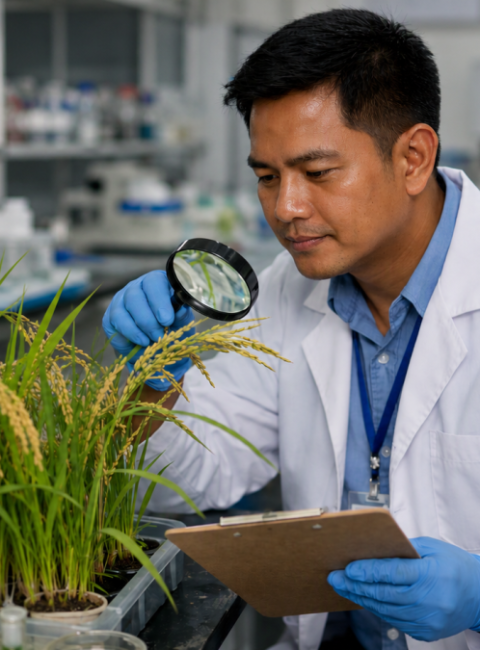
The secret to his success is Mestiso 20, a rice variety more popularly known as M20. It’s a hybrid rice bred by the Philippine Rice Research Institute (PhilRice) and University of the Philippines in Los Banos (UPLB).
PhilRice says Mestiso 20 has a yield of 6.4 tons to 11.7 tons per hectare. It matures in 111 days after sowing, and is moderately resistant to yellow stem borer, green leafhopper, and brown plant hopper. On-farm data also show that hybrids yield higher than inbreds by a minimum of 15%.
According to the 2017 PhilRice’s policy brief, the cultivation of hybrid rice represents a viable strategy for enhancing the competitiveness of farmers. This approach has the potential to boost yields and lower the production costs per kilogram of palay.
“Due to its high yield, hybrid rice can increase the availability of local supply, which strengthens the country’s rice security and minimizes the need to import,” PhilRice said.
Forty-five-year-old Baclay stands out from his peers. His farm is situated in sitio Sto. Niño within barangay New Clarin, approximately 7 kilometers from the town center.
He grows rice across an area of 6.5 hectares. Additionally, he manages a two-hectare plot dedicated to coconut cultivation and another two hectares for banana production. Actually, he owns only one hectare outright, while the remaining land is mortgaged to him.
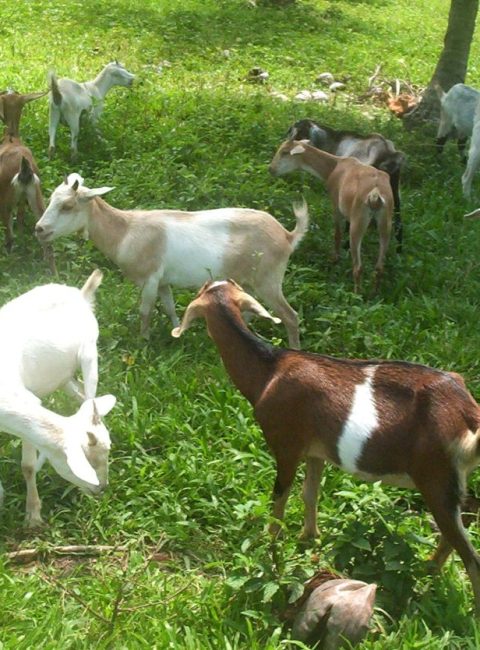
The one-hectare farm, which is about 600 meters away from his house, is planted to coconuts with bananas as intercrop. He also raises ducks and meat-type goats. He said the goats are only for consumption, but he is planning to raise more later on.
New Clarin is the rice granary of the municipality. That’s why he grows the crop on his farm, too. “I plant rice because this is the crop being grown in our community,” he said in an exclusive interview. “Besides, rice is our staple food. Wherever you go, there is always a market for rice.”
Baclay is one of the beneficiaries of the rice hybridization program of the regional office of the Department of Agriculture. As such, he was given free hybrid seeds of rice and commercial fertilizers.
He conducted an experiment by planting M20 in his 0.8-hectare rice field. Throughout this trial, he refrained from using chemical sprays such as insecticides and fungicides, as he holds the view that these chemicals would also eliminate beneficial insects.
Despite his farm being affected by bacterial leaf blight, a significant vascular disease in irrigated rice that poses management challenges and can lead to yield reductions of up to 50%, he was still able to achieve a higher yield.
The overall production amounted to 8,240 kilograms, with the average market price in the region during the study being P23 per kilogram. Consequently, the total gross revenue reached P189,520.00.
In the case where the crop was cultivated without any government subsidy, the net income would be approximately P11,520.00. The expenses incurred included labor costs of P50,000.00 and input costs of P22,000.00.
However, with the government providing subsidies for inputs such as fertilizer and seeds, the net income increased significantly to P139,520.00.
Baclay is known as a progressive farmer in his community. Unknowingly, he once served in special forces of the Philippine Army but opted to retire early and is now concentrating on farming. He also serves as a treasurer of the New Clarin farmers’ association.
Speaking in Bisaya during the interview, Baclay said, “It’s not only being a member of the military that we can serve our fellow man but also in providing food for their tables. That is what we, farmers, are doing.”
Freddie Baclay and his wife, Benifreda, have five children; he is the fourth of the siblings. His father was a farmer, and he often accompanied his father whenever he went farming as far as he could remember.
Baclay started farming when he was only 10 years old. So, it’s not surprising that he is now a farmer just like his father.
Baclay has indeed made significant progress in his life. He began his higher education as a scholar supported by a politician, pursuing a Bachelor of Science in Criminology at the University of Mindanao Bansalan College. However, when the politician lost the election, his scholarship was terminated.
With his father working as a laborer on his aunt’s farm and no other income available, Baclay chose to abandon his aspiration of becoming a police officer. Additionally, with three sisters also attending college, he decided to enlist in the military.
At the age of 18, Baclay joined the military in 1998. He expressed his motivation by stating, “I truly wanted to serve our country,” adding that a military career offered job stability.
In 2010, he married his longtime partner, Zenith Solana. Due to his military assignments in remote areas, he found himself unable to see his wife as often as he wished. Consequently, he initiated a conversation with her one evening regarding their future plans.
After dedicating 21 years to military service, he made the decision to retire as a soldier at the age of 39. With the retirement benefits he received, along with his monthly pension and his wife’s income as a teacher, they managed to accumulate savings. These savings were utilized to purchase their own farm, and they also took on mortgaged land.
When asked about his fondness for farming, he stated, “Farming is not stressful. In fact, it is quite relaxing. I appreciate the lush environment, and most importantly, there is financial potential in farming if one understands the fundamentals.”
Having acquired knowledge in rice cultivation, he chose to concentrate on this crop. Research indicates that for every peso spent on food, 20 centavos are allocated to rice. The Bureau of Agricultural Statistics reports that Filipinos allocate more of their food budget to rice than to any other item.
“I cultivate rice because it is the primary crop in our community,” Baclay explained. “Moreover, rice is our staple food. There is always a market for rice, no matter where you go.”
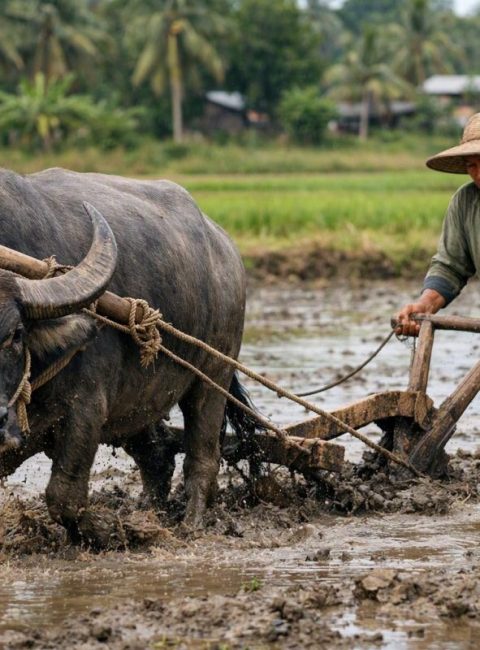
What he learned from his father was the traditional methods of rice cultivation, which included the use of carabao for plowing. To gain practical knowledge, he participated in training sessions and seminars organized by the Bansalan municipal agriculture office.
The advent of machinery has significantly simplified rice cultivation in contemporary times. Previously, land preparation for planting required approximately three days; however, it now takes only a few hours. “I am a member of the Sto. Nino-New Clarin Communal Irrigators Association, and we have access to machinery that we can rent for planting and harvesting,” he stated.
Baclay engages in two cropping seasons for rice: one during the wet season and another in the dry season. Although he oversees the farm independently, he employs four individuals to assist in the upkeep of the rice fields. These workers receive about 15% of the farm’s gross income as their compensation. Maintenance tasks include weeding, irrigation, fertilizer application, and assistance during the harvesting process.
Most of the expenses he incurs in growing rice comes from land preparation, planting and fertilizer application. He spends about 50% of the total expenses on fertilizer alone. He applies commercial fertilizer (9 bags per hectare) three times per cropping. “Fertilizer is really important when it comes to growing rice,” he pointed out.
The rice straw, which is scattered evenly by the rice harvester machine, is left in the field after harvesting. “We don’t burn rice straw. We just left them in the field and became organic fertilizer,” he said.
But he doesn’t use pesticides. “Since 2015, we have stopped spraying our crops with pesticides,” he pointed out. “We learned from seminars on rice production through Farmers Field School that if we spray them with pesticides, those helpful insects will also be exterminated.”
Most rice farmers in the area are not using pesticides anymore. They have observed that by not using pesticides, they have lessened their expenses. In addition, they are healthier compared to the time when they were using pesticides.
If ever he has problems, Baclay consults with the designated agricultural technician in his community. Aside from consultation, he also receives rice seeds. For three cropping seasons now, the agriculture office has been providing rice farmers seeds.
After harvesting, he brings the palay to an adjacent town – in Sinaragan, Matan-ao, Davao del Sur – where it is dried and then milled. It is about 12 kilometers from the farm.
He doesn’t sell his milled rice in the public market. Instead, he stocks them in the house. Neighbors come to his house and buy them at prevailing market prices in the town proper.
Baclay also got a mortgaged land planted to coconuts. But since the coconut trees are already older, he intercrops it with bananas. He doesn’t worry about where to sell his bananas as there is someone (“comprador”) who buys them on the farm.
He harvests banana fruits every 14 days, getting 850 kilograms per harvesting. At least three workers are maintaining the farm. He only visits the farm every now and then and sees how the workers are doing and if the crops are alright.
On why farmers should be considered heroes, Baclay explained, “If there are no farmers, we don’t have food to eat.” He added, “Farming is one of the solutions to the problem of hunger and economic crisis. It is also a way of getting a steady income.”



 Facebook
 Twitter