
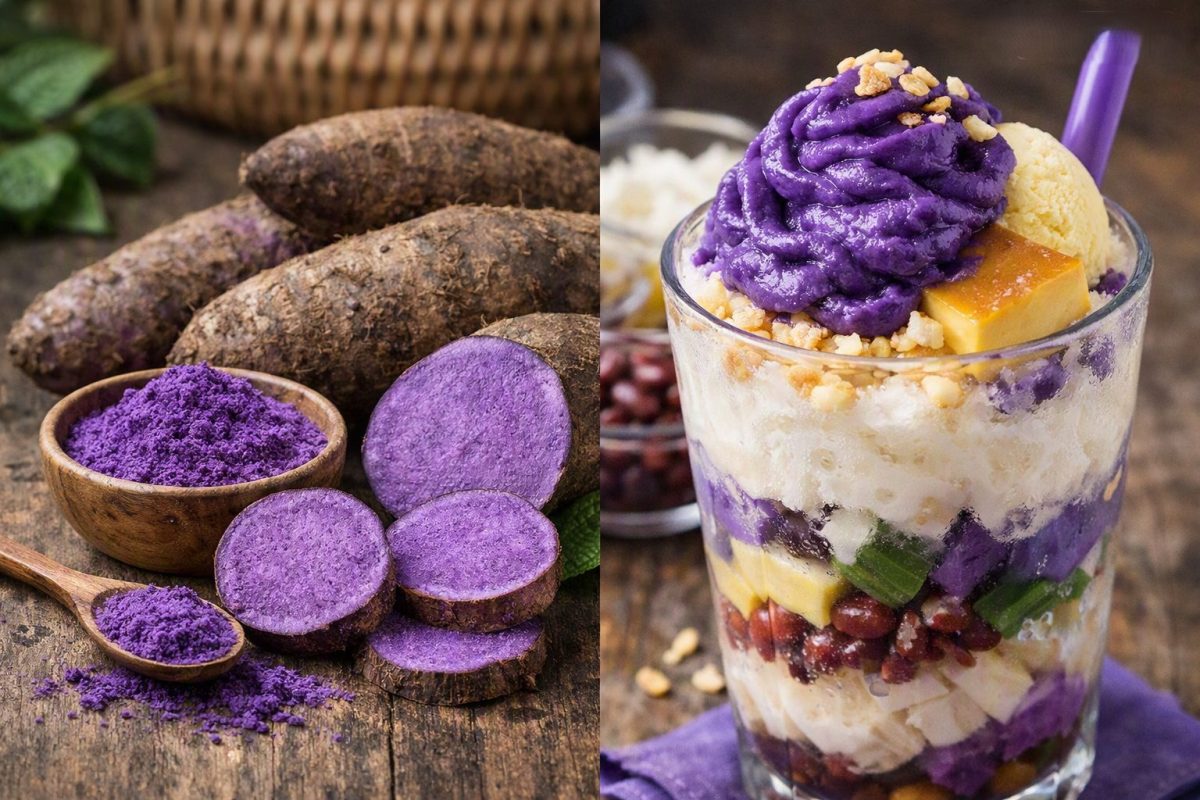
Ube global demand is steadily increasing as the Philippines’ iconic purple yam captures the attention of consumers, chefs, and food brands around the world. Once considered a niche Filipino ingredient, ube is now appearing in beverages, pastries, desserts, and culinary creations across the United States, Europe, Australia, and other international markets.
Often mispronounced as “Oob” on the global stage, the vibrant purple ube from the Philippines is gaining recognition around the world. It has been incorporated into beverages, pastries, and even culinary dishes throughout Europe, Australia, and the United States.
In New York, one of the pioneering restaurants to adopt this ingredient was Manila Social Club, which launched ube doughnuts in 2016. Following this, eateries and bakeries nationwide began devising innovative methods to integrate the vibrant root vegetable into their confections.
As ube (scientific name: Dioscorea alata) gained popularity across various social media platforms, New York City established its own Ubeland food festival, highlighting Filipino delicacies that use ube.
In addition, a well-known international café has unveiled its seasonal “Ube Spring Drinks” series, which is available globally: in the United States, United Kingdom, New Zealand, Australia, Italy, and the Netherlands.
Some young entrepreneurs are even promoting ube as the contemporary matcha. Similar to the iconic green matcha, the striking violet color of ube renders it exceptionally photogenic. More significantly, it possesses a unique flavor profile that is sweet, earthy, and nutty, with subtle notes of vanilla, making it an ideal complement to milk and coffee.
In an article which appeared in Real Simple, ube is described as: “Different from the purple sweet potato, it has an even sweeter, more mellow taste than its orange relative. Ube has a slightly nutty, vanilla taste and is popularly used in desserts in Filipino cuisine, often boiled and then mashed with condensed milk.”
The Department of Trade and Industry (DTI) is actively working to meet the growing clamor. Trade Secretary Cristina Roque said ube along with calamansi are emerging as new export “stars.” In a media conference, she was quoted as saying, “We saw the growth in the banana, pineapple. But the latest stars are the ube and the calamansi.”
Data from the DTI Export Marketing Bureau indicated that exports of ube products reached $3.06 million in 2025. These products were sent to various markets, including the United States, the United Kingdom, Italy, and the Middle East.
The DTI reported that processed ube items and flavor extracts have experienced consistent growth. In addition, global manufacturers are increasingly interested in incorporating ube into ice cream, baked goods, beverages, and other food items.
Ube possesses several unique traits that distinguish it from other root crops. Its striking purple hue is attributed to the presence of anthocyanins, potent antioxidants associated with numerous health advantages.
Like most root vegetables, ube is abundant in starch, rendering it an excellent energy source. However, it also offers a variety of nutrients, such as vitamins A and C, potassium, and fiber.
Ube is indigenous to the tropical areas of Asia. Nevertheless, its precise origin remains a subject of contention among scholars. Some experts contend that ube was initially cultivated in the Philippines, while others suggest it may have emerged from different regions of Asia.
The Philippines is frequently recognized as the primary center for the origin and diversity of ube, boasting over 100 varieties within its borders. Today, the country stands as the foremost producer of ube globally, contributing more than 90% of the world’s supply.
This root crop is extensively grown across various regions, especially in the provinces of Bukidnon, Mindanao, and Visayas. Historically, Bohol province is the largest producer of ube in the Philippines, accounting for about 35% of the country’s total production.
Now the bad news. Even before its global domination, ube production in the country has significantly slowed down. Data from the Philippine Statistics Authority (PSA) showed that the country produced 30,074 metric tons of ube in 2006. This number is more than 50% lower than the total recorded production of 14,000 metric tons in 2020.
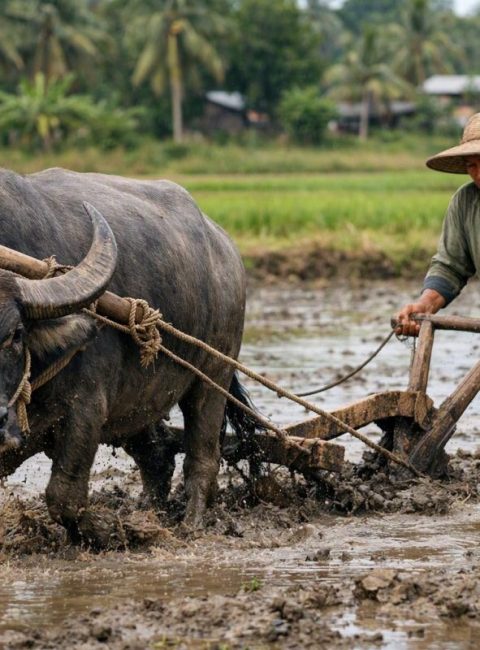
In Bohol, ube farmers are facing significant challenges in production.
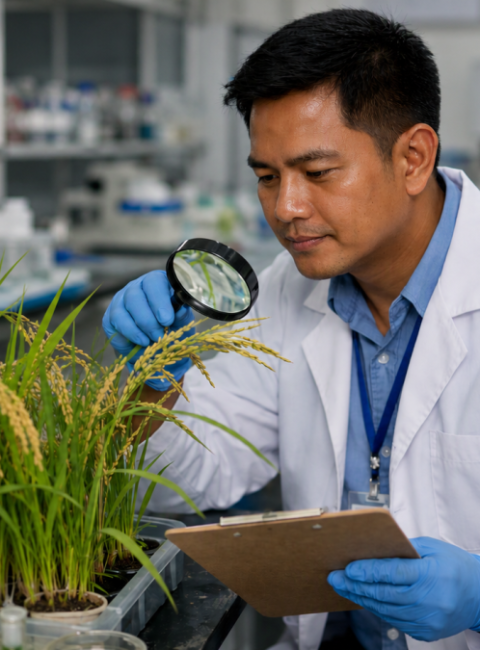
“First is the lack of planting materials. Based on our scoping studies, their production practices are really not very scientific. So, there is a low adoption of necessary recommended practices or science-and-technology-based practices, which we need to address to improve the yield,” said Marlon M. Tambis, the director of the Philippine Root Crops Research and Training Center (PhilRootcrops).
In order to find a solution to the problem, the PhilRootcrops of Visayas State University and Bohol Island State University (BISU) collaborated to develop advanced propagation techniques.
This technology has been presented to farmers through training sessions aimed at producing high-quality planting materials utilizing advanced methods. One such method is minisett, which entails slicing a healthy, whole ‘mother’ tuber into smaller segments.
According to Tambis, farmers can typically generate only 7-10 planting materials from one kilogram using the traditional method of cultivating ube. However, with the minisett propagation technique, they can yield over 30 quality planting materials.
Tambis noted that these planting materials cannot be directly sown in the field. Due to their smaller size compared to those used in conventional planting, they require ‘extra care’ prior to planting. This preparation involves initially placing them in a seedbed for germination.
Moreover, Tambis mentioned that their team is also engaged in a project aimed at developing protocols for the application of the tissue culture method, which could potentially assist in producing higher quality planting materials in the future.
In addition to the shortage of quality planting materials, another obstacle faced by farmers is that ube is classified as a seasonal root crop, which restricts planting to the months of May and June, utilizing traditional planting methods.
By implementing these science and technology-driven interventions, the Philippines has the potential to satisfy the global demand for ube, particularly if farmers nationwide adopt the advanced propagation techniques created by PhilRootcrops.
“Of course, it’s a big help to the farmer because that can potentially increase their income from root crops. So, it became a tool to expand the value chain and benefit more people,” Tambis pointed out.



 Facebook
 Twitter