
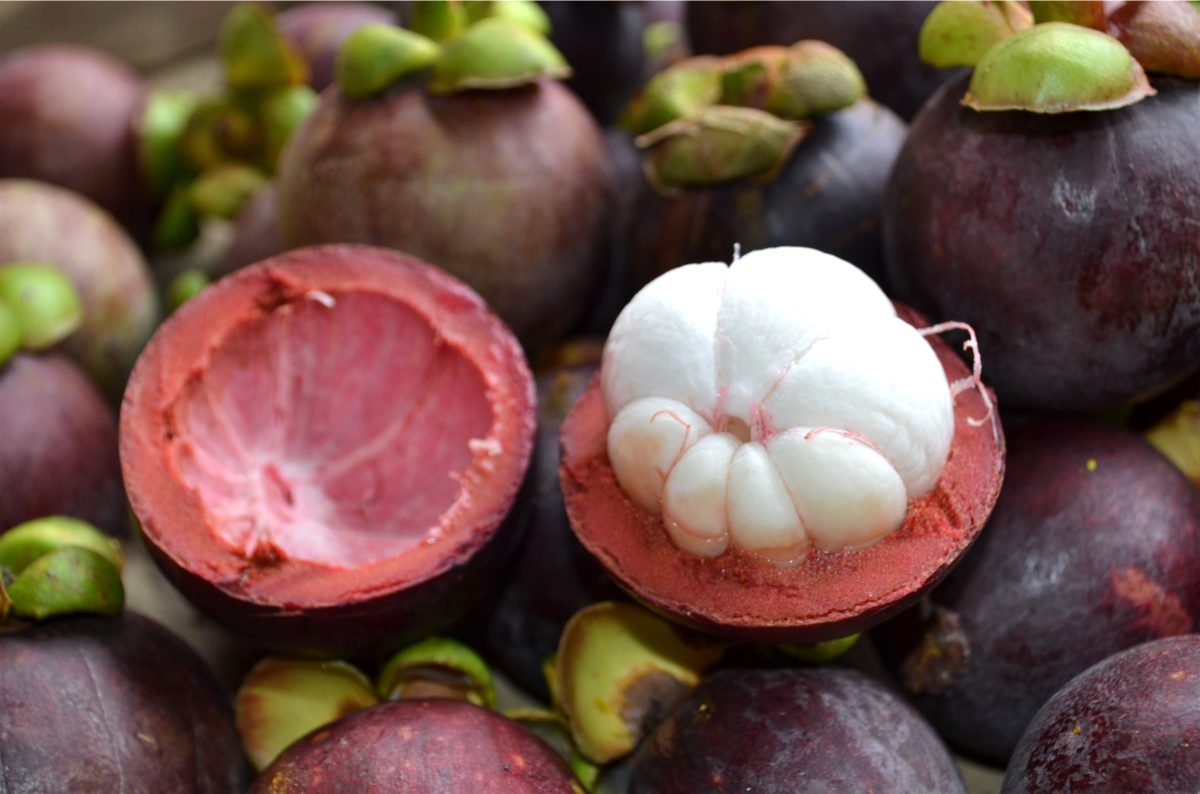
Off-season mangosteen harvest is now possible following the development of a technology that enables farmers to produce the tropical fruit beyond its traditional growing season. The innovation, developed by a Davao-based researcher, could improve fruit availability throughout the year while creating new income opportunities for mangosteen growers.
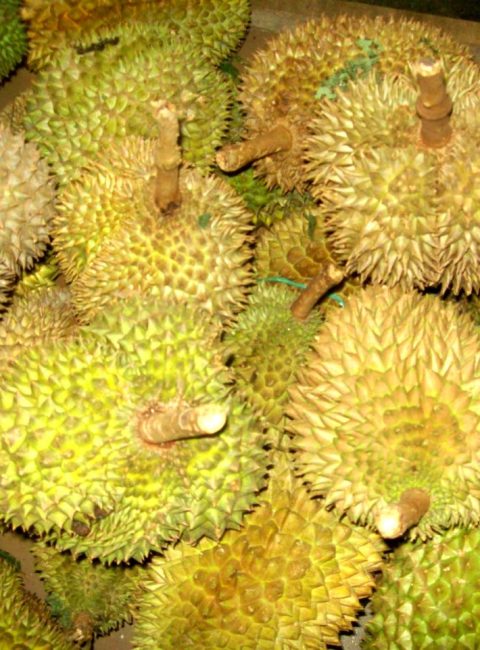
If durian is the “king of fruits,” then mangosteen is their queen. Mangosteen is believed to have “cooling” effects that counteract the “intense heat” emitted by durian. The fact that the fruiting seasons of these two tropical fruits coincide makes these titles particularly apt.
So much has been written about mangosteen. There is a legend about Queen Victoria offering a reward to anyone who could deliver to her the fabled fruit. In his publication, Hortus Veitchii, James Herbert Veitch reported that he visited Java (Indonesia) in 1892 “to eat the mangosteen. It is necessary to eat the fruit grown within three or four degrees of latitude of the equator to realize at all the attractive and curious properties of this fruit.”
In Southeast Asia, where it is endemic, mangosteen is highly esteemed. “In other tropical areas, this fruit is known only in botanical gardens and small experimental orchards,” noted Underexploited Tropical Plants with Promising Economic Value, published by the US National Academy of Sciences (NAS). “Curiously, it is unavailable in what could be its major markets: Central America, South America, Australia, and Africa, where it would be readily accepted if it could be economically produced.”
Now, there’s good news. A Davao-based researcher has found the secret of producing off-season mangosteen fruits. Mangosteen, whose season is only from the months of August to October, can be harvested even during the time when it is not available.
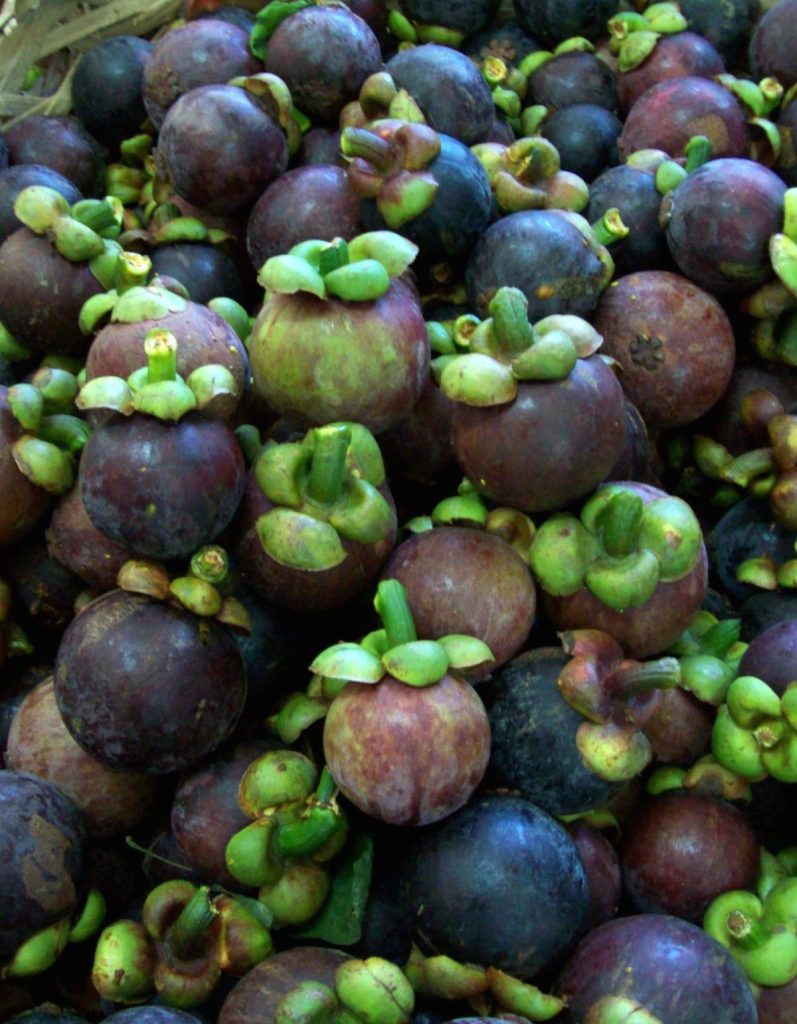
“Developing an off-season technology for mangosteen has the potential of bringing high profits to the farmers,” said Agapito Regulacion, the man who developed the technology, which was funded by the Bureau of Agricultural Research (BAR).
“With this technology, farmers can schedule the off-peak months wherein they can harvest mangosteen,” Regulacion, chief of the Davao Agricultural Research Central Experimental Station (DARCES) of the Davao regional field office of the Department of Agriculture (DA) in Manambulan, Tugbok District.
During the regular season, a kilo of mangosteen costs P25-P35 as the supply is plenty. But during the off-season, they are rarely available, and if people can find them, the price goes up to as high as P250-P300 per kilo.
During the summer months, mangosteen is not available. The fruit is also in high demand during the Christmas season. Before the New Year arrives, mangosteen is one of the most sought-after fruits as people believe that its rounded-shape symbolizes money.
“If farmers are able to adopt and use this technology effectively, they can predict the schedule of their production and identify easily when to produce them the best, which is during off-season where the price of mangosteen is high,” Regulacion told the BAR Digest.
“If they can program their production and harvest them from December to February wherein mangosteen is not available, then it will be very profitable for them,” he added. “The price is 10 times more during the off-season.”
Aside from price, there is also a difference in the production. Based on the data at hand, Regulacion said that “season-produced mangosteen had more fruits with a yield of 58 kilos per tree while the off-season mangosteen had lesser yield of about 26 kilos per tree.”
It took several years for the off-season mangosteen technology to be successful. Regulacion conducted some studies on mangosteen, which can be grown from seeds or asexually through grafting. With funding from the Bureau of Agricultural Research (BAR), he started his study in January 2015 and ended four years later in January 2019.
Like mango, the flowering process is crucial in mangosteen production. “In the study, Regulacion used several research interventions to determine their efficacy in inducing fruit flowering in mangosteen,” wrote Rita T. Dela Cruz, author of the BAR Digest feature. “These included: pruning, plastic mulching, bark ringing, application of a chemical flower inducer, and installing rain shelter.”
In the BAR Digest feature, Regulacion shared the following information:
Pruning and plastic mulching: This involves cutting off one foot from the top of every lateral branch of the mangosteen tree, while plastic mulching involves installing 3.5 meters of UV plastic mulch at the base of the mangosteen trees.
Bark ringing: An established technology used for off-season rambutan in Thailand. It involves scraping the bark two feet from the base at one inch wide and on a cambium layer deep. The scraped part is covered with transparent plastic to avoid fungal contamination.
Chemical flower inducer application: The chemical flower inducer used is Paclobutrazol. It is applied at a rate of 500 parts per million (ppm) to five-week-old leaves (from flushing) and to fully mature leaves.
Rain shelter installation: A rain shelter (200 microns UV protected plastic sheet) is installed in a bamboo frame as a roofing material. Results of the study showed that this particular research intervention proved effective in inducing fruit flowering in mangosteen.
“It was observed that among the treatments tested, only the trees with rain shelter have induced flowering two months (60 days) after establishment. The other treatments have initiated leaf flushing,” Regulacion said.
He believed the high temperature and water stress caused the mangosteen trees to induce flowers.
“The microclimate inside the rain shelter was controlled resulting in a drought and higher temperature condition that triggered the trees to induce flowers after 60 days of stress period,” he pointed out. “During this period, carbohydrates begin to accumulate at the apical part of the leaves forcing the bud to break which then initiates the flowering process.”
Regulacion also established a trench canal lined with plastic to enhance drainage of rainwater and to avoid seepage. This, he said, is another important aspect of technology.
A farmer who invests in the off-season mangosteen technology needs P1 million. It may be costly, but the returns are high as the year progresses.
“A one-hectare mangosteen farm with a planting distance of 10 x 5 square meter will produce around 5 metric tons on its first year alone. It will have gross sales of P1,250,000 at P250/kilo (off-season price), thus a farmer will have an initial net income of P250,000 on the first year,” said a DA report.
In the first two years, a farmer gets an income of P1.5 million, but in the succeeding years, he has to spend P100,000 on replacing the bamboo frame as this has to be replaced every two years. The lifespan of the rain shelter is up to 5 years.
Aside from being profitable, the off-season mangosteen technology is environment-friendly. “Induced flowering through a stress method minimizes the use of chemicals which not only reduce operating cost but also promote sustainable farming,” Regulation said.
Mangosteen is one of the world’s most popular fruits. In the book Manual of Tropical and Subtropical Fruits, author Wilson Popenoe quoted David Fairchild, a fruit explorer, describing mangosteen in this manner: “This delicious fruit is about the size of a mandarin orange, round and slightly flattened at each end, with a smooth, thick rind, rich red-purple in color, with here and there a bright, hardened drop of the yellow juice which marks some injury to the rind when it was young.”
Mangosteen is usually eaten fresh as dessert. You need to hold the fruit with the stem-end downward. Take a sharp knife and cut around the middle completely through the rind, and lift off the top half. What you see are the fleshy segments exposed in the colorful “cup” – the bottom half of the rind. To eat it, lift out the segments by the fork.
Fairchild wrote: “(Mangosteens) are strikingly handsome as anything of the kind could well be, but it is only when the fruit is opened that its real beauty is seen.”
And it is only when the fruit is eaten that makes it one of the most delicious of its kind. “The taste of the mangosteen pulp much resembles that of a well-ripened plum, only it is so delicate that it melts in the mouth like a bit of ice cream,” Fairchild noted. “There is nothing to mar the perfection of this fruit, unless it be that the juice from the rind forms an indelible stain on a white napkin.”
Mangosteen is said to be the queen of tropical fruits. British-born Malaysian author Desmond Tate has written these words in Tropical Fruit: “By popular acclaim, the mangosteen is held to be the most delectable of all the tropical fruits, and it has been proclaimed their queen. There is no doubt about the luxury of its taste. It has won unstinted praise down the ages from all who have encountered it.”
R. W. Apple Jr., writing for The New York Times, hailed: “No other fruit, for me, is so thrillingly, intoxicatingly luscious, so evocative of the exotic East, with such precise a balance of acid and sugar, as a ripe mangosteen. I thought so when I first tasted one half a lifetime ago, in Singapore, and I’ve thought so ever since. I’d rather eat one than a hot fudge sundae, which for a big Ohio boy is saying a lot.”
Mangosteen, as stated earlier, is usually eaten fresh as dessert. To do this, hold the fruit with the stem-end downward, take a sharp knife and cut around the middle completely through the rind, and lift off the top half, which leaves the fleshy segments exposed in the colorful “cup” – the bottom half of the rind. Lift out the segments by fork.
Since 2004, mangosteen has been included among an emerging category of novel functional foods sometimes called “superfruits” presumed to have a combination of: (1) appealing characteristics, such as taste, fragrance and visual qualities; (2) rich in nutrients; (3) antioxidant strength; and 4) potential impact for lowering risk against human diseases.
Mangosteen is known for its medicinal properties. The sliced and dried rind is powdered and administered to overcome dysentery. Made into an ointment, it is applied on eczema and other skin disorders. The rind decoction is taken to relieve diarrhea and cystitis. A portion of the rind is steeped in water overnight and the infusion given as a remedy for chronic diarrhea in adults and children.
In the Philippines, people employ a decoction of the leaves and bark as a febrifuge and to treat thrush, diarrhea, dysentery and urinary disorders. In Malaysia, an infusion of the leaves, combined with unripe banana and a little benzoin is applied to the wound of circumcision. A root decoction is taken to regulate menstruation.
The latest in scientific research shows mangosteen contains a class of naturally occurring polyphenolic compounds known as xanthones. Xanthones, which have properties which help to heal cells damaged by free radicals, slow aging, and ward off degenerative diseases and physical and mental deterioration, are found in a limited number of rainforest plants, but nowhere are they found in greater abundance than in the rind of the mangosteen fruit.
There are several other uses of mangosteen. In Ghana, mangosteen twigs are used as chew sticks. The fruit rind contains 7-14 percent tannin and rosin, and is used for tanning leather in China. It also yields a black dye.
In Thailand, all non-bearing trees are felled, so the wood is available but usually only in small dimensions. It is dark-brown, heavy, almost sinks in water, and is moderately durable. It has been used to make handles for spears, also rice pounders, and is employed in construction and cabinetwork.
According to the NAS publication, mangosteen has great potential for export to North America, Europe, and the Middle East. But due to ongoing restrictions on imports, mangosteen is not readily available in certain countries. Although available in Australia, for example, they are still rare in the produce sections of grocery stores in North America and
Europe.
Unlike other tropical fruits like durian, marang, jackfruit, and santol, “mangosteen is perhaps the one most readily accepted by Western palates,” the NAS publication noted.



 Facebook
 Twitter